
Estimated reading time: 12 minutes
Purchasing a new garage door represents one of the most impactful home improvement decisions you can make. Beyond simply providing access to your garage, this substantial investment affects your home’s curb appeal, security posture, and energy efficiency. Many homeowners underestimate how much a worn or outdated garage door can detract from their property’s overall appearance and functionality.
This garage door buying guide covers every essential aspect of the selection process. From understanding different materials and their long-term performance to navigating safety requirements and installation considerations, you will find practical guidance designed to prevent costly mistakes. Texas Pros Garage Doors serves the San Antonio area with expertise in helping homeowners match their specific needs with appropriate solutions.
Key Takeaways
- Garage doors typically last 15-30 years depending on material quality, maintenance, and climate exposure
- Wind load requirements in Texas are critical for safety and insurance compliance
- R-value matters most for attached garages and climate-controlled spaces
- Professional installation ensures warranty validity and prevents safety hazards
- Garage door replacement consistently ranks among home improvements with highest ROI at resale
▼
- Assess Whether Your Current Garage Door Needs Replacement
- Priorities That Should Guide Your Selection
- Wind Load Requirements for Texas Homeowners
- Understanding R-Value and Insulation Needs
- Garage Door Material Comparison
- Single, Double, and Triple-Layer Construction
- Safety Features That Protect Your Family
- Choosing the Right Opener Type
- Critical Measurements Before Ordering
- Why Professional Installation Matters
- Factors That Determine Total Project Cost
- Return on Investment Analysis
- Expected Garage Door Lifespan
- Common Mistakes to Avoid
- Frequently Asked Questions
Ready to Find Your Perfect Garage Door?
Our experts help San Antonio homeowners choose the right door for their budget and style. Get personalized recommendations today.
(210) 469-9003
Schedule Free Consultation
70+ Verified Reviews
Since 2006
How Do You Assess Whether Your Current Garage Door Needs Replacement?
Before shopping for a new door, evaluate your existing one honestly. Signs that replacement makes more sense than repair include visible structural damage to multiple panels, significant rust or rot that has compromised integrity, persistent operational problems despite previous repairs, and obvious gaps or warping that affect insulation and security. A door that shakes excessively during operation or produces grinding noises often indicates underlying issues beyond simple adjustment.
Age plays a significant role in this assessment. According to industry data referenced by DASMA and NAHB research, garage doors typically last between 15 and 30 years depending on material quality, usage frequency, climate exposure, and maintenance history. If your door approaches this range and requires frequent service calls, replacement usually proves more economical than continued repairs.
Consider also whether your current door meets your actual needs. Perhaps you converted your garage into a workshop requiring better insulation, or maybe security concerns have increased in your neighborhood. Changes in how you use the space often justify upgrading even when the existing door remains technically functional.
What Priorities Should Guide Your Garage Door Selection?
Defining your priorities before browsing options prevents becoming overwhelmed by choices. Start with aesthetics by considering whether you prefer modern, traditional, or carriage house styles. Your garage door occupies a substantial portion of your home’s front facade, making its appearance genuinely consequential for overall curb appeal.
Functionality considerations include how frequently you operate the door, acceptable noise levels during operation, and interest in smart home integration. Households with rooms above or adjacent to the garage particularly benefit from quieter operation systems. Budget naturally constrains options, but establishing a realistic price range early helps focus your research productively.
Location-specific factors prove especially important in Texas. Understanding local building codes for wind resistance protects both your investment and your family’s safety. Texas Pros Garage Doors assists customers in navigating these requirements, ensuring selected doors meet applicable standards for your specific area.
Why Do Wind Load Requirements Matter for Texas Homeowners?
Texas experiences severe weather events that test garage door durability. Wind load ratings indicate how much pressure a door can withstand without failing, measured in pounds per square foot. The International Residential Code requires garage doors in wind-prone zones to display labels showing their positive and negative pressure ratings.
Determining appropriate wind resistance involves multiple factors including door size, building height, and exposure category based on surrounding terrain. DASMA’s wind load guides provide detailed tables correlating these variables with required pressure ratings. Selecting a door rated below local requirements creates both safety hazards and potential code compliance issues that could affect insurance coverage or future property sales.
Professional assessment ensures accurate specification for your situation. Texas Pros Garage Doors technicians understand regional requirements and can verify that selected products meet applicable codes before installation begins, preventing expensive corrections after the fact.
What Does R-Value Mean and How Much Insulation Do You Actually Need?
R-value measures resistance to heat transfer, with higher numbers indicating better insulation performance. For garage doors, this rating affects temperature regulation inside the garage, noise transmission, and overall door rigidity. Understanding what R-value your situation requires prevents both overspending on unnecessary insulation and underspending on inadequate protection.
Attached garages benefit more significantly from insulation than detached structures. When conditioned living space shares walls or ceilings with your garage, heat loss through an uninsulated door directly impacts your home’s energy consumption. Garages used as workshops, home gyms, or hobby spaces also justify higher insulation levels for comfort reasons.
How Do Polystyrene and Polyurethane Insulation Compare?
Polystyrene insulation typically appears as rigid foam panels inserted between door layers. This approach costs less but provides lower R-values per inch of thickness. Polyurethane insulation involves injecting expanding foam that bonds directly to door panels, creating both better thermal performance and increased structural rigidity.
Polyurethane-insulated doors generally feel more solid during operation and produce less noise. However, comparing options requires examining actual specifications rather than assuming one type always outperforms another. Door construction quality varies significantly between manufacturers, making direct comparison of stated R-values more reliable than material type alone.
Which Garage Door Material Best Suits Your Situation?
Material selection involves balancing durability, maintenance requirements, appearance preferences, and budget constraints. Each option presents distinct advantages and limitations worth understanding before committing.
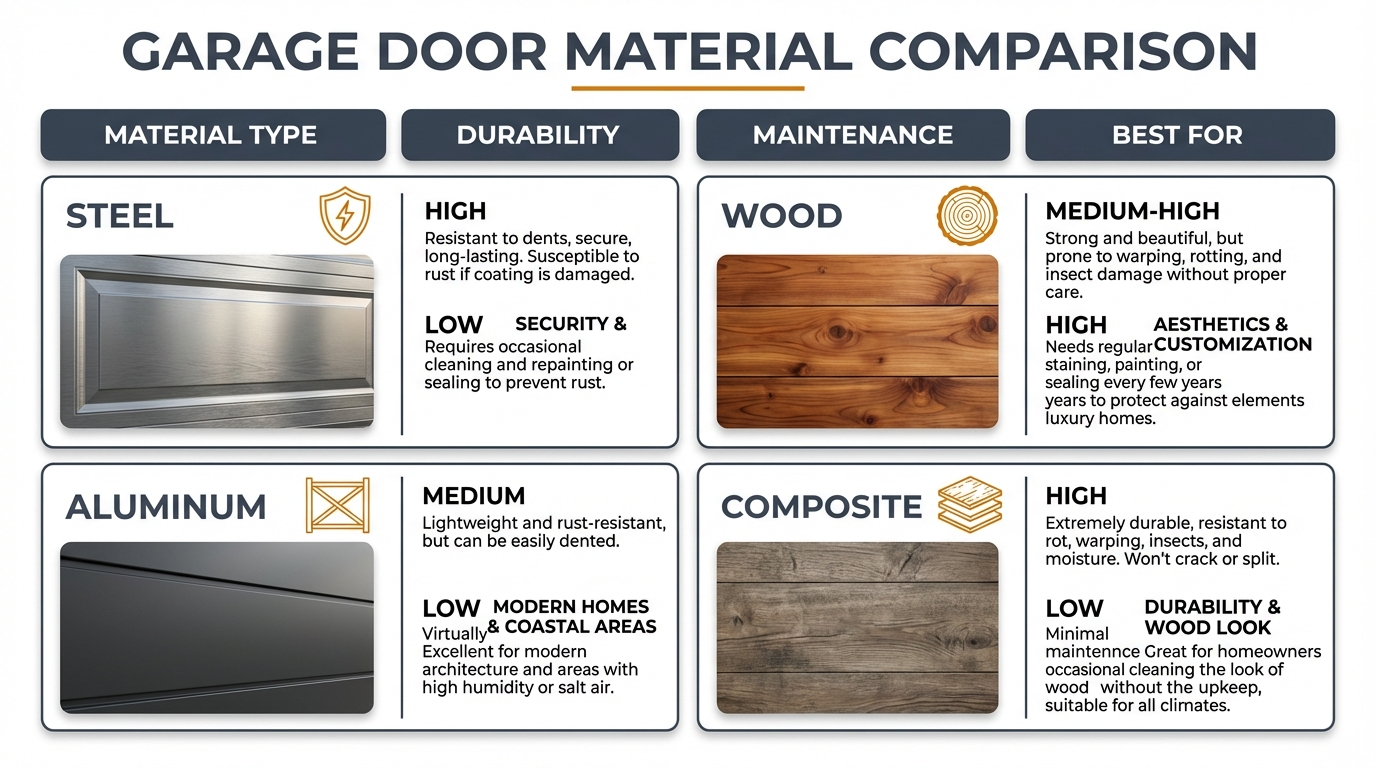
| Material | Durability | Maintenance | Best For |
|---|---|---|---|
| Steel | High | Low | Most residential applications |
| Wood | Moderate | High | Traditional aesthetics, custom designs |
| Aluminum | Moderate | Low | Coastal areas, modern styles |
| Composite | High | Low-Moderate | Wood appearance without wood maintenance |
Steel doors dominate the residential market because they offer excellent durability at reasonable prices with minimal upkeep. Available in numerous styles and finishes, steel works well for most applications. Checking corrosion resistance and coating quality helps differentiate between economy and premium steel options.
Wood provides unmatched aesthetic warmth but demands periodic refinishing to prevent moisture damage and warping. Weight considerations also affect spring and opener requirements. Aluminum resists rust effectively, making it suitable for humid or coastal environments, though it dents more easily than steel. Composite materials attempt to deliver wood-like appearance with reduced maintenance, though quality varies considerably between manufacturers.
What Distinguishes Single-Layer, Double-Layer, and Triple-Layer Construction?
Construction layers significantly impact performance beyond just insulation. Single-layer doors consist solely of exterior material with no backing or insulation. These hollow doors cost less initially but transmit more noise, flex more during operation, and provide no thermal barrier. For many homeowners, upgrading from single-layer to insulated construction produces immediately noticeable improvements in sound and feel.
Double-layer doors add insulation behind the exterior panel without an interior finish. This construction improves thermal performance and rigidity substantially compared to single-layer alternatives. Triple-layer doors include interior steel backing that protects insulation and creates a more finished appearance inside the garage.
The added weight of multi-layer construction requires appropriate springs and opener capacity. Professional installation ensures proper system balance, which affects both operational smoothness and component longevity. Texas Pros Garage Doors evaluates existing hardware during consultations to identify any necessary upgrades before ordering new doors.
How Do Safety Features Protect Your Family?
Modern garage door safety standards exist because older systems caused preventable deaths and injuries. The U.S. Consumer Product Safety Commission established federal requirements for automatic reversing mechanisms following documented fatalities involving children. Understanding these requirements helps you evaluate whether existing equipment meets current standards.
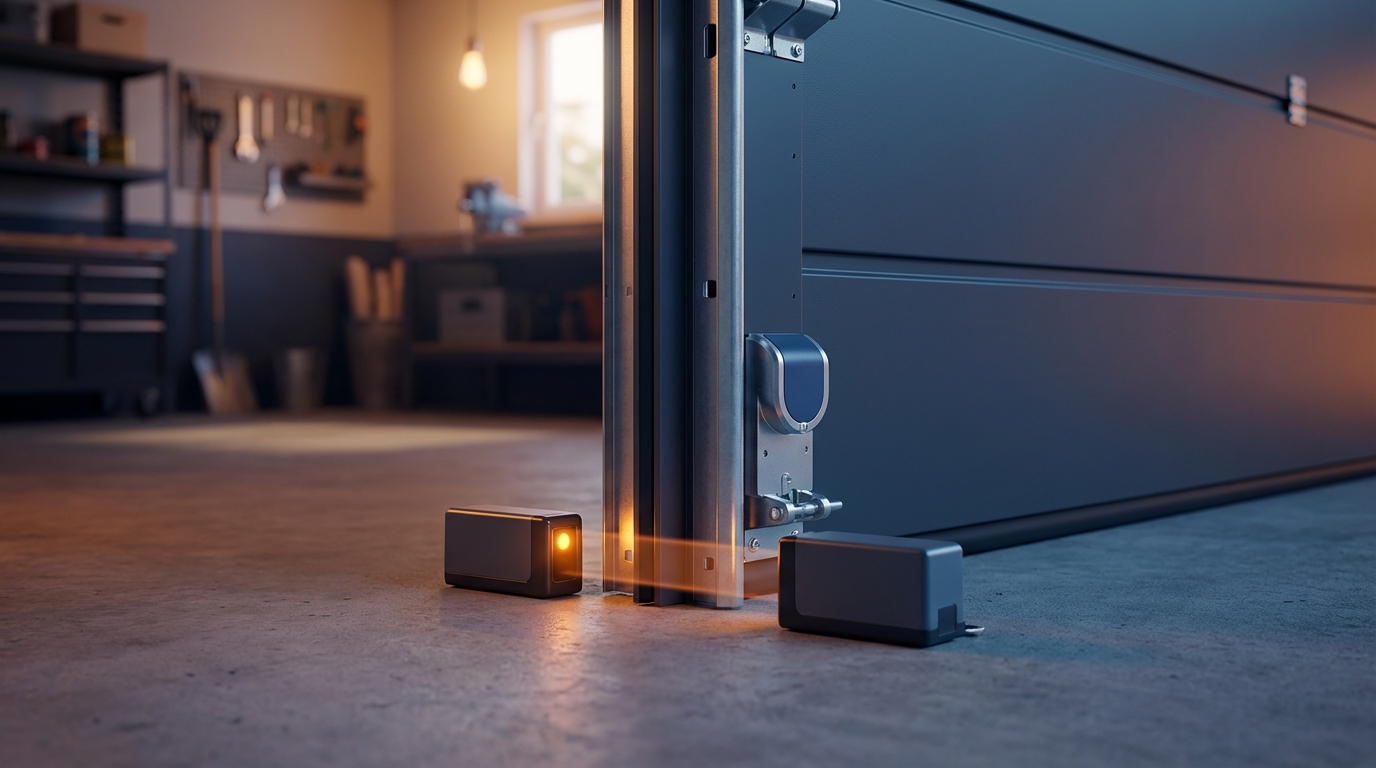
Automatic reversing systems must detect obstructions and reverse door travel within specified parameters. Testing involves placing a two-inch block on the floor in the door’s path. If the door fails to reverse upon contact, the system requires immediate service or replacement. Photoelectric sensors positioned near floor level provide secondary protection by detecting objects in the door’s path before contact occurs.
What Safety Checks Should You Perform Regularly?
Monthly testing of safety features takes only minutes but confirms continued protection. Verify that the door reverses when encountering resistance and that sensor lights indicate proper alignment. Check manual release functionality by disconnecting the opener and operating the door by hand. A properly balanced door should stay in place when released halfway open rather than falling or rising.
Visual inspection of springs, cables, and hardware reveals wear before failure occurs. Frayed cables, rust on springs, or loose mounting brackets warrant professional attention. Attempting spring repairs yourself creates serious injury risk due to the extreme tension these components maintain.
Questions About Garage Door Safety?
Our technicians can inspect your current system and identify any safety concerns. Don’t wait until something fails.
Which Opener Type Matches Your Needs and Preferences?
Garage door openers vary in drive mechanism, noise level, features, and price. Understanding differences helps you select appropriately for your situation rather than simply accepting whatever comes bundled with door installation.
Chain drive openers cost less but produce more noise during operation. Belt drive systems run significantly quieter, making them preferable when bedrooms adjoin or sit above the garage. Screw drive openers occupy a middle position and require less maintenance than chain systems. Direct drive units, where the motor itself moves along the track, operate most quietly of all.
Smart features enable monitoring and control through smartphone applications. You can verify door status remotely, receive alerts when the door opens unexpectedly, and grant temporary access to service providers or guests. Battery backup ensures continued operation during power outages, providing both convenience and security benefits.
Horsepower requirements depend on door size and weight. Standard residential doors typically need one-half to three-quarters horsepower, while heavier insulated or oversized doors may require more. Undersized openers strain during operation and fail prematurely.
What Measurements Must Be Accurate Before Ordering?
Incorrect measurements cause installation complications ranging from minor adjustments to complete door returns. Beyond simple opening dimensions, several clearance measurements determine which door and track systems will fit your garage.
| Measurement | What It Determines | Typical Minimum |
|---|---|---|
| Opening Width | Door width | Exact measurement required |
| Opening Height | Door height | Exact measurement required |
| Sideroom | Track mounting space | 3.75 inches per side |
| Headroom | Track and spring clearance | 10-12 inches standard |
| Backroom | Door and opener depth | Door height plus 18 inches |
Sideroom refers to wall space beside the opening where vertical tracks mount. Insufficient sideroom requires special low-clearance hardware at additional cost. Headroom describes space between the opening top and ceiling, affecting track angle and spring placement. Low headroom situations need specialized configurations that accommodate reduced clearance.
Backroom measures depth from the opening into the garage, determining whether the door and opener will fit when fully open. Obstructions like water heaters or storage platforms may limit available backroom. Professional measurement by Texas Pros Garage Doors technicians identifies any special requirements before ordering, preventing installation day surprises.
Why Does Professional Installation Matter More Than You Might Expect?
Garage door installation involves genuinely hazardous work that injures unprepared individuals every year. Torsion springs store enough energy to cause severe harm if they release unexpectedly. Proper tensioning requires specific tools and techniques that prevent dangerous failures. Electrical connections must meet code requirements to avoid fire and shock hazards.
Beyond safety, professional installation affects long-term performance. Correct track alignment ensures smooth operation and prevents premature wear on rollers and panels. Proper spring calibration balances door weight precisely, reducing opener strain and extending component life. Weather sealing installation determines how effectively the door blocks drafts, moisture, and pests.
Texas Pros Garage Doors technicians complete installations according to manufacturer specifications, maintaining warranty validity. Included warranty coverage protects against defects and workmanship issues, providing recourse if problems develop after installation. Attempting self-installation often voids manufacturer warranties while creating liability if failures cause property damage or injury.
What San Antonio Homeowners Say
Robert Parshall
Google Review
“The spring on my garage door broke and they were able to come out within an hour. Very professional service and fair pricing.”
Leon McPherson
Google Review
“Excellent experience from start to finish. They helped me select the right door design and the installation was completed in one day.”
Alyssa Silva
Google Review
“My garage door spring broke on a Saturday morning. They came out the same day and fixed it quickly. Great service!”
Adam Mendoza
Google Review
“Professional commercial garage door repair. They understood the urgency for our business and minimized our downtime.”
What Factors Actually Determine Total Project Cost?
Understanding cost components helps you compare quotes meaningfully and identify where value exists versus where you might be overpaying. Door price alone tells only part of the story.
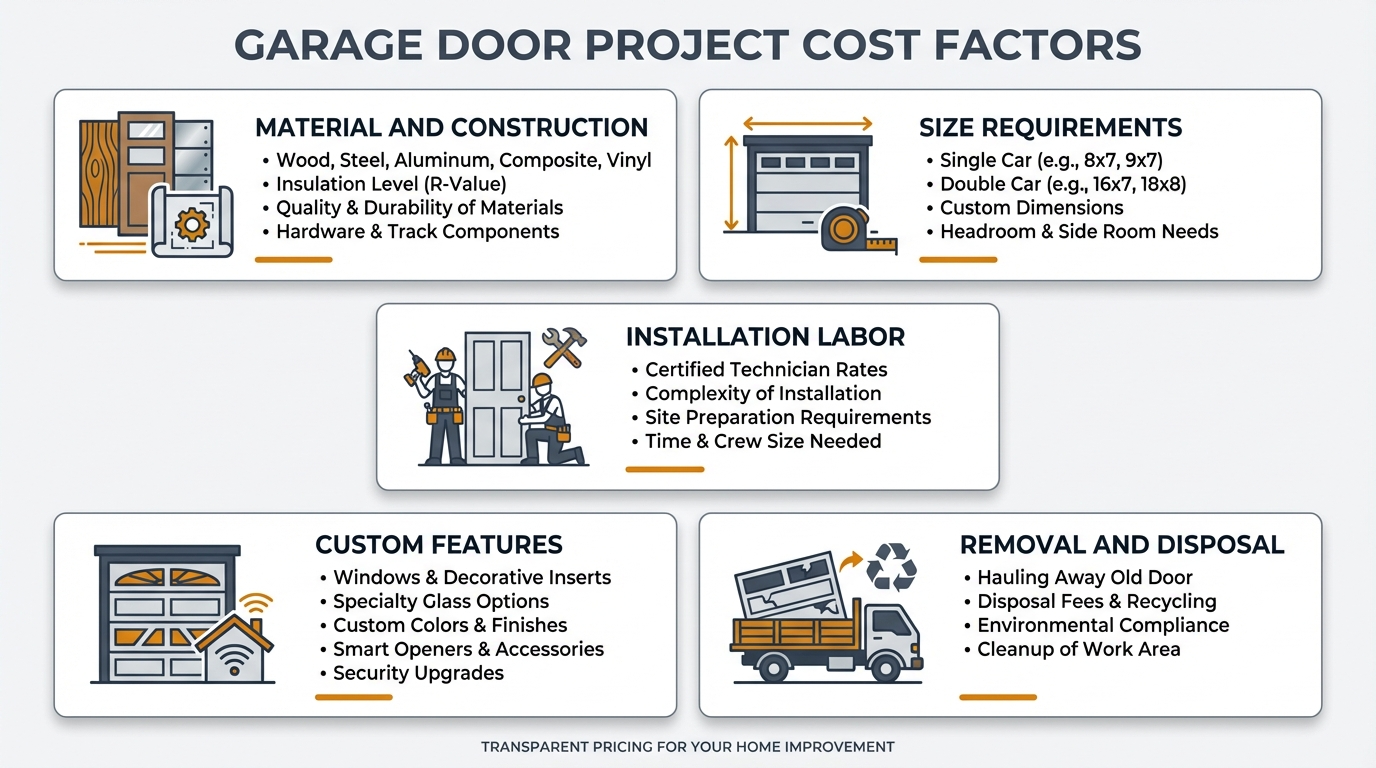
Material and construction quality create the most significant price variations. Basic single-layer steel doors cost far less than triple-layer insulated wood or composite alternatives. Size matters proportionally, with larger doors requiring more material and heavier hardware. Custom colors, window inserts, and decorative hardware add to base prices.
Installation labor varies by complexity and regional factors. Removing and disposing of existing doors adds cost, as does any structural repair or modification needed to accommodate new doors. According to Better Homes and Gardens, total replacement costs span a wide range depending on these variables.
How Can You Read a Quote to Avoid Surprises?
Detailed quotes should itemize specific components rather than presenting single lump sums. Verify that listings include the door model and specifications, hardware including springs and tracks, opener if included, removal and disposal of old equipment, any necessary structural modifications, and warranty terms for both products and labor.
Ask explicitly about scenarios that might increase costs. What happens if existing framing needs repair? Are permit fees included where applicable? Understanding contingencies upfront prevents disagreements during or after installation.
Does Garage Door Replacement Actually Provide Good Return on Investment?
Annual Cost vs. Value reports consistently rank garage door replacement among home improvements with highest cost recovery at resale. The 2024 report data indicates garage door replacement recovers a substantial percentage of project cost in increased home value. This return reflects both functional improvement and significant curb appeal enhancement.
Return on investment extends beyond resale value. Energy savings from insulated doors reduce utility costs in climate-controlled attached garages. Reduced maintenance compared to worn doors saves time and service expenses. Enhanced security features protect vehicles and stored belongings. Quieter operation improves daily quality of life for household members.
When evaluating whether to proceed with replacement, consider the cumulative cost of ongoing repairs versus single replacement investment. Multiple service calls over several years often approach new door costs without delivering the benefits of modern features and full warranty protection.
How Long Should You Expect a New Garage Door to Last?
According to DASMA resources referencing NAHB research, garage doors typically provide 15 to 30 years of useful service. This range reflects significant variation based on material durability, environmental exposure, usage frequency, and maintenance consistency. Coastal installations face accelerated corrosion. Commercial-frequency residential use stresses components faster than occasional opening.
Component lifespan differs from door lifespan. Springs rated for specific cycle counts eventually require replacement even while doors remain serviceable. Standard springs rated for 10,000 cycles last roughly seven to ten years with typical residential use. High-cycle springs rated for 25,000 or more cycles cost more initially but extend service intervals substantially.
Proper maintenance maximizes lifespan regardless of initial quality. Regular lubrication reduces friction wear. Promptly addressing minor issues prevents cascading damage. Weather seal replacement maintains protection against elements. Texas Pros Garage Doors offers maintenance services that help customers extend equipment life while identifying developing problems early.
What Common Mistakes Should You Avoid When Buying a Garage Door?
First-time buyers frequently make preventable errors that affect satisfaction, cost, or safety. Awareness of common pitfalls helps you navigate the purchase process more effectively.
Choosing based on price alone often disappoints. Economy doors may cost less initially but require earlier replacement and provide inferior performance throughout their shorter lifespan. Conversely, overspending on features you will not use wastes money better applied elsewhere. Match specifications to actual needs rather than defaulting to cheapest or most expensive options.
Neglecting to verify code compliance creates problems ranging from failed inspections to voided insurance coverage. This matters especially in wind-rated zones where doors must meet specific pressure ratings. Assuming any door will work in your opening ignores real constraints that clearance measurements reveal.
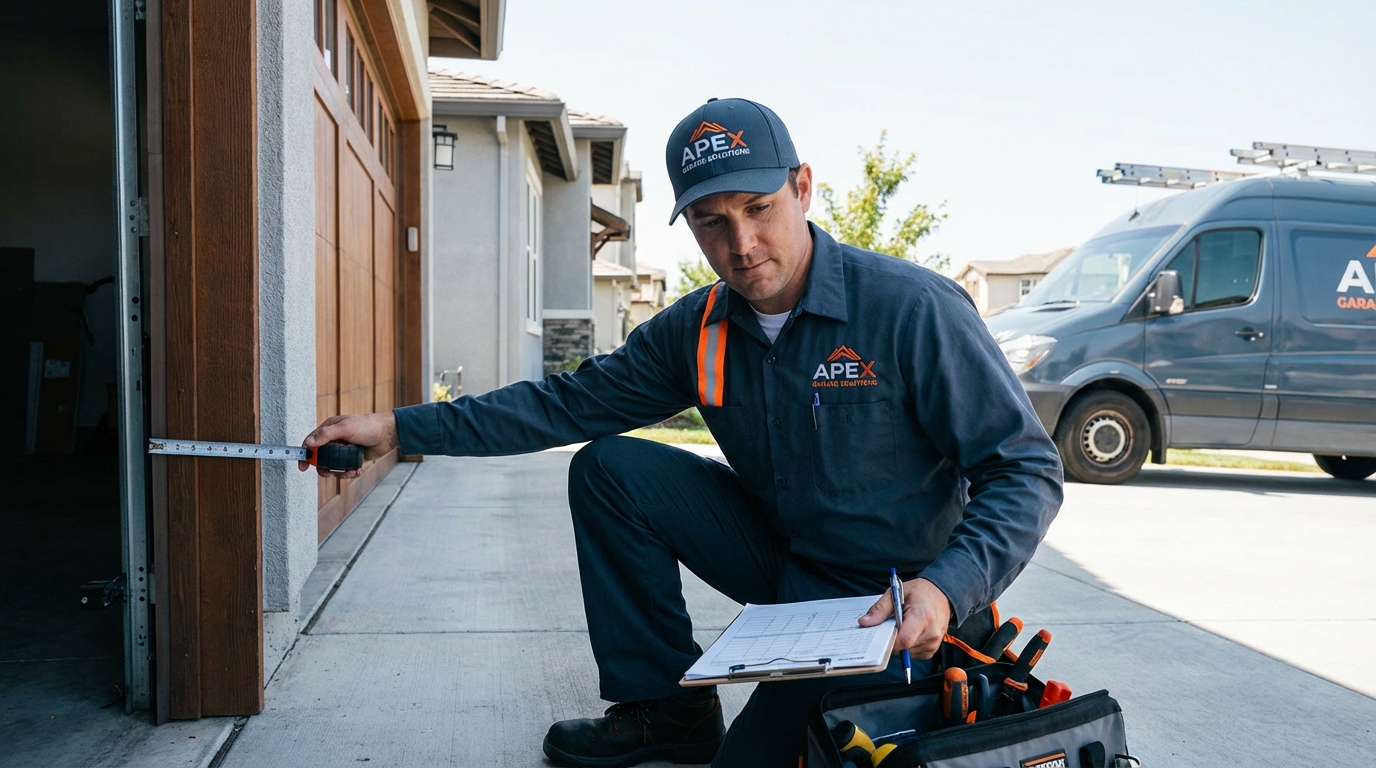
Skipping professional measurement saves nothing when incorrect doors arrive. Returns and reorders delay projects and may incur restocking fees. Even when measurements prove correct, amateur installation creates safety risks and often voids warranties. Professional involvement throughout the process proves cost-effective despite apparent savings from self-service approaches.
Practical Checklist Before Finalizing Your Garage Door Purchase
Confirm accurate measurements for opening dimensions plus sideroom, headroom, and backroom clearances. Professional measurement eliminates costly errors and identifies any special requirements your situation presents.
Verify wind load and other building code requirements with qualified local professionals. Texas Pros Garage Doors technicians understand regional codes and ensure selected products comply before ordering. Review applicable safety feature requirements and confirm that both door and opener meet current standards for automatic reversal and obstruction detection.
Compare warranty coverage carefully. Understand what manufacturer warranties cover versus installer warranties, and know the duration and conditions of each. Ask about recommended maintenance schedules and available service plans that help maintain warranty validity while extending equipment life.
Obtain written quotes itemizing all costs including door, hardware, opener, installation labor, old equipment removal, and any anticipated modifications. Compare quotes on equivalent specifications rather than simply selecting lowest total price. Verify contractor licensing, insurance, and references before committing.
Ortal Peretz
Google Review
“Called on a Sunday evening when my opener stopped working. They came out the same night and got everything working again. Outstanding service!”
Frequently Asked Questions About Buying Garage Doors
Panel replacement works for isolated damage when matching panels remain available. However, mismatched panels affect appearance and potentially performance. When multiple panels need replacement or panels are discontinued, full door replacement usually makes more sense economically and aesthetically.
Compatibility depends on opener horsepower relative to new door weight and whether existing mounting hardware fits new track configurations. Professional assessment determines whether your current opener can remain or requires replacement. Heavier insulated doors often exceed capacity of openers sized for lightweight single-layer doors.
Windows do allow visibility into the garage, which some homeowners prefer to avoid. Frosted or obscured glass options provide natural light without clear visibility. Placement matters too, as windows positioned high or in upper panels reveal less than those at eye level. Weigh aesthetic and lighting benefits against privacy preferences for your situation.
Monthly visual inspection catches developing problems early. Lubricate moving parts including hinges, rollers, and springs every few months with garage door specific lubricant. Test safety reversal mechanisms monthly. Clean door surfaces periodically and address any paint or finish damage promptly to prevent corrosion or deterioration.
Standard single-door replacement typically completes in three to five hours including old door removal. Double door installations or situations requiring structural modifications take longer. Most residential projects finish within a single day, minimizing disruption to household routines.
Aftermarket insulation kits exist but provide limited benefit compared to factory-insulated doors. Added weight may exceed spring and opener capacity, requiring those components to be upgraded as well. Factory insulated doors also include proper backing that protects insulation and provides finished interior appearance.
Ready to Find the Right Garage Door for Your Home?
Selecting a garage door involves balancing numerous considerations. Let our experts guide you toward solutions that match your specific needs and budget. Serving San Antonio since 2006.
(210) 469-9003
Schedule Free Consultation
Licensed & Insured
Warranty Protection

Recent Comments