
Estimated reading time: 12 minutes
When a garage door needs to open and close dozens of times a day under serious weight, the opener behind it has to be built for punishment. For warehouses, auto shops, multi-bay facilities, and even busy residential properties across San Antonio, one technology has earned its reputation as the workhorse of the industry: the chain drive garage door opener. This guide breaks down exactly how a chain driven system works, when it makes sense for your operation, what maintenance it demands, and how to avoid the costly mistakes that shorten its lifespan. Whether you manage a single commercial bay or oversee multiple properties, the goal here is to help you make a confident, informed decision about your next opener investment.
Key Takeaways
- Chain drive garage door openers deliver the strongest pulling power for heavy, insulated, and oversized commercial doors, making them the go-to choice for San Antonio businesses with high-cycle operations.
- Regular maintenance including quarterly lubrication, chain tension adjustments, and professional inspections is the single biggest factor in maximizing a chain drive opener’s lifespan.
- Always perform a door balance test before replacing or upgrading an opener. An unbalanced door is the most common cause of premature opener failure.
- Federal safety standards (UL 325 and 16 CFR 1211.8) require functioning entrapment protection devices on every automated garage door system, and compliance is both a legal and liability necessity.
- Chain drives are louder than belt-driven alternatives, which is a non-issue for detached facilities but should be carefully evaluated for mixed-use or noise-sensitive buildings.
▼
- Why a Chain Drive Opener Is the Standard for Texas Businesses
- Is a Chain Drive Opener the Right Fit for Commercial Use?
- Choosing an Affordable Garage Opener Without Sacrificing Power
- What Are the Real Drawbacks of a Chain Drive Opener?
- How Loud Is a Chain Drive Opener in Practice?
- Does “Chain Drive” Automatically Mean “Heavy Duty”?
- What Horsepower Does a Chain Drive Opener Need?
- How Long Does a Chain Drive Opener Last?
- How Often Should You Lubricate and Maintain a Chain Driven System?
- How Do You Know If the Chain Is Too Tight or Too Loose?
- Why Did Your Chain Drive Opener Suddenly Get Louder?
- Safety Standards for Industrial Chain Driven Systems
- Chain Drive vs. Quieter Alternatives
- What San Antonio Facility Managers Often Get Wrong
- How Texas Pros Garage Doors Supports Commercial Projects
- Frequently Asked Questions
Why a Chain Drive Garage Door Opener Is the Standard for Texas Businesses
At Texas Pros Garage Doors, we see chain drive openers installed more often than any other type in San Antonio’s commercial landscape, and there is a straightforward reason for that. A chain drive garage door opener uses a metal chain running along a rail to push and pull a trolley connected to the door. That metal-on-metal design delivers raw pulling power that handles heavy, insulated, and oversized doors without flinching. For businesses operating multi-car bays, loading docks, or high-cycle service entrances, a heavy duty opener built on a chain rail remains the most reliable option available.
Commercial-grade openers must be listed to UL 325 standards to ensure proper safety and secondary entrapment protection. Federal law has required “electric eye” photoelectric sensors on all automated garage door systems since January 1, 1993, as documented by the U.S. Consumer Product Safety Commission. These requirements apply equally to chain drive openers, belt systems, and every other operator type, making compliance a baseline rather than a bonus.
Is a Chain Drive Garage Door Opener the Right Fit for Commercial Use?
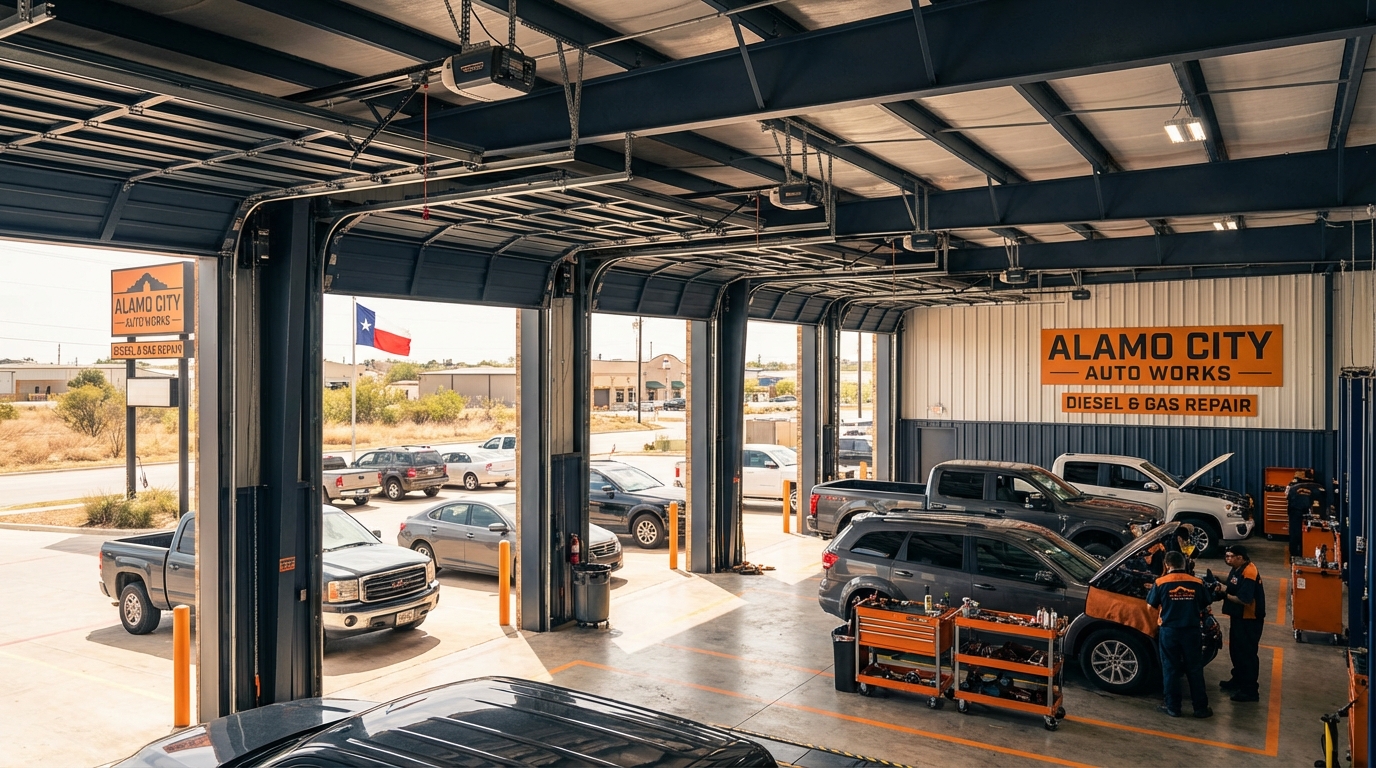
The short answer is yes, particularly when your facility has a heavy door, a high daily cycle count, or both. Chain driven systems thrive in environments where mechanical durability matters more than whisper-quiet operation. Auto repair shops, distribution centers, rental-property garages, and agricultural buildings across the San Antonio area rely on chain drives because the technology handles sustained, repetitive work without the performance degradation that lighter systems can experience under similar loads.
The key is matching the opener’s specifications to your actual operational demands. A facility that opens and closes its door forty times a day needs a different duty rating than a residential home that cycles four times daily. Ignoring that mismatch is one of the most common and most expensive purchasing errors we encounter in the field.
Choosing an Affordable Garage Opener Without Sacrificing Power
For facility managers watching budgets closely, a chain driven system is often the most affordable garage opener choice that still delivers commercial-grade performance. The economics are simple: chain drive components, specifically the chain itself, sprockets, and gears, are widely manufactured, readily available, and straightforward to service. That means lower parts costs and faster turnaround when repairs are needed compared to proprietary belt assemblies or screw-drive mechanisms.
The return on investment extends beyond the purchase price. Because a well-maintained chain driven system can endure high-frequency use for years, the total cost of ownership tends to be lower even though periodic maintenance is required. Think of it this way: the chain drive asks for consistent, modest attention in exchange for long-term reliability and reduced emergency repair bills.
That said, even the most affordable systems need professional attention to sustain peak performance. Partnering with a provider that offers professional commercial repair services ensures that small issues like chain slack or sprocket wear get caught before they escalate into downtime.
Need a Chain Drive Opener Installed or Repaired?
Texas Pros Garage Doors provides expert commercial opener services across San Antonio. Free on-site evaluations with transparent pricing, no surprises.
(210) 469-9003
Schedule Free Evaluation
Serving San Antonio Since 2006
24/7 Emergency Service
What Are the Real Drawbacks of a Chain Drive Opener?
No system is perfect, and honesty about limitations helps you plan better. The two primary drawbacks of a chain drive garage door opener are noise and maintenance demands. The metal chain running along the rail produces more vibration and audible noise than belt-driven alternatives. In a detached warehouse or standalone shop bay, this rarely matters. In a facility with offices directly above or adjacent to the door, the noise can become a legitimate operational concern, especially during early-morning or late-night shifts.
Maintenance is the other side of the coin. A chain driven system requires regular lubrication, periodic tension adjustment, and inspection for wear on the sprocket and gear assembly. Skip those tasks, and you accelerate wear, increase noise, and set yourself up for an unplanned service call at the worst possible time.
How Loud Is a Chain Drive Opener in Practice, and Does It Matter for Your Facility?
Chain drive openers are measurably louder than belt-driven units. The metal-on-metal contact creates a distinctive rumble and vibration that transmits through the rail and into the structure. For most commercial environments like auto bays, storage facilities, and detached workshops, this is a non-issue. The ambient noise of the workspace already masks the opener’s sound.
Where noise does become a factor is in mixed-use buildings, shared commercial complexes, or facilities operating in noise-sensitive hours. If tenants, clients, or neighboring businesses are within earshot, persistent opener noise can generate complaints and even lease disputes. In those scenarios, evaluating whether the cost savings of a chain drive justify the noise trade-off is an important step before installation.
Does “Chain Drive” Automatically Mean “Heavy Duty”?
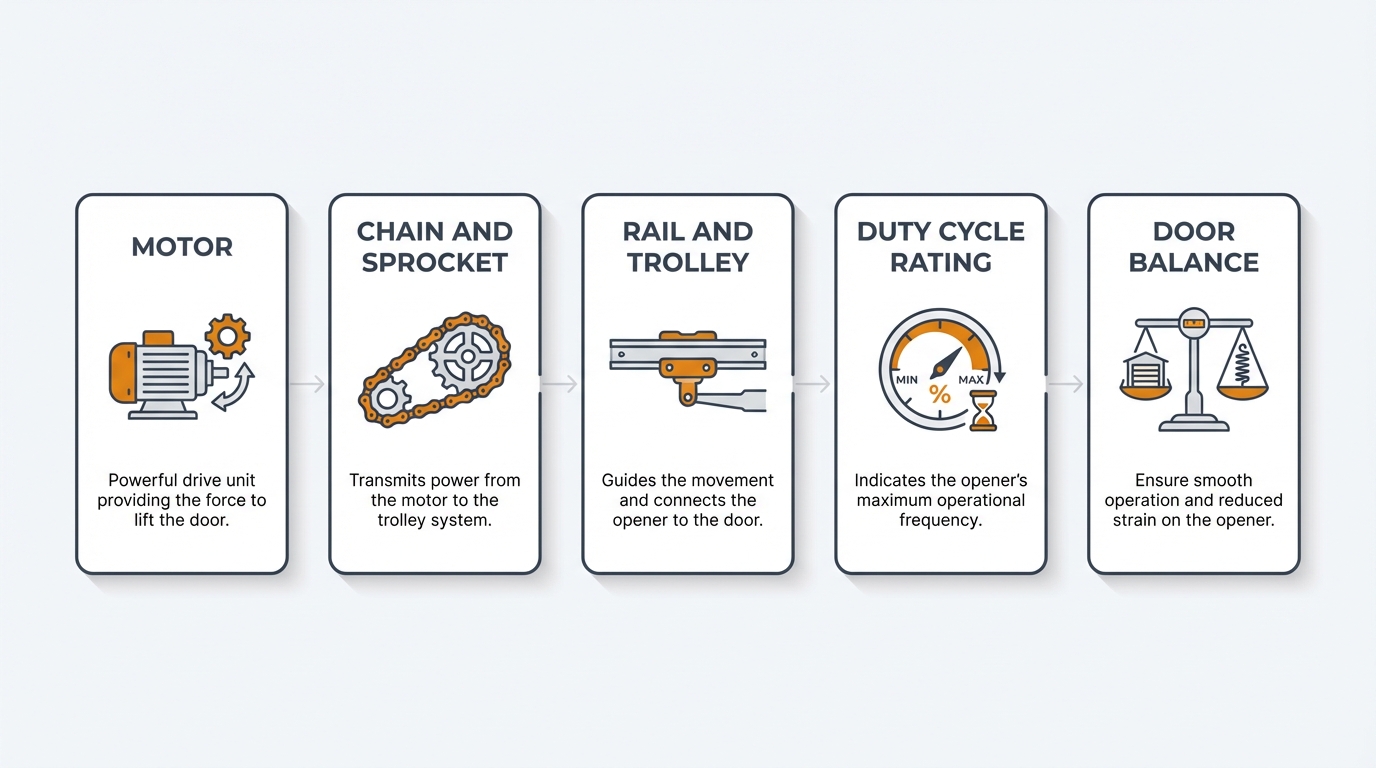
Not necessarily. The term heavy duty opener describes a complete system, not just the drive mechanism. A chain drive provides a strong transmission method, but true heavy-duty performance depends on the motor’s horsepower rating, the trolley and rail construction, the system’s rated duty cycle (how many operations per hour or day it can sustain), and critically, whether the door itself is properly balanced.
| Component | What Makes It Heavy Duty | Warning Sign It’s Undersized |
|---|---|---|
| Motor | Adequate HP/torque for the door’s weight and size | Motor strains, overheats, or slows under load |
| Chain and Sprocket | Industrial-grade metal, proper gauge for the load | Excessive stretch, skipping teeth, visible wear |
| Rail and Trolley | Reinforced rail rated for the door’s weight | Flexing, bowing, or trolley binding during travel |
| Duty Cycle Rating | Matches or exceeds your daily open/close count | System needs “cool down” periods between cycles |
| Door Balance | Springs and hardware properly tuned | Door feels heavy to lift manually or drifts closed |
An unbalanced door forces any opener to work harder than designed, regardless of its specifications. Before upgrading or replacing an opener, a balance test should always come first.
What Horsepower Does a Chain Drive Opener Need for a Heavy Door?
The right answer depends on the door’s weight, height, insulation thickness, and how often it cycles daily. A standard single residential door might work fine with a half-horsepower motor. A heavy, insulated commercial door that opens thirty or more times a day requires significantly more power and a system rated for that frequency.
Choosing the right motor size is not about buying the biggest option available. It is about matching the opener to the door and usage pattern so the system operates within its designed range. Oversizing wastes money; undersizing burns out components.
Warning Sign: Your Door Is Out of Balance
If the door feels heavy when you disconnect the opener and try to lift it by hand, or if it drifts up or slams down on its own, the issue is not the motor. It is the springs, cables, or hardware. No amount of motor power compensates for a fundamentally unbalanced door. Address the balance first, then evaluate whether the opener itself needs upgrading. This sequence saves money and prevents repeat failures.
How Long Does a Chain Drive Garage Door Opener Last in a Commercial Setting?
Lifespan varies widely based on maintenance discipline, door balance, and cycle frequency. A chain driven system in a well-maintained commercial facility with a properly balanced door can deliver years of reliable service. The same system in a facility that skips lubrication and ignores chain tension issues may start showing serious wear within a fraction of that timeframe.
The biggest factor is not the opener’s brand or price point. It is whether someone is performing consistent preventive maintenance. Lubrication at appropriate intervals, proper chain tension, and periodic professional inspections are the three inputs that most directly influence how long a chain drive opener serves your business.
Is Your Current Opener Showing Signs of Wear?
Grinding noises, slow cycles, and chain slapping are warning signs. Get a professional diagnosis before a small issue becomes a costly emergency.
How Often Should You Lubricate and Maintain a Chain Driven System?
For residential use, annual lubrication and inspection are typically sufficient. In a commercial environment with high daily cycle counts, the intervals tighten. Monthly visual inspections and quarterly lubrication are a reasonable starting framework, but facilities with extremely high use, dusty environments, or exposure to temperature extremes may need even more frequent attention.
Maintenance should not focus exclusively on the chain itself. The door’s hinges, rollers, tracks, and springs all contribute to the system’s overall health. A well-lubricated chain pulling a door with worn-out rollers still creates unnecessary strain. According to Overhead Door’s maintenance guidelines, applying lubricant to the opener chain specifically (never to a belt drive) and checking for excess slack are essential steps to prevent slapping, groaning, and premature wear.
Facility Manager’s Maintenance Reference
| Task | Frequency (Commercial) | Why It Matters |
|---|---|---|
| Visual inspection for unusual noises or vibration | Monthly | Catches problems early before they escalate |
| Chain lubrication (white lithium grease or manufacturer-recommended product) | Quarterly | Prevents metal-on-metal wear and reduces noise |
| Chain tension check and adjustment | Quarterly | Too tight causes chatter and sprocket wear; too loose causes slapping |
| Roller, hinge, and track inspection | Quarterly | Worn hardware increases load on the opener |
| Safety sensor test (photo-eye alignment and function) | Monthly | Required for compliance and employee/vehicle safety |
| Manual release handle test | Quarterly | Ensures emergency operation during power loss per UL 325 concepts |
| Door balance test (disconnect opener, lift manually) | Semi-annually | Identifies spring wear before it damages the opener |
| Professional comprehensive inspection | Annually | Technician-level assessment of all mechanical and electrical components |
Texas Pros Garage Doors provides annual professional inspections for commercial clients across the San Antonio area. Our technicians verify chain tension, sprocket condition, motor performance, and safety device function as part of a thorough assessment designed to prevent unexpected failures. If persistent noise or performance issues remain after your own maintenance efforts, it may be time for expert opener repair and maintenance.
How Do You Know If the Chain Is Too Tight or Too Loose?
Chain tension is one of the most overlooked maintenance items, and getting it wrong creates problems in both directions. A chain that is too tight produces a clicking or chattering noise, especially in the middle of the door’s travel. It also puts excessive lateral force on the sprocket and motor shaft, accelerating wear on components that are expensive to replace. A chain that is too loose slaps against the rail, creates loud banging sounds, and can skip on the sprocket, causing erratic door movement.
The correct tension allows a small amount of sag in the chain, typically about half an inch below the rail at the midpoint, though you should always follow the manufacturer’s specific recommendation. If you are unsure, a professional adjustment is fast and prevents the kind of damage that leads to a full opener replacement.
Why Did Your Chain Drive Opener Suddenly Get Louder?
A chain drive opener that was previously operating at an acceptable noise level and suddenly becomes significantly louder is sending a clear signal. The most common causes are dried-out lubrication on the chain, incorrect chain tension that has shifted over time, wear on the drive gear or sprocket inside the motor housing, or a door that has gone out of balance due to spring fatigue.
A Quick Diagnostic Before You Replace the Opener
Before assuming the motor or opener unit needs replacement, disconnect the opener from the door using the manual release. Then try lifting the door by hand. If the door is difficult to move, feels uneven, or will not stay open at the halfway point, the problem is in the door’s hardware, most likely the springs or cables, not the opener itself. Fixing the door balance often resolves the noise issue entirely and costs far less than a new opener. This diagnostic step saves San Antonio business owners significant money every year.
Safety Standards for Industrial Chain Driven Systems
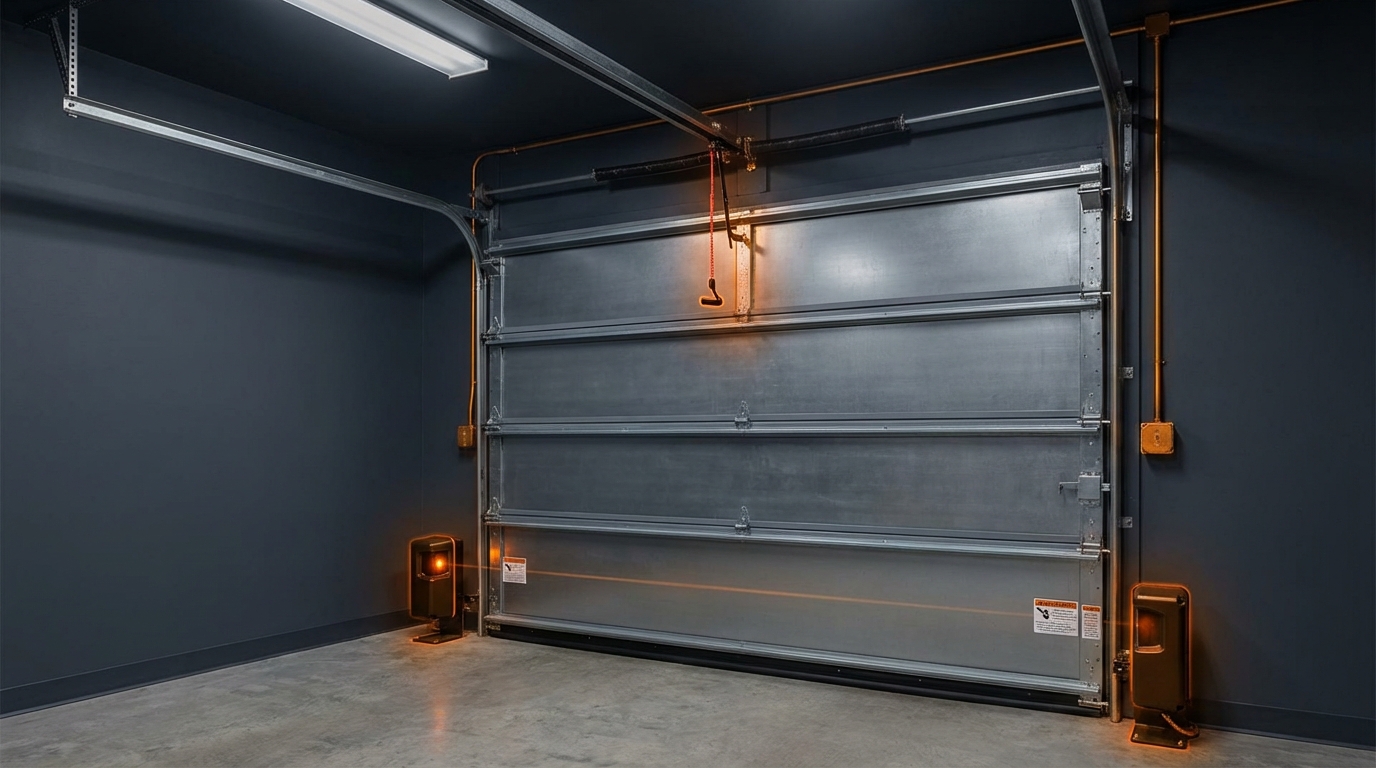
Safety compliance is not optional, and for business owners, it is also a liability issue. Every chain drive garage door opener installed in a commercial or residential setting must include secondary entrapment protection. Under 16 CFR 1211.8, the operator system must monitor the correct operation of its entrapment protection devices during each close cycle. If the safety device fails or is obstructed, the system must not complete the closing operation.
There are two primary categories of entrapment protection devices. Non-contact devices, such as photoelectric beams (the familiar “electric eye” sensors mounted near floor level), detect objects in the door’s path without physical contact. Contact devices, such as sensing edges attached to the door’s bottom panel, detect resistance when the door contacts an object. Many commercial installations use both types for redundant protection.
For facility managers, the practical takeaway is this: your opener’s safety sensors must be tested regularly, kept clean and aligned, and replaced immediately if they malfunction. A heavy duty opener that closes a massive door without functioning entrapment protection is a serious injury and liability risk. UL 325 also requires a manual release handle accessible from inside the garage to allow manual operation during power loss, which is an emergency preparedness item that should be part of every routine inspection.
Chain Drive vs. Quieter Alternatives: Which Is the Smarter Business Decision?
This is not a question with a universal answer. It depends entirely on your facility’s physical layout, noise sensitivity, budget, and operational priorities. The decision framework below helps clarify which direction makes more sense for your specific situation.
| Factor | Chain Drive Advantage | Quieter Alternative Advantage |
|---|---|---|
| Upfront cost | Lower purchase price, widely available parts | Higher initial investment |
| Noise level | Acceptable in detached or industrial spaces | Better for attached offices, shared buildings, night operations |
| Lifting power for heavy doors | Proven reliability under sustained heavy loads | Comparable in many models, but verify duty rating |
| Maintenance cost over time | Requires consistent lubrication and tension checks | Typically lower maintenance frequency |
| Parts availability and repair speed | Fastest to source and service locally | May require specific parts with longer lead times |
| Total cost of ownership (5+ years) | Often lower if maintenance is performed | Can be lower if maintenance is neglected on chain system |
For a detached warehouse, standalone shop, or high-traffic bay where noise is irrelevant and budget efficiency matters, the chain drive garage door opener is the practical choice. For facilities where the door is adjacent to occupied offices, client-facing spaces, or noise-restricted zones, the premium for a quieter system may pay for itself in fewer complaints and operational disruptions.
What Our Customers Say
“The spring on my garage door broke and they were able to come out within an hour. Very professional service and fair pricing.”
“Excellent experience from start to finish. They helped me select the right door design and the installation was completed in one day.”
“My garage door spring broke on a Saturday morning. They came out the same day and fixed it quickly. Great service!”
“Professional commercial garage door repair. They understood the urgency for our business and minimized our downtime.”
What San Antonio Facility Managers Often Get Wrong About Opener Selection
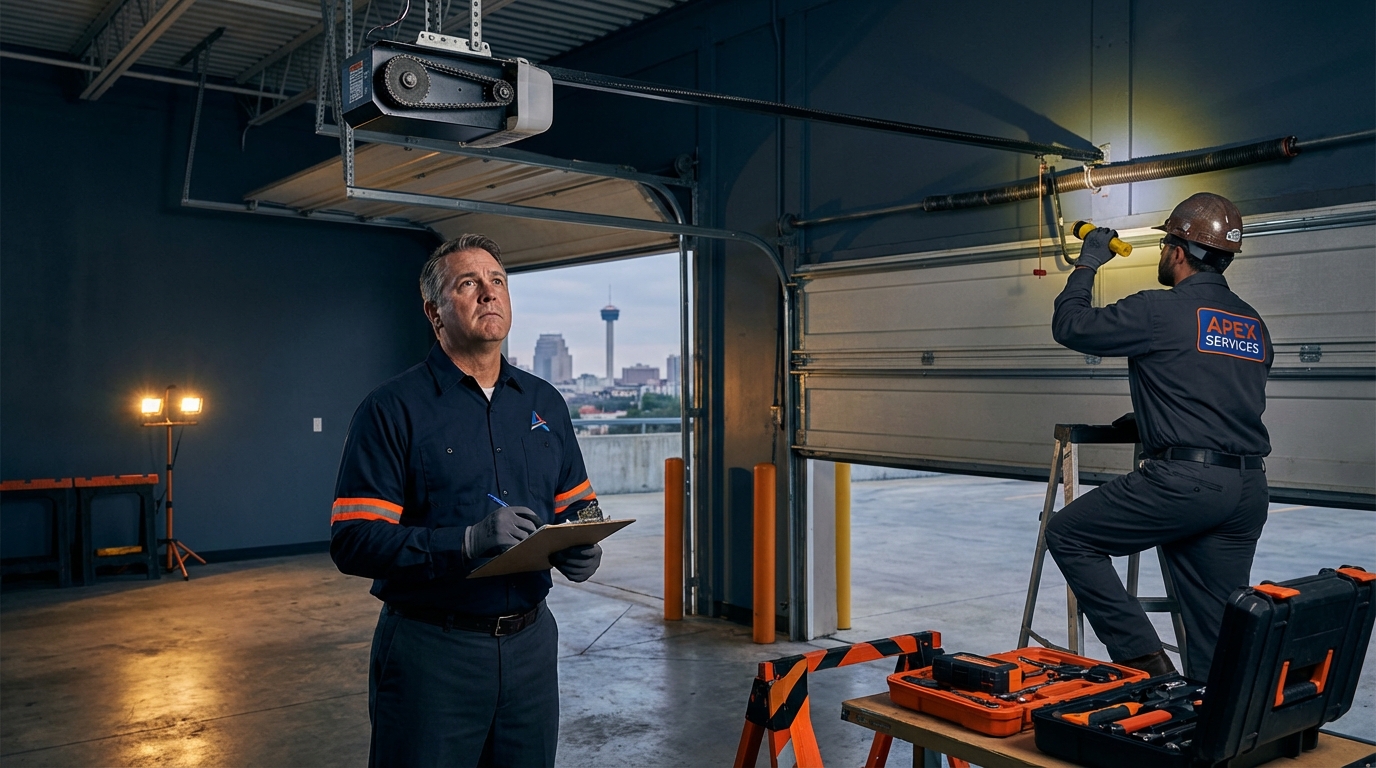
Three mistakes come up repeatedly in commercial opener selection across the San Antonio area. First, choosing an opener based solely on price without verifying that its duty cycle and horsepower match the door and usage pattern. A bargain opener that fails under commercial loads is not a bargain. Second, installing a new opener on an unbalanced door. The opener will strain, overheat, and fail prematurely, and the warranty claim will likely be denied because the root cause is the door, not the opener. Third, neglecting to confirm that all safety devices comply with current federal requirements. An opener installed without functioning entrapment protection exposes the business owner to regulatory penalties and personal injury liability.
Texas Pros Garage Doors addresses these issues proactively during every commercial installation. Our process includes a full door balance and hardware assessment before any opener is selected, ensuring that the chain driven system or alternative we recommend is genuinely matched to the facility’s needs rather than just the budget line.
How Texas Pros Garage Doors Supports Commercial Opener Projects
Selecting, installing, and maintaining a chain drive garage door opener for a commercial application involves more than picking a model off a shelf. The opener must match the door’s weight and dimensions, the facility’s cycle frequency, the building’s noise environment, and local safety codes. Texas Pros Garage Doors brings three practical advantages to that process for San Antonio businesses. First, same-day response availability means that when an opener fails and your bay is stuck open or closed, you are not waiting days for a technician. Second, transparent quoting means you see the full scope of work, parts, and cost before anything starts, with no hidden charges after the fact. Third, every installation includes a complete safety device check, door balance verification, and final operational test, not just a quick part swap.
“Called on a Sunday evening when my opener stopped working. They came out the same night and got everything working again. Outstanding service!”
Frequently Asked Questions
Yes. Chain drive openers are among the most commonly installed systems in commercial facilities specifically because they handle heavy doors and high cycle counts reliably. The key requirement is consistent preventive maintenance, including lubrication, tension adjustments, and periodic professional inspections.
If the opener struggles to lift the door, makes grinding or clicking noises that were not present before, or fails to complete a full open or close cycle, it may need repair. Start by checking door balance and chain tension. If those are fine and the problem persists, the motor, gear, or sprocket assembly may need professional attention.
While the mechanical installation is straightforward in concept, commercial applications involve safety compliance requirements, proper mounting for heavy doors, and electrical connections that should be handled by a qualified technician. Improper installation can void warranties, create safety hazards, and violate local building codes.
Texas Pros Garage Doors services and installs openers from major manufacturers including LiftMaster and Chamberlain, among others. We focus on matching the right system to your specific door and operational requirements rather than pushing a single brand.
Yes, chain drive openers produce more operational noise than belt-driven systems due to metal-on-metal contact. For many commercial environments, this is not a concern. For noise-sensitive facilities, we help evaluate whether the cost savings justify the sound level or whether a quieter alternative makes more sense for your situation.
Cost depends on the opener’s horsepower, the door’s size and weight, any required electrical work, and whether existing hardware like rails and brackets can be reused. Texas Pros Garage Doors provides free estimates with transparent pricing so you can make an informed decision without surprises.
Ready to Find the Right Opener for Your Facility?
Get a free on-site evaluation for your San Antonio commercial property. Our technicians assess your door, usage pattern, and operational priorities to deliver an honest, tailored recommendation.
(210) 469-9003
Schedule Your Free Assessment
Transparent Pricing – No Hidden Fees
24/7 Emergency Response

Recent Comments