
Estimated reading time: 12 minutes
Your garage door is one of the largest moving components in your home, and it works hard every single day. Most homeowners use their garage door multiple times daily, yet many overlook the importance of regular maintenance until something goes wrong. A well-maintained garage door operates smoothly, quietly, and safely for years. Neglecting basic upkeep can lead to unexpected breakdowns, costly repairs, and even serious safety hazards for your family.
This comprehensive garage door maintenance guide provides actionable steps you can take to keep your door in optimal condition. From monthly safety checks to seasonal door care tips, you will find a practical maintenance checklist designed specifically for homeowners who want to protect their investment and ensure reliable performance year-round.
Key Takeaways
- Monthly safety tests for auto-reverse and photo eye sensors are essential and take only minutes to complete
- Proper lubrication every 3-6 months extends component life and reduces noise significantly
- Never attempt spring or cable repairs yourself as these components are under extreme tension
- A balanced door protects your opener motor and ensures safe operation for your family
- Annual professional inspections catch problems early before they become expensive emergencies
▼
- Why Does Preventive Maintenance Matter?
- How Often Should You Perform Maintenance?
- Monthly Safety Checks Every Homeowner Should Perform
- Common Homeowner Mistakes to Avoid
- Which Parts Need Lubrication?
- Is WD-40 Appropriate for Garage Doors?
- How to Perform a Balance Test
- Why Does Your Door Make Noise?
- Door Reverses Immediately After Closing
- Signs of Spring or Cable Failure
- Complete Annual Maintenance Checklist
- Seasonal Door Care Tips
- When to Call a Professional
- Frequently Asked Questions
Need Professional Garage Door Maintenance?
Our certified technicians ensure your door operates safely and efficiently
(210) 469-9003
Schedule Service Today
4.8 Rating from 70+ Reviews
Same-Day Service
Why Does Preventive Maintenance Matter for Your Garage Door?
Preventive maintenance is not just about avoiding inconvenience. A garage door system includes heavy panels, high-tension springs, cables under significant stress, and electrical components that all work together. When any part fails unexpectedly, the consequences can range from being locked out of your garage to serious injury. Regular inspections catch small issues before they become major problems.
Beyond safety, consistent maintenance extends the lifespan of every component in your system. Springs that receive proper lubrication last longer. Rollers that move smoothly cause less wear on tracks. Weather seals that remain intact keep energy costs down and protect your garage from the elements. The small investment of time you make in maintenance pays dividends in reliability and peace of mind.
How Often Should You Perform Garage Door Maintenance?
The frequency of maintenance tasks depends on the type of inspection or service required. Safety checks should happen monthly without exception. More thorough maintenance tasks like lubrication and hardware inspection work well on a quarterly or semi-annual schedule. A complete professional inspection is recommended at least once per year, or twice yearly for doors that see heavy daily use.
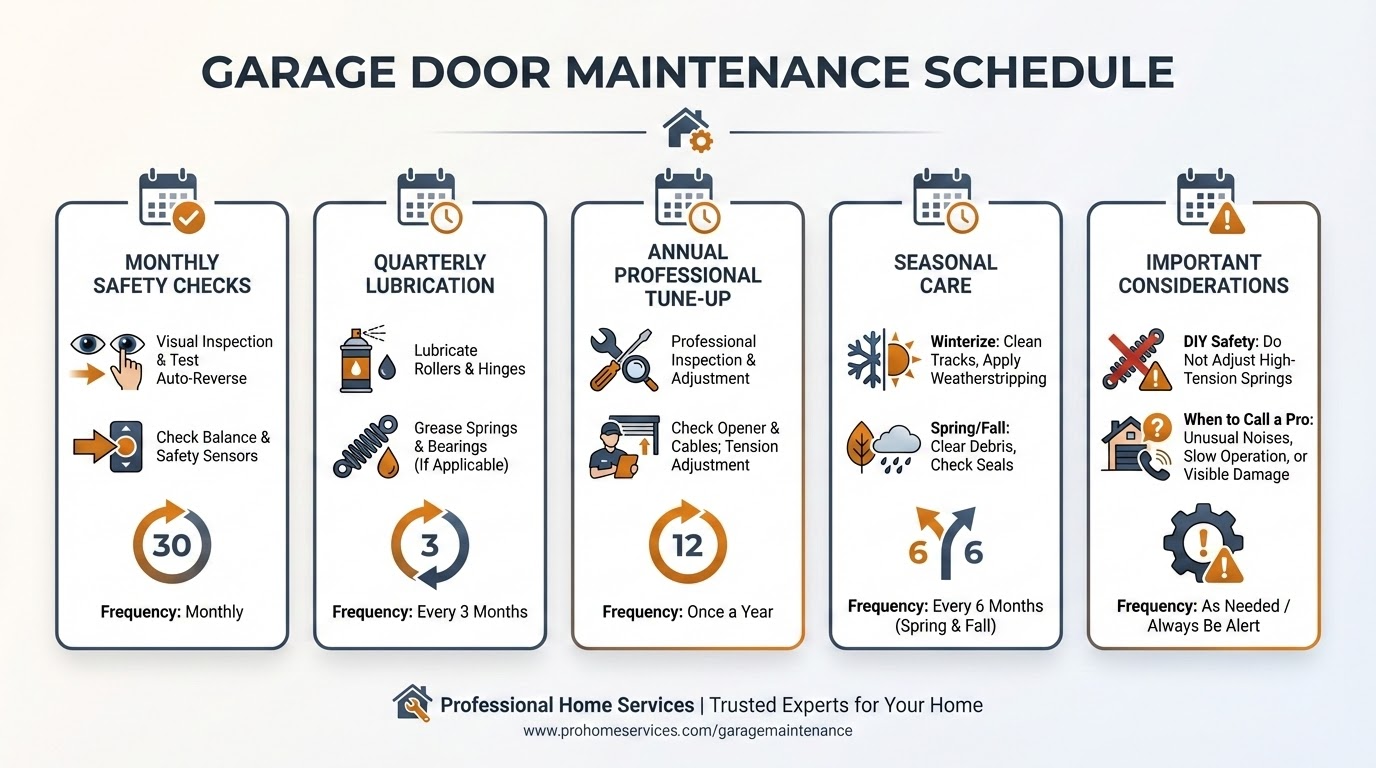
| Maintenance Task | Recommended Frequency | Time Required |
|---|---|---|
| Safety reversal test | Monthly | 2-3 minutes |
| Photo eye sensor check | Monthly | 2-3 minutes |
| Visual inspection of hardware | Monthly | 5-10 minutes |
| Lubrication of moving parts | Every 3-6 months | 15-20 minutes |
| Hardware tightening | Every 6 months | 10-15 minutes |
| Weatherstripping inspection | Seasonally | 5-10 minutes |
| Professional tune-up | Annually | 45-60 minutes |
What Monthly Safety Checks Should Every Homeowner Perform?
Monthly safety checks are the foundation of responsible garage door ownership. These quick tests take only minutes but can prevent accidents and identify problems early. Federal safety standards established by the Consumer Product Safety Commission require that automatic garage door openers include specific safety features, and it is your responsibility to verify these features work correctly.
The Reversal Mechanism Test
The auto-reverse feature is designed to prevent the door from closing on a person, pet, or object. To test this critical safety function, place a flat 2×4 board or similar object approximately 1.5 inches tall on the floor in the center of the door opening. Activate the door to close. Upon contact with the board, the door must stop and reverse direction within two seconds. If the door does not reverse, stop using the opener immediately and contact a qualified technician. According to CPSC guidelines, this test must be performed every month without fail.
Photo Eye Sensor Alignment and Functionality
Photoelectric sensors installed near the floor on each side of the door opening create an invisible beam. When this beam is broken while the door is closing, the door should stop and reverse. Check that both sensor units are clean and free of cobwebs or debris. Verify that the indicator lights on each sensor are steady, not blinking. Test the system by breaking the beam with your foot while the door closes. The Door and Access Systems Manufacturers Association notes that sensors should be mounted no higher than six inches from the floor to detect small children and pets effectively.
Manual Release Engagement
Every automatic garage door opener includes a manual release mechanism, typically a red handle hanging from the opener rail. This allows you to disconnect the door from the opener during power outages or emergencies. Practice using this feature so you are familiar with it when needed. Pull the release handle to disengage the door, then manually lift the door. Reattach by pulling the release and running the opener until it reconnects. Knowing this procedure ensures you are never trapped by a non-functioning opener.
What Mistakes Do Homeowners Commonly Make With Garage Door Maintenance?
Many well-intentioned homeowners inadvertently cause problems through improper maintenance techniques. Understanding these common errors helps you avoid them and keeps your door operating safely.
One frequent mistake involves using the wrong lubricant. General-purpose products may seem convenient, but they often attract dust and dirt, creating a gummy residue that increases friction rather than reducing it. Another error is over-lubricating, which causes similar problems. The goal is a thin protective film, not a heavy coating.
Some homeowners attempt to adjust spring tension themselves after watching online videos. This is extremely dangerous. Torsion springs are under tremendous pressure and can cause severe injury or death if mishandled. Similarly, attempting to repair frayed cables or replace broken springs without proper training and tools puts you at serious risk. These tasks require professional expertise and specialized equipment.
Which Parts of a Garage Door Need Lubrication, and Which Do Not?
Proper lubrication reduces friction, minimizes noise, and extends component life. However, not every part of your garage door system should receive lubricant. Understanding what to lubricate and what to leave alone prevents problems.
Parts That Benefit From Lubrication
Metal hinges connecting door panels benefit from light lubrication at their pivot points. Steel rollers with ball bearings need occasional lubrication of the bearings themselves. Torsion springs can receive a light coating to prevent rust and reduce friction. The opener rail or screw drive mechanism may need lubrication depending on your opener type. Bearing plates at each end of the torsion spring shaft also benefit from occasional attention.
Parts You Should Not Lubricate
Tracks should never be lubricated. A lubricated track attracts dirt and debris, creating a paste that impedes roller movement and causes the door to operate poorly. Instead, wipe tracks clean with a dry cloth. Nylon rollers do not require lubrication and can actually be damaged by petroleum-based products. Plastic components throughout the system should also remain lubricant-free.
Is WD-40 Appropriate for Garage Door Maintenance?
This question generates significant confusion among homeowners. Standard WD-40 is primarily a solvent and water displacer, not a long-lasting lubricant. While it can temporarily reduce squeaking, it evaporates quickly and does not provide sustained protection. After the initial application wears off, parts may actually be drier than before because the solvent removed existing lubrication.
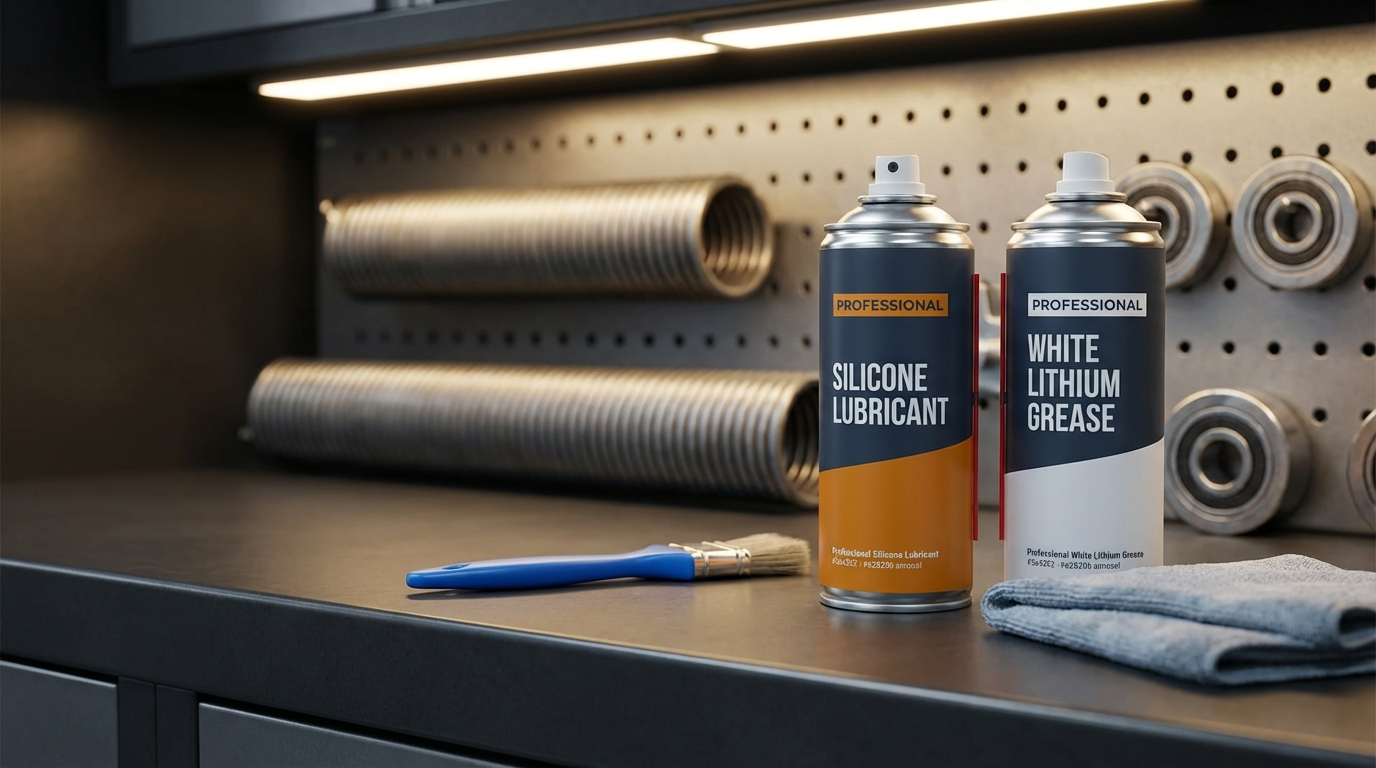
For garage door maintenance, choose a product specifically designed for the application. Silicone-based sprays or white lithium grease formulated for garage doors provide longer-lasting protection. These products resist temperature extremes, do not attract dust as readily, and maintain their lubricating properties over time. Read product labels carefully to ensure compatibility with your door components.
Questions About Proper Maintenance?
Our experts can guide you through the right care for your specific door system
How Do You Perform a Balance Test on Your Garage Door?
A properly balanced door is essential for safe operation and opener longevity. When springs are correctly calibrated, the door should feel relatively light to lift manually and stay in place when partially opened. An unbalanced door forces the opener motor to work harder, shortening its lifespan and potentially causing safety issues.
To perform a balance test, first disconnect the door from the opener using the manual release. Lift the door manually to approximately waist height and release it. A well-balanced door will stay in position, perhaps drifting slightly but not falling or rising dramatically. If the door falls quickly, the springs may need adjustment. If it rises on its own, the springs may be over-tensioned. Either condition requires professional attention because spring adjustment is dangerous for untrained individuals.
Why Does Your Garage Door Make Noise, and How Can You Reduce It?
Unusual sounds from your garage door often indicate maintenance needs. Different noises point to different issues, and understanding what you hear helps identify the source.
Squeaking typically indicates metal-on-metal friction from hinges, rollers, or springs that need lubrication. Grinding sounds may suggest worn rollers or debris in the tracks. Popping noises when the door moves could indicate torsion spring issues. Rattling often comes from loose hardware such as bolts, nuts, or bracket screws. A general rumbling might mean rollers are worn and need replacement.
Start by applying appropriate lubricant to hinges and metal roller bearings. Tighten any visibly loose hardware using a socket wrench. Clean the tracks thoroughly. If noise persists after these steps, the issue likely requires professional diagnosis. Texas Pros Garage Doors can identify and resolve noise problems efficiently, often during a routine maintenance visit.
Why Does Your Garage Door Reverse Immediately After Starting to Close?
When a door begins closing then immediately reverses, the safety system is detecting an obstruction or malfunction. This frustrating symptom has several possible causes, and systematic troubleshooting usually identifies the problem.
Check the photo eye sensors first. Clean both lenses with a soft cloth and verify nothing is blocking the beam. Confirm that both sensors are aligned by checking their indicator lights. Misaligned sensors often show blinking lights rather than steady illumination. Next, examine the tracks for obstructions, debris, or damage that might impede smooth travel. Check that rollers move freely without binding.
If sensors and tracks appear fine, the issue may involve force settings on the opener or actual mechanical resistance in the system. Worn rollers, binding hinges, or track misalignment can create enough resistance to trigger the safety reversal. When basic troubleshooting does not resolve the problem, professional evaluation is necessary to prevent further damage and ensure safe operation.
How Do You Know When Springs or Cables Are Failing?
Springs and cables are critical components that operate under extreme stress. Recognizing warning signs of impending failure allows you to address issues before a sudden break leaves your door inoperable or causes injury.
Signs of spring wear include visible gaps in the coils of torsion springs, rust or corrosion on the spring body, and the door feeling heavier than usual when operated manually. A door that closes too quickly when disconnected from the opener indicates spring weakness. If you hear a loud bang from the garage, a spring may have already broken.
Cable warning signs include visible fraying, kinks, or rust. Cables that appear loose or have slipped off their drums require immediate attention. Never attempt to repair or replace springs or cables yourself. These components store enormous energy and can cause catastrophic injury if they release unexpectedly. Always contact a professional for spring and cable service.
What Our Customers Say
Robert Parshall
Google Review
“The spring on my garage door broke and they were able to come out within an hour. Very professional service and fair pricing.”
Leon McPherson
Google Review
“Excellent experience from start to finish. They helped me select the right door design and the installation was completed in one day.”
Alyssa Silva
Google Review
“My garage door spring broke on a Saturday morning. They came out the same day and fixed it quickly. Great service!”
Adam Mendoza
Google Review
“Professional commercial garage door repair. They understood the urgency for our business and minimized our downtime.”
Your Complete Annual Maintenance Checklist
Beyond monthly safety checks, a comprehensive annual inspection covers all major system components. This checklist guides you through a thorough evaluation of your garage door system.
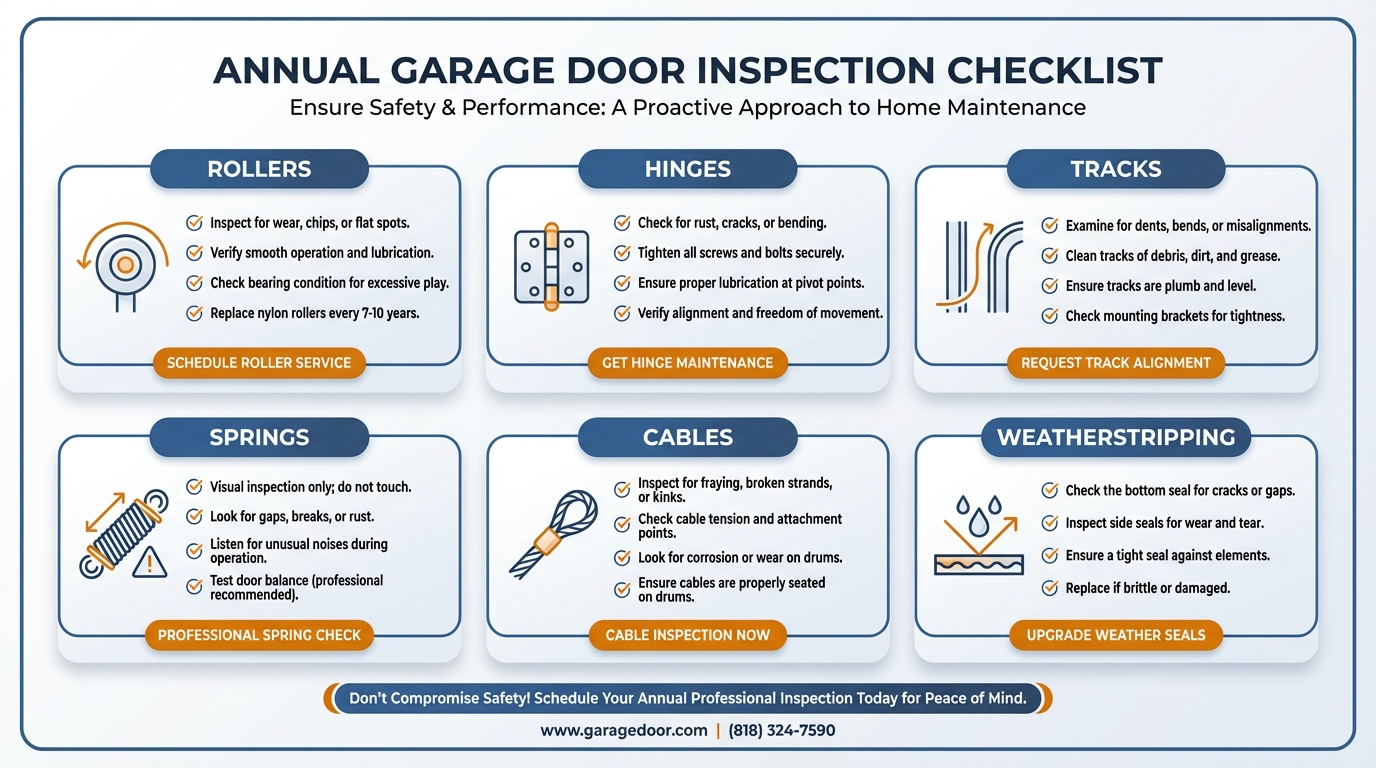
| Component | Inspection Points | Action Required |
|---|---|---|
| Rollers | Cracks, chips, excessive wear | Replace if damaged |
| Hinges | Cracks, binding, loose pins | Replace if cracked, lubricate |
| Tracks | Dents, bends, debris buildup | Clean, check alignment |
| Springs | Rust, gaps, stretched appearance | Professional service only |
| Cables | Fraying, kinks, rust | Professional service only |
| Weatherstripping | Cracks, tears, gaps | Replace if damaged |
| Hardware | Loose bolts and brackets | Tighten as needed |
| Opener | Unusual sounds, slow response | Lubricate, check settings |
Inspecting Hardware Components
Visually examine all visible bolts, nuts, and brackets for looseness. The vibration of daily operation gradually loosens hardware over time. Use a socket wrench to snug any loose fasteners, but avoid over-tightening. Check roller brackets, hinge mounting hardware, and track brackets. Look for any signs of metal fatigue such as cracks or bending.
Examining Weatherstripping Condition
The bottom seal and side weatherstripping prevent drafts, moisture, and pests from entering your garage. According to the U.S. Department of Energy, damaged weatherstripping significantly impacts energy efficiency. Check the bottom seal for cracks, brittleness, or sections that no longer contact the floor evenly. Examine side and top seals for gaps or deterioration. Replacement weatherstripping is relatively inexpensive and easy to install, making this an accessible DIY task.
What Seasonal Door Care Tips Keep Your System Operating Smoothly?
Different seasons present different challenges for your garage door system. Adapting your maintenance approach to seasonal conditions helps prevent weather-related problems.
Summer Preparation and Care
Summer heat causes metal components to expand slightly. This is normal but can sometimes affect door operation. Check for smooth travel and listen for any new sounds. Inspect the garage for insect nests, particularly mud daubers that build in tracks and around sensors. Clean tracks of any accumulated debris. Ensure the garage has adequate ventilation to prevent excessive heat buildup that can affect opener electronics and lubricant consistency.
Winter Preparation and Care
Cold weather causes contraction of metal parts and can make lubricants less effective. Before winter arrives, apply fresh lubricant to all appropriate components. Inspect weatherstripping carefully, as brittle seals crack more readily in cold conditions. The New York State Homes and Community Renewal recommends checking weatherstripping before each winter season to maintain energy efficiency. Clean around photo eye sensors regularly if you experience snow or ice, as accumulation can block the beam and prevent door operation.
When Should You Call a Professional Instead of Attempting DIY Repairs?
While many maintenance tasks are safe for homeowners, certain situations require professional expertise. Understanding this boundary protects your safety and prevents costly mistakes.
Safe DIY tasks include monthly safety tests, cleaning, lubrication of appropriate parts, weatherstripping replacement, and tightening accessible hardware. You can also replace light bulbs in the opener and reprogram remote controls without professional help.
Call a professional for any issue involving springs, cables, drums, or bottom brackets. Bent tracks or damaged panels require proper equipment to repair safely. Opener malfunctions beyond simple troubleshooting, such as motor problems or circuit board issues, need expert diagnosis. Any safety test failure warrants professional attention to identify and correct the underlying problem. When you hear unusual noises that persist after basic maintenance, professional evaluation prevents small issues from becoming major repairs.
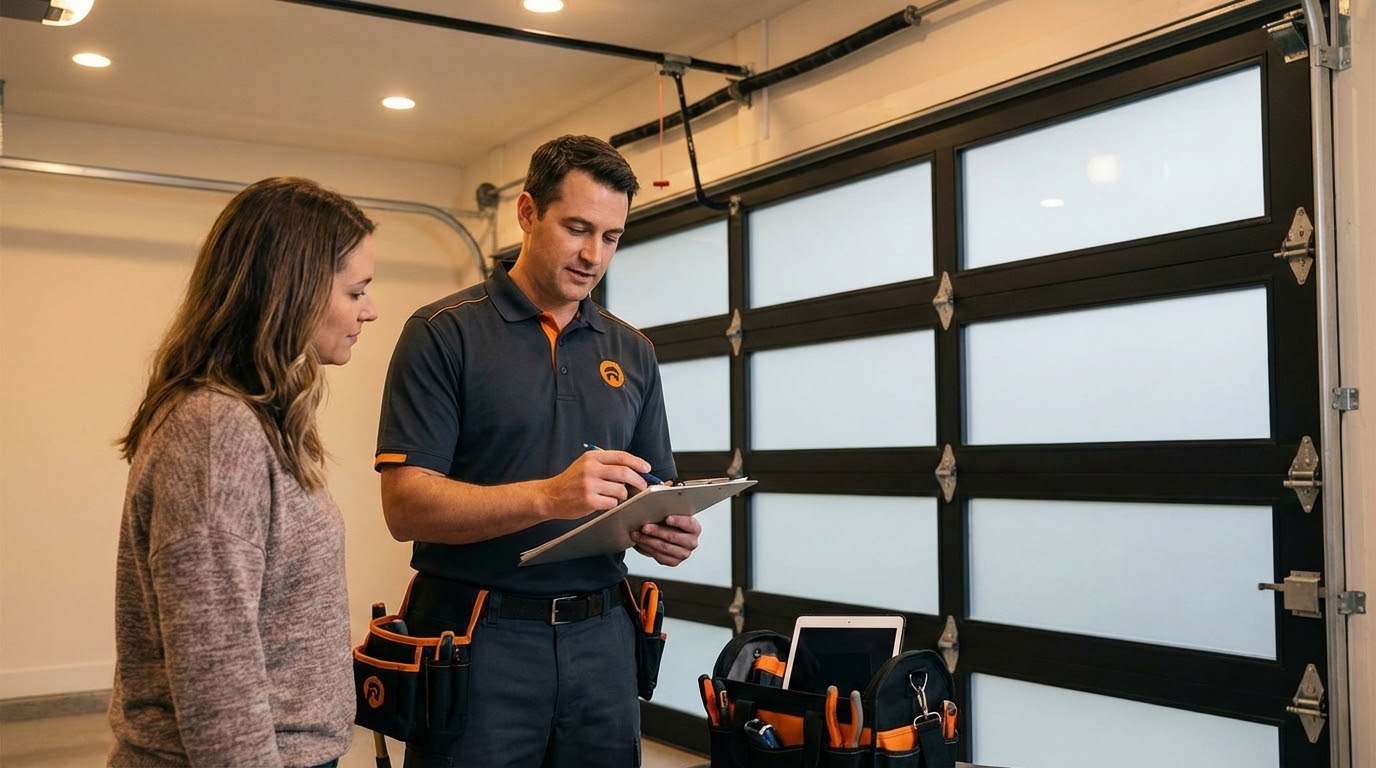
Texas Pros Garage Doors provides the expertise, tools, and safety training needed for complex repairs. Their technicians can quickly diagnose issues that might take homeowners hours to identify, and they complete repairs safely and efficiently.
What Safety Standards Govern Garage Door Opener Requirements?
Federal regulations and industry standards establish minimum safety requirements for automatic garage door openers sold in the United States. Understanding these standards helps you recognize whether your system meets current safety expectations.
The Consumer Product Safety Commission requires all residential garage door openers to include entrapment protection features. Primary protection typically consists of the auto-reverse mechanism that stops and reverses the door when it contacts an obstruction. Secondary protection, required since 1993, usually takes the form of photoelectric sensors or edge sensors that detect obstructions before contact occurs.
UL 325, the industry standard for garage door operators, specifies detailed requirements for these safety features. If your opener was manufactured before 1993, it likely lacks secondary entrapment protection and should be considered for replacement. Modern openers meeting current UL 325 requirements provide significantly improved safety compared to older units.
Ortal Peretz
Google Review
“Called on a Sunday evening when my opener stopped working. They came out the same night and got everything working again. Outstanding service!”
Frequently Asked Questions About Garage Door Maintenance
Ready to Ensure Your Door Operates Safely?
Professional maintenance protects your family and extends the life of your garage door system
(210) 469-9003
Schedule Your Tune-Up
Upfront Pricing
Satisfaction Guaranteed
Regular maintenance protects your family, extends the life of your garage door system, and prevents the inconvenience of unexpected failures. While many tasks are accessible to homeowners, professional expertise ensures that all components receive proper attention and that potential problems are identified before they become emergencies.
Whether you need a routine maintenance inspection, have noticed concerning symptoms with your door, or simply want peace of mind knowing your system meets current safety standards, professional service makes a difference. Have questions about your garage door maintenance needs or ready to schedule service? Contact Texas Pros Garage Doors today to discuss how we can help keep your garage door operating at its best.

Our Garage Door Services in San Antonio
Garage Door Repair | New Garage Door Installation | Spring Replacement | Panel Replacement | Rollers Replacement | Openers Service | Fix Broken Cables | Fix Torsion Springs | Fix Bent Track
Contact us or call (210) 469-9003 for a free estimate!
Recent Comments