
Estimated reading time: 14 minutes
Your garage door is one of the largest moving components in your home. It operates multiple times daily, yet most homeowners rarely think about the intricate system working behind each open and close cycle. Understanding the various garage door parts helps you recognize early warning signs of wear, communicate effectively with technicians, and make informed decisions about repairs or upgrades. For homeowners in San Antonio, TX, where extreme heat and humidity can accelerate component wear, this knowledge becomes especially valuable.
This comprehensive guide breaks down every essential door component, explains how each part functions within the larger system, and helps you identify when professional attention is needed. Whether you hear an unusual noise, notice slower operation, or simply want to understand what keeps your door running smoothly, this resource provides the foundation you need.
Key Takeaways
- Garage door systems consist of three interdependent categories: door structure, movement system, and balance/lifting mechanism that all work together
- Springs are the most dangerous components and should never be serviced by homeowners due to extreme tension that can cause severe injury
- Regular maintenance including visual inspection and lubrication every six months extends component lifespan significantly
- Photo eye safety sensors are federally mandated on all openers since 1993 and must be properly aligned for safe operation
- Professional service is required for any work involving springs, cables, bottom brackets, or drums due to stored energy hazards
▼
- What Makes a Garage Door More Than Just a Door?
- How Do Door Panels Form the Foundation?
- What Role Does the Track System Play?
- How Do Rollers Enable Smooth Travel?
- What Function Do Hinges Serve?
- Why Are Springs the Powerhouse?
- How Do Cables Connect Springs to Your Door?
- What Components Make Up the Opener System?
- Why Are Photo Eye Sensors Required?
- How Do Drums and Pulleys Transfer Force?
- What Brackets and Mounts Hold Everything Together?
- How Does Weatherstripping Protect Your Garage?
- What Issues Signal Professional Service Needed?
- Which Maintenance Tasks Extend Lifespan?
- Frequently Asked Questions
Need Expert Garage Door Service in San Antonio?
Our certified technicians diagnose and repair all garage door components with upfront pricing and written warranties.
(210) 469-9003
Call Now for Fast Service
4.8 Star Rating
24/7 Emergency Service
What Makes a Garage Door More Than Just a Door?
Many people view their garage door as a simple barrier that goes up and down. In reality, it functions as a sophisticated mechanical system with dozens of interconnected parts working in precise coordination. The door itself represents only one component within a larger assembly that includes structural elements, movement systems, counterbalance mechanisms, and safety features.
Think of your garage door system as three distinct but interdependent categories. The first involves the door structure: panels, hinges, and weatherstripping that form the physical barrier. The second encompasses the movement system: tracks, rollers, and brackets that guide motion. The third includes the balance and lifting mechanism: springs, cables, and drums that manage the heavy lifting. When any single component fails, the entire system suffers.
How Do Door Panels Form the Foundation of Your System?
Door panels, also called sections, are the large visible segments that make up the door face. A typical residential garage door contains four to five horizontal panels connected by hinges, allowing them to bend and follow the curved track path from vertical to horizontal position.
Panel materials vary significantly and affect durability, insulation, and maintenance requirements. Steel panels offer excellent strength and come in various thicknesses measured in gauge numbers, where lower numbers indicate thicker, more durable steel. Wood panels provide classic aesthetics but require more maintenance in humid climates. Aluminum panels resist rust but dent more easily. Fiberglass panels allow light transmission but can become brittle over time.
Insulation levels within panels range from non-insulated single-layer construction to triple-layer designs with polyurethane or polystyrene cores. In San Antonio summers, insulated panels help regulate garage temperatures and reduce energy costs when the garage connects to living spaces.
Why Do Damaged Panels Create Bigger Problems?
A dented or warped panel might seem like a cosmetic issue, but structural damage affects the entire door operation. When a panel loses its flat profile, it can pull the door out of alignment with the tracks, causing rollers to bind or wear unevenly. This misalignment places additional stress on hinges, cables, and the opener motor.
Common panel damage sources include vehicle impacts, fallen objects, severe weather, and age-related deterioration like rust or delamination. Addressing panel damage promptly prevents cascading failures throughout the system. In some cases, individual panels can be replaced without requiring a complete door replacement, though color matching on older doors presents challenges.
What Role Does the Track System Play in Door Movement?
The track system serves as the railway that guides your door through its opening and closing path. This system consists of two primary components: vertical tracks mounted on either side of the door opening and horizontal tracks that extend into the garage ceiling space.
Vertical tracks handle the initial lift phase, guiding the door straight up from ground level. As the door rises, it transitions through a curved section into the horizontal tracks, which support the door in its open position parallel to the ceiling. The precision of this track alignment directly impacts how smoothly and quietly your door operates.
Track materials are typically galvanized steel to resist corrosion. The interior channel must remain clean and properly lubricated to prevent roller binding. Even minor misalignment can cause the door to stick, make grinding noises, or place excessive strain on the opener motor.
What Causes Tracks to Become Misaligned?
Several factors can knock tracks out of their proper position. Physical impact from a vehicle backing into the door or bumping the track with equipment represents the most obvious cause. However, less dramatic issues also contribute to misalignment over time.
Mounting hardware loosens gradually from the constant vibration of door operation. Brackets that secure tracks to the wall or ceiling framing can shift if fasteners work loose. Temperature fluctuations cause metal expansion and contraction that stress connections. In some cases, foundation settling or structural movement in the building itself pulls track mounting points out of position.
Regular visual inspection of track alignment helps catch problems early. Look for gaps between the roller and track edge, listen for scraping sounds, and watch for the door pulling to one side during operation.
How Do Rollers Enable Smooth Door Travel?
Rollers are the small wheels attached to brackets on each side of your door panels. These wheels ride inside the track channel, supporting the door weight while allowing smooth movement. Most residential doors use ten to twelve rollers distributed across the panels.
Roller construction varies significantly in materials and quality. Steel rollers with exposed ball bearings represent the most basic and economical option but tend to be noisy and require frequent lubrication. Nylon rollers operate much more quietly and resist corrosion, making them popular upgrades. Premium nylon rollers with sealed ball bearings combine quiet operation with extended service life, often lasting twice as long as standard options.
Roller stem length must match your track specifications. Standard residential tracks use rollers with two-inch stems, while commercial or heavy-duty installations may require longer stems. Using incorrect roller sizes creates binding, excessive wear, and potential safety hazards.
When Should Rollers Be Replaced?
| Warning Sign | Possible Cause | Action Needed |
|---|---|---|
| Grinding or squealing noise during operation | Worn bearings or lack of lubrication | Lubricate first; replace if noise persists |
| Visible cracks or chips in roller wheels | Age-related material degradation | Replace affected rollers promptly |
| Door wobbles or shakes during travel | Uneven roller wear or loose stems | Inspect all rollers; replace worn units |
| Roller appears to drag rather than roll | Seized bearings or debris in track | Clean track; replace frozen rollers |
Most homeowners can safely replace rollers that are not connected to the bottom bracket assembly. However, bottom bracket rollers connect to the cable system under spring tension and require professional handling.
What Function Do Hinges Serve Beyond Connecting Panels?
Hinges connect adjacent door panels and allow them to pivot as the door bends around the track curve. Beyond this basic function, hinges also serve as mounting points for rollers, positioning each roller at the correct distance from the panel edge to maintain proper track engagement.
Hinge numbering indicates the offset distance between the hinge centerline and the roller stem. This offset positions rollers correctly within the track at different points along the door. Lower-numbered hinges with smaller offsets mount near the door bottom, while higher-numbered hinges with larger offsets mount progressively higher on the door.
Using incorrect hinge numbers causes rollers to ride too close to or too far from the track edge, creating binding, excessive noise, and accelerated wear. When replacing a hinge, always match the stamped number on the original component.
How Can You Identify Different Hinge Types?
Residential garage doors typically use commercial hinges stamped with numbers from one through five, though not all numbers appear on every door. The numbering corresponds to panel position and the specific offset required at that location.
Standard hinges work for most residential doors up to approximately 200 pounds. Heavy-duty hinges feature thicker gauge steel and reinforced pivot points for heavier insulated doors or doors exceeding standard dimensions. Some high-cycle commercial applications use hinges with grease fittings for extended lubrication intervals.
Common hinge failures include bending at the pivot point from door flex, cracking around mounting holes from vibration fatigue, and roller stem hole elongation from repeated stress. Bent or cracked hinges should be replaced immediately to prevent further damage to panels and tracks.
Why Are Springs Considered the Powerhouse of Your Door?
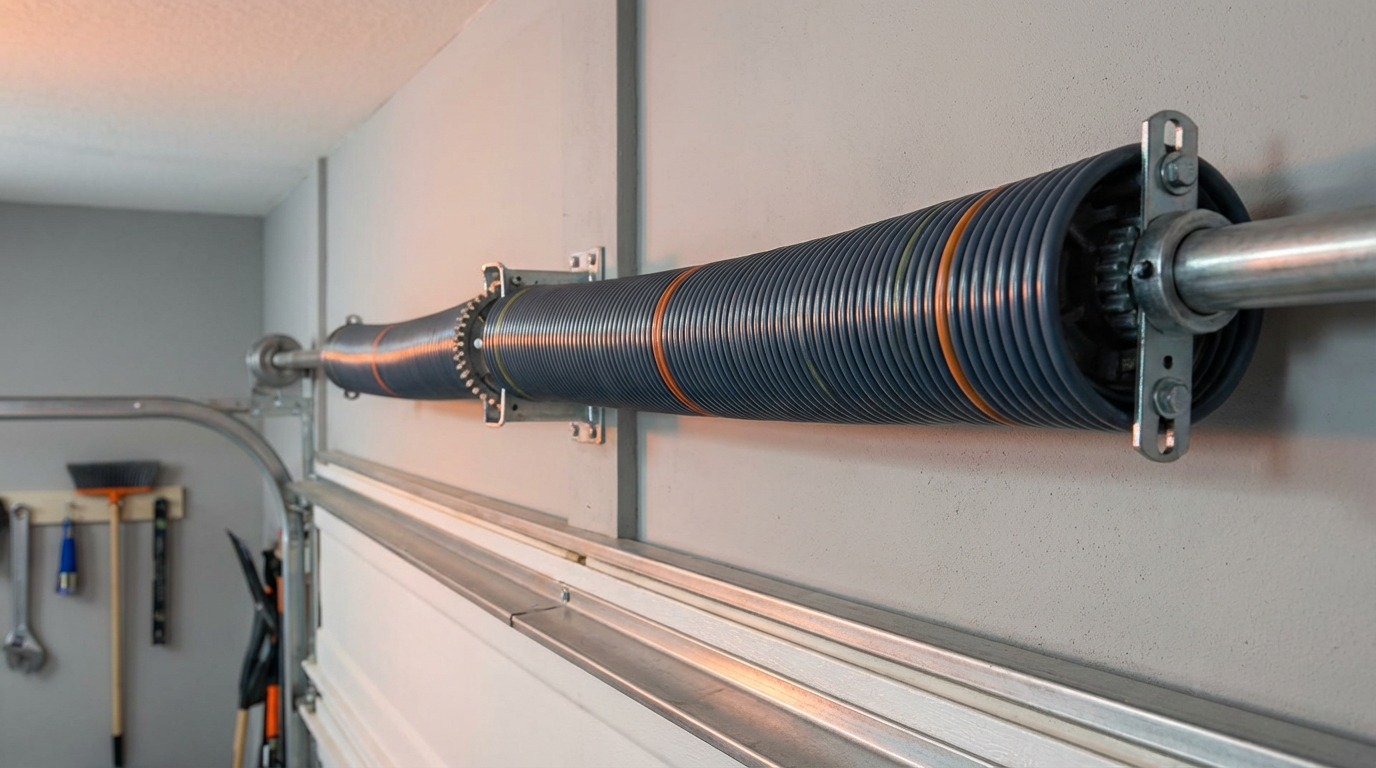
Springs counterbalance the weight of your garage door, making it possible to lift a 150 to 400-pound door with minimal effort. Without properly functioning springs, the opener motor could not lift the door alone, and manual operation would require significant strength.
Two spring types dominate residential applications. Torsion springs mount on a shaft above the door opening and use rotational force to lift the door. Extension springs mount alongside the horizontal tracks and stretch to store energy when the door closes. Both types store tremendous potential energy, making them the most dangerous components in your garage door system.
Torsion systems have become the industry standard for new installations due to their smoother operation, longer lifespan, and improved safety characteristics. Extension springs remain common on older homes and budget installations but require safety cables to contain the spring if it breaks.
What Makes Spring Repair Dangerous for Homeowners?
Spring systems operate under extreme tension capable of causing severe injury or death if mishandled. Medical literature documents cases of catastrophic eye injuries, broken bones, and lacerations from spring failures during improper repair attempts. According to research published in peer-reviewed medical journals, garage door springs can dislodge with enough force to cause open globe eye injuries requiring emergency surgical intervention.
The Consumer Product Safety Commission has established federal requirements for garage door safety features specifically because of the injury potential these systems present. Professional technicians use specialized tools, safety protocols, and training to manage spring tension safely. Attempting DIY spring adjustment or replacement without this expertise creates unacceptable risk.
Texas Pros Garage Doors maintains crews equipped and trained specifically for spring service. Our technicians assess spring condition during every service call, identifying wear patterns that indicate impending failure before a dangerous break occurs.
How Do Cables Connect Springs to Your Door?
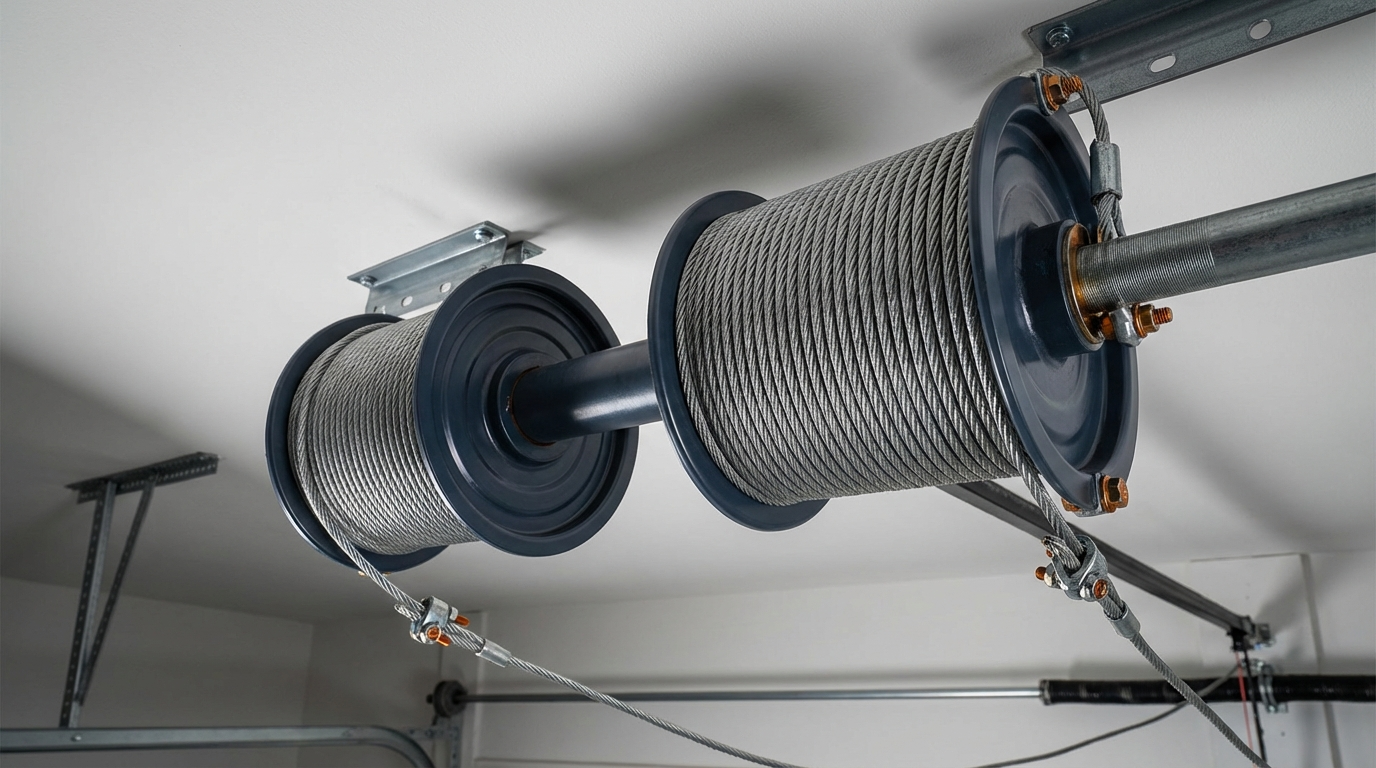
Lift cables transfer the counterbalance force from your spring system to the door itself. On torsion systems, cables wind around drums at each end of the torsion shaft, unwinding as the door closes and winding as it opens. On extension systems, cables route through pulleys and connect to brackets on the door bottom.
Cable construction typically consists of galvanized aircraft cable rated for the specific door weight. Over time, cables can develop fraying, kinking, or rust that weakens their load capacity. A cable failure during operation can cause the door to drop suddenly or hang at a dangerous angle.
Visual inspection of cables should occur regularly. Look for broken strands poking out from the cable surface, rust discoloration, or flattened sections where the cable has kinked. Any visible damage warrants immediate professional evaluation.
Worried About Your Garage Door Springs or Cables?
Do not risk injury with DIY repairs. Our trained technicians handle dangerous components safely with proper tools and expertise.
What Components Make Up the Automatic Opener System?
The automatic garage door opener adds convenience and security to your door operation. This system includes several distinct components that work together to lift, lower, and secure your door on command.
The motor unit, sometimes called the head or powerhead, mounts to your garage ceiling and contains the electric motor, drive mechanism, and control electronics. Drive types include chain drive units that use a metal chain similar to a bicycle chain, belt drive units that use a reinforced rubber belt for quieter operation, screw drive units that use a threaded steel rod, and direct drive units where the motor itself travels along a stationary chain.
Each drive type offers different trade-offs between noise level, maintenance requirements, speed, and cost. Belt drive openers operate most quietly, making them ideal when living spaces are adjacent to or above the garage. Chain drive units cost less but generate more noise during operation.
How Do Remotes and Wall Controls Communicate with Your Opener?
Modern garage door openers respond to commands from multiple sources. Wall-mounted control panels provide push-button operation from inside the garage and often include features like lighting control, lock-out switches, and vacation mode settings.
Wireless remotes use radio frequency signals to communicate with a receiver in the opener unit. Current systems employ rolling code technology that changes the transmitted code with each use, preventing code capture and replay by thieves. Older fixed-code systems should be upgraded for improved security.
Smart garage door openers integrate with home automation systems and smartphone applications, allowing remote monitoring and control from anywhere with internet connectivity. These systems can send alerts when the door opens or closes, allow temporary access codes for visitors, and integrate with voice assistants. Smart garage door opener installations represent one of the most requested upgrades among San Antonio homeowners seeking enhanced convenience and security.
Why Are Photo Eye Sensors Required on Every Opener?
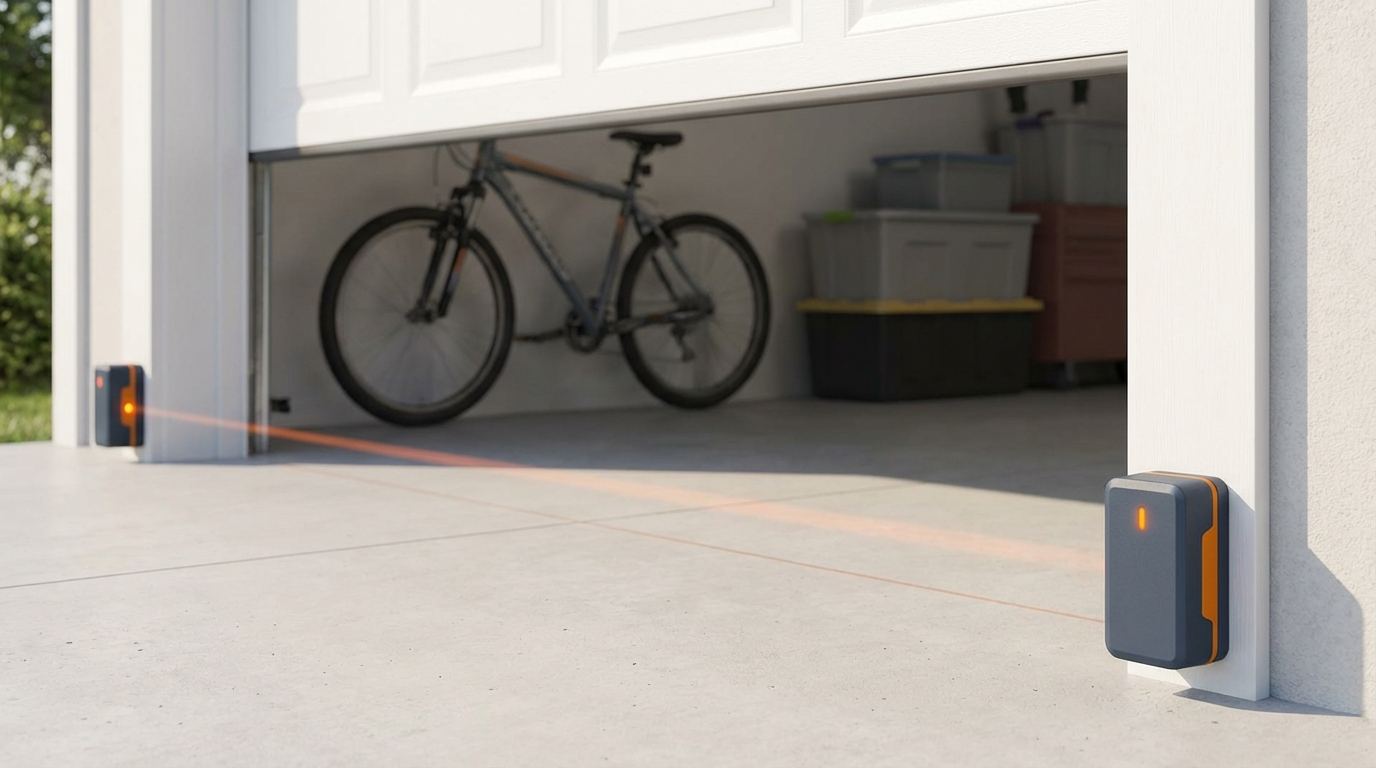
Photoelectric safety sensors, commonly called photo eyes, mount near the floor on each side of your garage door opening. These sensors project an invisible infrared beam across the door path. If anything interrupts this beam while the door is closing, the opener immediately stops and reverses direction.
Federal safety regulations have required entrapment protection devices on all residential garage door openers manufactured since January 1993. The Consumer Product Safety Commission mandated these protections after documenting numerous injuries and deaths, particularly among children, from doors that did not detect obstructions.
Photo eye sensors require proper alignment to function correctly. Sensor lenses must face each other directly, and the mounting brackets must remain stable. Dirt, spider webs, condensation, and direct sunlight can all interfere with sensor operation. When sensors detect a problem or misalignment, many openers will only close while you hold the wall button continuously, bypassing the automatic close feature for safety.
What Other Safety Features Protect Against Entrapment?
Beyond photo eye sensors, modern openers include additional safety mechanisms. The mechanical reversal system detects resistance when the door contacts an obstruction during closing. Pressure sensors in the opener measure the force required to move the door; if resistance exceeds the programmed threshold, the door stops and reverses.
Timer-to-close features can be convenient but require careful consideration. UL 325 safety standards mandate specific requirements for automatic closing functions, including audible and visual warnings before the door begins moving. Systems that close automatically without these safeguards may not meet current safety codes.
The emergency release cord, typically a red handle hanging from the opener rail, disconnects the door from the automatic opener, allowing manual operation. This feature proves essential during power outages or opener failures. Understanding how to use this release safely prevents damage to the opener mechanism and potential injury from uncontrolled door movement.
How Do Drums and Pulleys Transfer Spring Force?
Cable drums mount at each end of the torsion spring shaft above your door. These grooved cylinders wind and unwind the lift cables as the shaft rotates, translating spring force into vertical door movement. Drum grooves must precisely match cable diameter to prevent slipping or binding.
Extension spring systems use pulleys instead of drums. These wheel assemblies guide cables through their routing path, changing cable direction while minimizing friction. Pulleys mount at fixed points and must spin freely for proper operation. Seized or damaged pulleys create uneven cable wear and erratic door movement.
Both drums and pulleys connect directly to the spring-tensioned cable system. Any service involving these components falls into the professional-only category due to the stored energy involved.
What Brackets and Mounts Hold Everything Together?
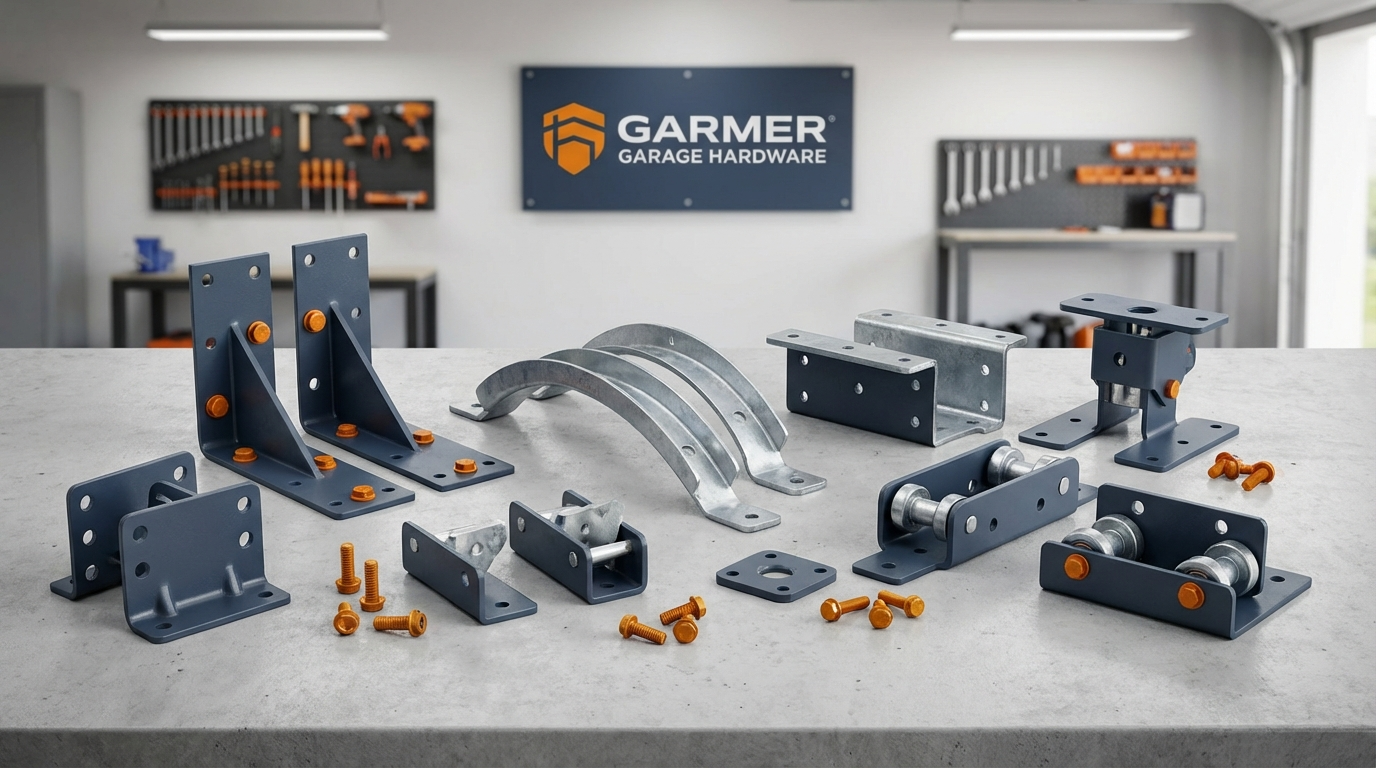
Various brackets secure your garage door components in their proper positions. Understanding bracket types helps during troubleshooting and when communicating with service technicians.
| Bracket Type | Location | Function |
|---|---|---|
| Bottom bracket | Lower corners of bottom panel | Anchors lift cables; supports bottom roller |
| Top fixture | Upper corners of top panel | Connects door to opener arm; secures top rollers |
| Track hangers | Horizontal track sections | Suspends tracks from ceiling joists |
| Flag bracket | Track curve transition | Secures curved track section to vertical track |
| Spring anchor bracket | Center above door opening | Secures torsion spring shaft; absorbs spring force |
The bottom bracket deserves special attention because it connects to the lift cable under full spring tension. This bracket should never be loosened or removed by anyone without proper training and tools. Even experienced technicians treat bottom brackets with respect due to the stored energy they contain.
How Does Weatherstripping Protect Your Garage?
Weatherstripping creates seals around the door perimeter to block air, water, pests, and debris from entering your garage. The bottom seal, also called an astragal, attaches to the bottom panel edge and compresses against the floor when closed.
Perimeter weatherstripping mounts in channels along the sides and top of the door frame, creating a flexible seal against the closed door surface. This stripping wears over time and may require periodic replacement to maintain effectiveness.
In San Antonio’s climate, effective weatherstripping significantly impacts garage comfort and energy efficiency. Gaps in sealing allow hot summer air to infiltrate, raising temperatures in the garage and any connected living spaces. Proper weatherstripping also prevents rainwater intrusion during storms and discourages insects and rodents from finding entry points.
What San Antonio Homeowners Say
Robert Parshall
Google Review
“The spring on my garage door broke and they were able to come out within an hour. Very professional service and fair pricing.”
Leon McPherson
Google Review
“Excellent experience from start to finish. They helped me select the right door design and the installation was completed in one day.”
Alyssa Silva
Google Review
“My garage door spring broke on a Saturday morning. They came out the same day and fixed it quickly. Great service!”
Adam Mendoza
Google Review
“Professional commercial garage door repair. They understood the urgency for our business and minimized our downtime.”
What Issues Signal the Need for Professional Service?
While understanding door components helps you maintain your system, certain problems require professional intervention. Recognizing these situations protects both your safety and your investment.
Any issue involving springs, cables, bottom brackets, or drums should prompt an immediate call to a qualified technician. These components operate under dangerous tension levels. Similarly, problems with the opener circuit board, motor, or drive mechanism typically require professional diagnosis and specialized replacement parts.
Signs that warrant professional evaluation include the door falling faster than normal during closing, visible gaps between the door and frame that appeared suddenly, the door reversing for no apparent reason, loud banging noises from the spring area, and the opener running but failing to move the door. While understanding these door components can help you identify problems, many repairs, especially involving springs or frayed cables, are dangerous and best left to professionals. For comprehensive repair services in San Antonio, TX, including emergency needs, you can always rely on our expert team.
Which Maintenance Tasks Extend Component Lifespan?
Regular maintenance keeps your garage door operating safely and extends the service life of expensive components. Many tasks require only basic tools and a few minutes of attention.
Visual inspection should occur monthly. Look at springs for rust or gaps in the coils. Check cables for fraying. Examine rollers for wear. Watch the door travel for smooth, even movement. Listen for new noises that indicate developing problems.
Lubrication every six months keeps moving parts operating smoothly. Apply a silicone-based lubricant to rollers, hinges, springs, and the opener rail or chain. Avoid using grease or oil-based products that attract dirt and create gummy buildup. Wipe excess lubricant to prevent drips on vehicles parked below.
Test safety features quarterly. Place a two-by-four board flat on the floor in the door path and activate the close function. The door should contact the board and immediately reverse. Test photo eye sensors by waving an object through the beam during closing; the door should stop and reverse. If either test fails, discontinue automatic operation until repairs are completed.
How Does Texas Pros Garage Doors Support San Antonio Homeowners?
| Homeowner Need | How We Help |
|---|---|
| Emergency breakdown outside business hours | 24/7 emergency service with rapid response times |
| Uncertainty about repair versus replacement | Honest assessment with options at different price points |
| Concern about safety during spring service | Trained technicians with proper equipment and insurance |
| Interest in upgrading to smart controls | Complete smart opener installation with app setup assistance |
| Need for parts on older door models | Extensive parts inventory and sourcing network |
Our technicians arrive equipped to diagnose and repair most issues in a single visit. We explain findings clearly, provide upfront pricing before beginning work, and stand behind our repairs with written warranties.
Ortal Peretz
Google Review
“Called on a Sunday evening when my opener stopped working. They came out the same night and got everything working again. Outstanding service!”
Frequently Asked Questions About Garage Door Parts
Springs fail most frequently because they operate under constant stress and have a finite cycle life. Most residential torsion springs are rated for approximately 10,000 cycles, which translates to roughly seven to ten years of typical use. Extension springs generally have shorter lifespans. Rollers represent the second most common failure point due to bearing wear.
You can safely replace most rollers except those mounted in the bottom brackets at the door corners. Those bottom corner rollers connect to the lift cable system under spring tension and require professional service. For other roller positions, you can remove the hinge, swap the roller, and reinstall without encountering high-tension components.
This behavior indicates your photo eye safety sensors are blocked, misaligned, or malfunctioning. The opener defaults to constant-pressure operation when it cannot confirm the safety beam is intact. Check for obstructions blocking the sensors, clean the lenses, and verify both sensor indicator lights show solid illumination. If problems persist, the sensors or wiring may need replacement.
The hinge number is stamped into the metal surface of the hinge, usually near the pivot point or roller stem hole. Match this number exactly when ordering replacements. If the stamp is illegible, count the hinge position from the bottom of the door and consult a parts reference guide, or photograph the hinge location and contact a supplier for assistance.
Torsion springs mount horizontally above the door on a central shaft and use twisting force to lift the door. Extension springs mount alongside the horizontal tracks and stretch to store energy. Torsion systems provide smoother operation, longer service life, and better safety characteristics. Extension systems cost less initially but require safety cables to contain broken springs.
Lubricate moving parts every six months under normal use. If you operate your door more than average or notice squeaking between intervals, more frequent lubrication helps. Apply silicone-based spray lubricant to rollers, hinges, springs, and the opener drive mechanism. Avoid petroleum-based products that attract debris.
Ready to Address Your Garage Door Concerns?
Understanding your garage door parts empowers you to maintain your system, but complex repairs require professional expertise and safety equipment.
(210) 469-9003
Get Expert Help Today
Upfront Pricing
Written Warranties
If you have concerns about any component in your garage door system, or if you need immediate assistance with a malfunction, our team is ready to help. We serve homeowners throughout San Antonio and surrounding areas with responsive, professional service you can trust. Contact Texas Pros Garage Doors today to schedule an inspection or request emergency repair service.

Recent Comments