
Estimated reading time: 12 minutes
Your garage door is one of the largest entry points into your home. Many homeowners focus on securing front doors and windows while overlooking this critical vulnerability. Burglars know this and often target garages as their preferred point of entry. A secure garage protects not only your vehicles and stored valuables but also prevents direct access to your living space. Understanding common vulnerabilities and taking proactive steps can significantly reduce your risk of becoming a victim.
This comprehensive guide covers essential garage door security tips that every homeowner should implement. From simple habits like securing your remote control to advanced measures like upgrading to rolling code technology, these strategies create multiple layers of protection. Whether your garage is attached to your home or stands as a separate structure, these recommendations will help you establish a more secure environment for your family and belongings.
- Never leave garage door remotes visible inside your vehicle as thieves specifically target them during break-ins
- Secure the emergency release mechanism with a shield or guard without disabling it completely for safety
- Upgrade older fixed-code openers to modern rolling code technology that generates billions of unique codes
- The interior door between your garage and home deserves equal security attention as your front door
- Motion-activated exterior lighting combined with security cameras creates powerful deterrence against intruders
▼
- Why Do Burglars Target Garage Doors as Entry Points?
- What Happens When You Leave Your Garage Remote in the Car?
- How Do Thieves Exploit the Emergency Release Mechanism?
- Is Using a Zip Tie on the Emergency Release a Safe Solution?
- What Security Steps Should You Take Before Extended Travel?
- How Should You Secure the Door Between Your Garage and Home?
- What Role Does Exterior Lighting Play in Garage Security?
- Does Installing a Camera Actually Prevent Garage Break-Ins?
- How Can Garage Windows Compromise Your Security?
- What Is Rolling Code Technology and Why Does It Matter?
- How Do Gaps and Weatherstripping Affect Garage Security?
- What Security Features Should a Modern Garage Door Opener Include?
- When Should You Call a Professional for Garage Door Security?
- Common Mistakes That Leave Your Garage Vulnerable
- How Does Professional Maintenance Improve Long-Term Security?
- Frequently Asked Questions About Garage Door Security
Our expert technicians can assess your garage door vulnerabilities and recommend security upgrades. Available 24/7 for San Antonio homeowners.
(210) 469-9003
Schedule Free Security Assessment
24/7 Emergency Service
Serving San Antonio Since 2006
Why Do Burglars Target Garage Doors as Entry Points?
Garages present an attractive target for several reasons. They typically contain valuable items such as tools, bicycles, sports equipment, and sometimes additional vehicles. More importantly, an attached garage provides a concealed entry point directly into your home. Once inside the garage, intruders can work on breaching the interior door without being observed from the street or by neighbors.
Common weaknesses that burglars exploit include outdated opener systems with fixed codes, unsecured emergency release mechanisms, and poorly protected service doors. Many homeowners leave garage door remotes visible inside their vehicles, essentially handing criminals easy access. Inadequate lighting around the garage area also creates opportunities for intruders to work undetected during evening hours. According to law enforcement reports from multiple jurisdictions, stolen garage door openers have become a common tool for subsequent home invasions.
What Happens When You Leave Your Garage Remote in the Car?
Leaving your garage door remote visible inside your vehicle creates a significant security risk. If someone breaks into your car, they gain immediate access to your garage and potentially your entire home. This scenario becomes even more dangerous when vehicle registration documents containing your home address are also present. The combination gives criminals everything they need to locate and enter your property.
Police departments across the country have issued warnings about this specific threat. The Moreno Valley Police Department advises homeowners to keep garage door remotes out of plain view and to immediately change or reset the opener code if a remote is stolen or cannot be found. Similarly, Suffield Police in Connecticut warned residents about thieves specifically targeting garage door openers during vehicle break-ins. The solution involves either removing the remote from your vehicle entirely, using a keychain-sized remote that stays with your keys, or switching to a smartphone-based opener system that requires authentication.
How Do Thieves Exploit the Emergency Release Mechanism?
The emergency release lever inside your garage allows manual operation during power outages. However, this safety feature can become a security vulnerability. Burglars use a simple technique involving a wire or coat hanger inserted through a gap at the top of the door. By hooking the emergency release lever, they can disengage the opener and lift the door manually within seconds.
The Stop Richmond Burglary initiative describes this method in detail while emphasizing an important safety consideration. You should never completely disable the emergency release because it serves a critical function during emergencies such as fires or power failures when you need to exit quickly. Instead, consider installing a shield that blocks access to the lever from outside while still allowing interior activation. Another option involves shortening or repositioning the release cord so it cannot be reached with a wire through the door gap. CBS Sacramento reported that Roseville Police specifically recommend securing the emergency release as part of their break-in prevention guidance.
Is Using a Zip Tie on the Emergency Release a Safe Solution?
Some homeowners use zip ties or small padlocks to prevent unauthorized activation of the emergency release. This approach can provide temporary protection but introduces potential safety hazards. In an actual emergency requiring rapid exit through the garage, a secured release mechanism could delay your escape. This becomes particularly dangerous during fires when every second matters.
If you choose this method as a short-term measure, ensure every family member understands how to quickly remove the restraint from inside. Test the process regularly to confirm it works smoothly under stress. However, upgrading to a purpose-built shield or guard designed for this specific application provides better long-term protection without compromising your ability to exit during emergencies. Professional garage door technicians can recommend and install solutions that balance security with safety requirements.
What Security Steps Should You Take Before Extended Travel?
Preparing your garage for extended absence requires additional precautions beyond daily security habits. Physical locks that prevent door movement provide protection even if someone obtains your opener code or remote. Many garage door systems include a vacation or lock mode that disables remote operation entirely. Activating this feature before departure adds another layer of security.
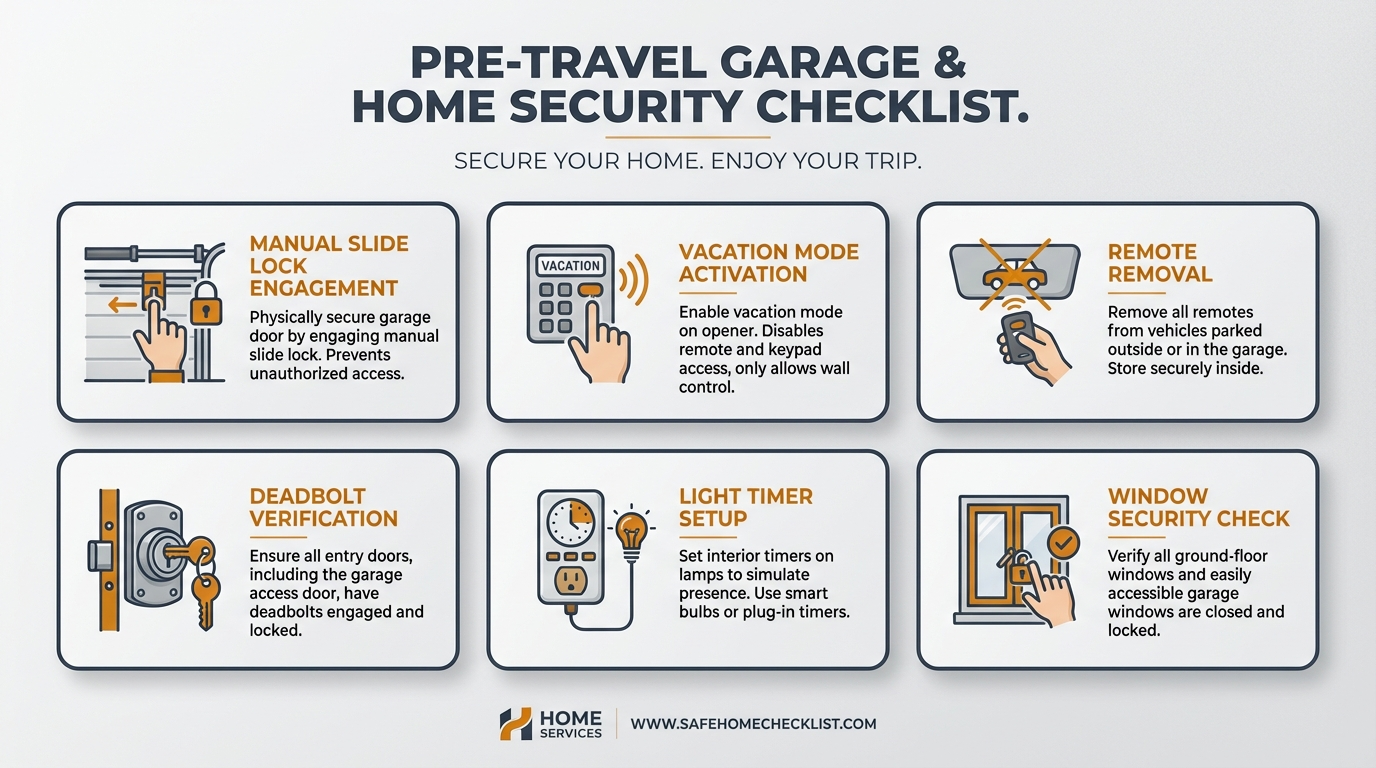
| Pre-Travel Security Action | Time Required | Protection Level |
|---|---|---|
| Engage manual slide lock on track | 30 seconds | High |
| Activate vacation mode on opener | 1 minute | Medium |
| Remove remote from vehicle | 10 seconds | High |
| Verify service door deadbolt engaged | 30 seconds | High |
| Set light timers for garage area | 5 minutes | Medium |
| Confirm windows are covered and secured | 2 minutes | Medium |
Common mistakes during travel preparation include leaving the remote in a parked vehicle, forgetting to secure the interior service door, and leaving ladders or tools accessible near the garage. Remove any items from your yard that could assist in climbing or prying. Ask a trusted neighbor to occasionally check that your garage door remains closed during your absence.
How Should You Secure the Door Between Your Garage and Home?
The interior door connecting your garage to your living space deserves the same attention as your front entry door. This door represents your last line of defense if someone successfully enters the garage. Unfortunately, many builders install hollow-core doors or basic locks in this location, creating a weak point in your home security.
Evaluate your current door by checking its core construction. A solid wood or metal door provides substantially more resistance than a hollow-core alternative. Examine the door frame and strike plate for signs of weakness. Reinforcing the strike plate with longer screws that reach the wall studs significantly increases kick-in resistance. Install a quality deadbolt if one is not already present. Consider adding a door reinforcement kit that strengthens the entire frame assembly.
Quick Upgrades Versus Comprehensive Improvements
Budget-friendly improvements include replacing short strike plate screws with three-inch alternatives, adding a door reinforcement plate, and installing a door barricade for nighttime use. More comprehensive upgrades involve replacing the entire door with a fire-rated steel unit, installing a smart lock with activity monitoring, and adding a door sensor connected to your home security system. The investment level depends on your overall security priorities and the current condition of your existing door.
What Role Does Exterior Lighting Play in Garage Security?
Adequate lighting serves as one of the most effective deterrents against break-in attempts. Burglars prefer working in darkness where their activities go unnoticed. Motion-activated lights that suddenly illuminate catch intruders off guard and increase their risk of being seen by neighbors or captured on security cameras. Kansas City police specifically recommend good lighting as a key element of burglar deterrence.
Strategic placement matters more than total brightness. Focus on illuminating potential entry points including the main garage door, any side service doors, and windows. Cover approach paths that someone might use when approaching your garage. Eliminate dark corners and shadowed areas near the structure. Motion sensor lights work better than always-on fixtures because the sudden activation draws attention to movement in the area.
Comparing Timer-Based and Motion-Activated Lighting
Timer-controlled lights provide consistent illumination during set hours regardless of activity. This approach works well for general deterrence and can simulate occupancy during absences. Motion-activated lights remain dark until triggered, creating a surprise effect when someone approaches. The ideal configuration combines both approaches with timer-controlled ambient lighting supplemented by brighter motion-activated floods aimed at entry points and approach paths.
Our technicians identify vulnerabilities and recommend cost-effective solutions tailored to your property.
Does Installing a Camera Actually Prevent Garage Break-Ins?
Security cameras alone may not prevent a determined burglar, but visible cameras combined with other measures significantly increase deterrence. The real value comes from the combination of recording capability, real-time alerts, and the psychological impact on potential intruders who know their actions are being documented. Modern systems can send immediate notifications to your smartphone when motion is detected.
Position at least one camera to capture activity at the main garage door and another covering any side entry points. Internal cameras pointing toward the door from inside the garage record anyone who manages to enter. Exterior cameras covering the driveway and approach paths provide early warning of suspicious activity. Cloud storage ensures footage remains available even if the physical camera is damaged or stolen during a break-in attempt.
How Can Garage Windows Compromise Your Security?
Windows in garage doors serve legitimate purposes including natural light and aesthetic appeal. However, they also allow potential intruders to survey the contents of your garage and determine whether vehicles are present. This information helps burglars identify when homeowners are away and whether valuable items are worth the risk of entry.

Address this vulnerability without sacrificing natural light by applying frosted film or privacy coating to window surfaces. These treatments allow light transmission while blocking clear views into the interior. Reinforcing the glass itself with security film makes breaking through more difficult and time-consuming. For garages containing particularly valuable items, consider installing decorative security bars or replacing glass panels with solid alternatives that match your door design.
What San Antonio Homeowners Say
Google Review
“The spring on my garage door broke and they were able to come out within an hour. Very professional service and fair pricing.”
Google Review
“Excellent experience from start to finish. They helped me select the right door design and the installation was completed in one day.”
Google Review
“My garage door spring broke on a Saturday morning. They came out the same day and fixed it quickly. Great service!”
Google Review
“Professional commercial garage door repair. They understood the urgency for our business and minimized our downtime.”
What Is Rolling Code Technology and Why Does It Matter?
Rolling code technology represents a significant advancement in garage door opener security. Each time you activate your remote, the system generates a new code from billions of possibilities. This means that even if someone captures the radio signal during transmission, the recorded code becomes useless immediately afterward. The next opening requires an entirely different code that cannot be predicted.
Older fixed-code systems transmit the same signal every time. Criminals with radio frequency capture devices could theoretically record and replay these signals. While Snopes has investigated various claims about code grabber prevalence and notes that some concerns may be exaggerated, the underlying vulnerability in fixed-code systems remains real. According to Wikipedia documentation on garage door opener technology, the industry transitioned to rolling code systems specifically to address this security weakness. If your opener system is more than fifteen years old, upgrading to a modern unit with rolling code encryption significantly improves your security posture.
Signs Your System May Need Upgrading
Indicators that your garage door opener uses outdated technology include DIP switch code setting on the remote or motor unit, lack of any programming or learn button on the main unit, and operating frequencies below 300 MHz. Modern systems typically operate at 310 MHz, 315 MHz, or 390 MHz with encrypted rolling code transmission. If you cannot find documentation confirming rolling code capability, consulting a professional technician provides definitive answers about your system security.
How Do Gaps and Weatherstripping Affect Garage Security?
Visible gaps around your garage door create both security and energy efficiency problems. From a security perspective, gaps at the top of the door can allow insertion of tools to manipulate the emergency release. Side gaps may permit prying or provide leverage points for forced entry. The Department of Energy notes that if you can see daylight around a door frame, you have a leak or gap requiring attention.
Weatherstripping serves the dual purpose of sealing against weather infiltration and reducing entry points for intrusion tools. Inspect seals around all edges of your garage door including the bottom, sides, and top. Replace cracked, compressed, or missing weatherstripping promptly. The Department of Energy provides detailed guidance on selecting and installing appropriate weatherstripping for different applications. Proper sealing also improves energy efficiency by reducing air infiltration between your garage and conditioned living spaces.
| Gap Location | Security Risk | Recommended Fix |
|---|---|---|
| Top of door | Emergency release access | Top seal replacement or gap guard |
| Bottom of door | Tool insertion, pest entry | Bottom seal or threshold seal |
| Sides of door | Prying leverage points | Side weatherstripping replacement |
| Panel joints | Minimal direct risk | Flexible seal between sections |
What Security Features Should a Modern Garage Door Opener Include?
Current garage door opener technology offers numerous security and convenience features beyond basic open and close functionality. Smart openers connect to your home WiFi network and allow monitoring and control through smartphone applications. You can verify door status, receive alerts when the door opens or closes, and operate the system remotely from anywhere with internet access.
UL Solutions publishes safety standards for door and gate operators including requirements for remote closing systems. Modern compliant systems incorporate visual and auditory warnings before automatic closing to prevent injury or damage. Additional valuable features include automatic closing after a set time period, activity logs showing all door operations, and integration with broader home security systems. Battery backup ensures continued operation during power outages when you may need to access your vehicle for evacuation.
Replace your outdated fixed-code system with rolling code technology and smart home integration. Free security assessment included with every opener installation.
(210) 469-9003
Get Your Free Quote
Factory-Trained Technicians
Warranty Included
When Should You Call a Professional for Garage Door Security?
While many security improvements are suitable for do-it-yourself implementation, certain situations benefit from professional expertise. Complex repairs involving springs, cables, or track alignment carry injury risk without proper training and tools. Opener replacement requires electrical knowledge and precise installation to ensure safe and reliable operation. Security assessments by experienced technicians can identify vulnerabilities that homeowners might overlook.
Texas Pros Garage Doors provides comprehensive services including security evaluations, opener upgrades, and maintenance programs designed to keep your garage door functioning safely and securely. Professional installation ensures proper alignment, appropriate force settings, and correct safety feature calibration. Regular maintenance identifies worn components before they fail and verifies that all security features operate as intended. For expert garage door installation in San Antonio, working with experienced technicians ensures your system meets current safety standards from the start.
Common Mistakes That Leave Your Garage Vulnerable
Even security-conscious homeowners sometimes overlook simple precautions that significantly impact garage safety. Failing to wait and confirm the door closes completely after activation leaves an opportunity for someone to slip inside unnoticed. Sharing opener codes with service providers or temporary workers without changing them afterward creates ongoing access vulnerabilities. Neglecting routine maintenance allows components to degrade until they fail at inconvenient or dangerous moments.
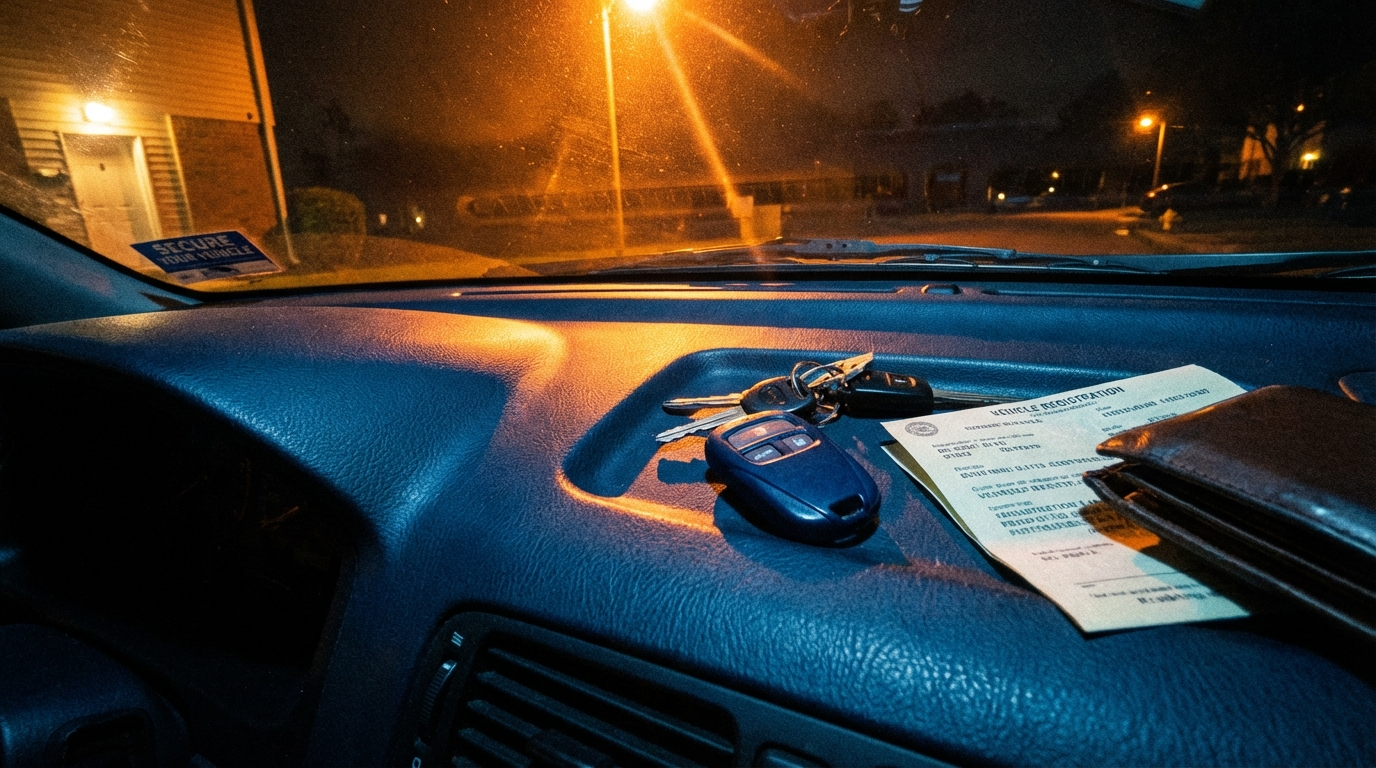
Storing the only garage door remote in a vehicle parked outside overnight essentially advertises easy access to potential thieves. Ignoring unusual sounds or slow operation delays identification of problems until complete failure occurs. Assuming that a functioning door is automatically a secure door overlooks the distinction between operational status and security effectiveness. If you need assistance addressing any of these concerns, garage door repair services in San Antonio can quickly diagnose and resolve issues before they become serious vulnerabilities.
How Does Professional Maintenance Improve Long-Term Security?
Scheduled professional maintenance extends equipment life while maintaining optimal security function. Technicians inspect mechanical components including springs, cables, rollers, and hinges for wear patterns that indicate impending failure. They verify proper force adjustment to ensure the door reverses when encountering obstacles as required by safety standards. Lubrication of moving parts reduces strain on the opener motor and prevents binding that could compromise smooth operation.
Security-specific checks during maintenance visits include testing the auto-reverse function, verifying rolling code operation, inspecting weatherstripping and seals, and confirming proper door balance. Imbalanced doors strain opener components and may not close securely. Professional assessment also identifies opportunities for security upgrades such as adding timer-to-close functionality, installing backup batteries, or upgrading to smart monitoring capabilities.
Google Review
“Called on a Sunday evening when my opener stopped working. They came out the same night and got everything working again. Outstanding service!”
Frequently Asked Questions About Garage Door Security
With rolling code technology, routine code changes are unnecessary because the system automatically generates new codes. However, you should reprogram your system immediately if a remote is lost or stolen, if you provided access codes to workers or service providers, or if you move into a home with an existing opener system. Older fixed-code systems benefit from periodic changes especially after any situation where the code may have been compromised.
Smart openers with proper encryption and authentication face minimal hacking risk when configured correctly. Ensure your home WiFi network uses strong password protection and current encryption standards. Enable two-factor authentication on your opener app if available. Keep firmware updated to address any discovered vulnerabilities. The convenience benefits of smart openers generally outweigh the minimal security risks when basic precautions are followed.
A door that fails to close fully creates an obvious security gap. Common causes include misaligned safety sensors, obstruction in the door path, track damage, or broken springs. Check for visible obstructions and clean sensor lenses before assuming a mechanical problem. If basic troubleshooting does not resolve the issue, contact a professional technician promptly rather than leaving your garage unsecured while waiting.
Garage-specific alarm systems provide an additional detection layer especially valuable for detached structures or garages containing high-value items. Options range from simple door sensors that trigger audible alarms to integrated systems connecting with whole-home security monitoring. The appropriate solution depends on your garage contents, location, and existing security infrastructure.
Power outages require manual operation using the emergency release. Engage any manual locks or slide bolts your door includes. If your opener has battery backup, it will continue functioning normally for a limited time. Consider keeping a flashlight in the garage for safe movement during outages. Once power returns, verify that the door operates correctly and all automatic features have resumed proper function.
Are you confident your garage provides adequate protection? Taking action today significantly improves your security posture. Contact us for personalized guidance on securing your specific garage door system.
(210) 469-9003
Schedule Your Assessment
No Obligation Consultation
Licensed & Insured

Recent Comments