
Estimated reading time: 14 minutes
Your garage door is the single largest moving component on your home. It affects curb appeal, security, energy costs, and daily convenience. For homeowners across San Antonio and surrounding areas like Boerne, Helotes, and New Braunfels, choosing the right material is a decision that plays out over decades of Texas heat, sudden cold snaps, and occasional severe storms. Fiberglass garage doors have emerged as a compelling alternative to traditional steel and wood, offering a blend of aesthetics and durability that deserves a closer look. This guide walks you through what fiberglass doors actually are, where they shine, where they fall short, and how to decide if they belong on your home.
Key Takeaways
- Fiberglass garage doors resist corrosion, moisture absorption, and cyclical refinishing demands that affect wood and steel alternatives in San Antonio’s climate.
- UV exposure is the primary threat to fiberglass doors in Texas; choosing a high-grade UV-protective finish and lighter colors extends the door’s appearance significantly.
- Multi-layer insulated fiberglass doors with polyurethane cores provide meaningful thermal resistance for attached garages, workshops, and living spaces above.
- Impact resistance varies dramatically between thin single-skin panels and thick multi-layer constructions; door specification should match your household’s activity level.
- Professional installation with proper spring calibration, sensor alignment, and seal integrity is critical for fiberglass doors, which can crack if opener force settings are incorrect.
▼
- What Exactly Are Fiberglass Garage Doors Made Of?
- Why Are San Antonio Homeowners Switching to Fiberglass?
- A Common Misconception: “Low Maintenance” Means “No Maintenance”
- What Are the Real Disadvantages of Fiberglass Garage Doors?
- Do Fiberglass Doors Crack in Cold Weather?
- How Does Insulation Work in Fiberglass Garage Doors?
- A Scenario Worth Considering: West-Facing Garage
- Fiberglass vs. Composite: Is There a Difference?
- How Much Do Fiberglass Garage Doors Cost?
- Mistakes Homeowners Make When Choosing a Fiberglass Door
- Wind Resistance: Why It Matters More Than You Think
- Safety Systems Still Need Attention
- How to Choose the Right Fiberglass Door for Your Home
- Fiberglass Panel Doors vs. Full Fiberglass Doors
- What Makes a Professional Installation Different?
- Commercial Applications Are Growing Too
- Frequently Asked Questions
Need Expert Garage Door Advice? Call Now
Our San Antonio technicians help you choose the right fiberglass door for your home’s orientation, climate exposure, and budget. Free estimates with zero pressure.
(210) 469-9003
Schedule Free Estimate
24/7 Emergency Service
Since 2006
What Exactly Are Fiberglass Garage Doors Made Of?
Fiberglass garage doors use panels constructed from fiberglass-reinforced polyester (FRP) layered over a steel or aluminum frame. The outer skin is molded to replicate wood grain, raised panels, or smooth contemporary finishes. Some models sandwich a polystyrene or polyurethane insulation core between two fiberglass skins, creating a multi-layer structure that adds thermal resistance and rigidity. Unlike solid wood doors that rely on the natural material for both appearance and structure, fiberglass separates those roles: the composite shell handles weather exposure while the internal frame provides structural support.
This construction is governed by industry specifications. ASTM D3841, for example, classifies FRP panels by weathering grades, which means not every fiberglass door on the market performs equally under sun, rain, or hail. The grade matters, and asking about it before purchase can save you from premature fading or surface degradation.
Why Are San Antonio Homeowners Switching to Fiberglass?
The shift toward fiberglass garage doors in Central Texas is driven by practical realities. Wood demands periodic sanding, sealing, and repainting, tasks that accelerate in humidity and direct sun. Steel resists impact better but is vulnerable to rust, especially along the bottom edge where moisture collects near the garage floor seal. Fiberglass sidesteps both problems. It does not corrode, does not absorb moisture, and does not require the cyclical refinishing that wood demands.
There is also a weight advantage. Fiberglass panel doors tend to be lighter than equivalent steel doors, which translates to less strain on torsion springs and the opener motor. Over thousands of cycles, that reduced load can extend the lifespan of hardware components and keep operation quieter. For homeowners who open and close their garage door four or more times daily, that mechanical advantage compounds over the years.
A Common Misconception: “Low Maintenance” Means “No Maintenance”
Fiberglass is often marketed as a low maintenance door material, and that label is accurate when compared to wood. However, low maintenance is not the same as zero maintenance. The door’s hardware, including springs, cables, rollers, tracks, and hinges, still requires periodic inspection and lubrication regardless of what the panels are made from. The fiberglass surface itself benefits from a mild soap-and-water wash two or three times a year to remove pollen, road grime, and dust that accumulate on any exterior surface in San Antonio.
Equally important is the UV-protective clear coat applied at the factory. Research published in materials science journals confirms that UV radiation is the primary driver of color fading in exterior composites (Springer Nature, 2023). If that clear coat is compromised by abrasive cleaning products or left unaddressed after visible chalking, the door’s finish will deteriorate faster than expected. A gentle annual inspection of the coating, looking for dullness or white residue, is a simple step that protects your investment.
What Are the Real Disadvantages of Fiberglass Garage Doors?
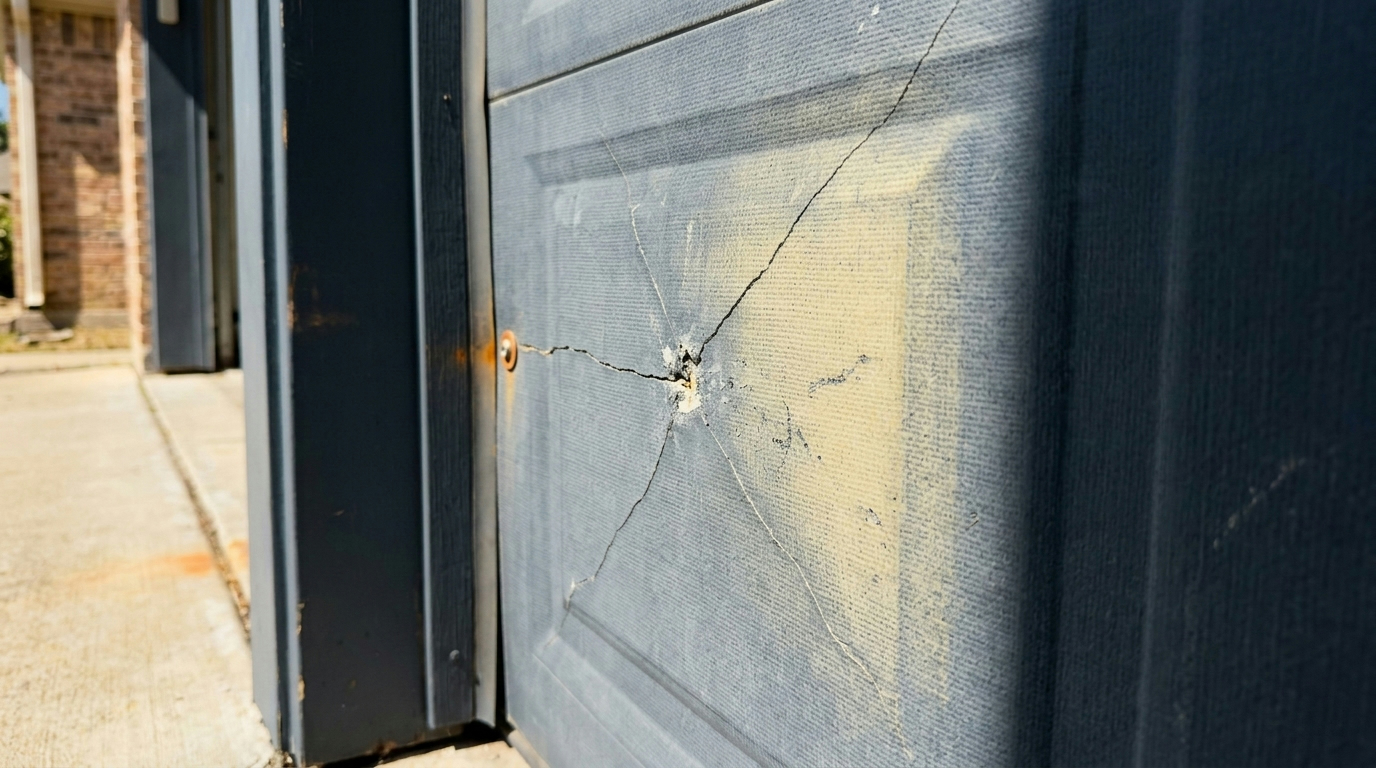
No material is perfect for every situation. Fiberglass panels can crack under sharp impact, whether from a stray basketball, a bike handlebar, or hail large enough to dent steel. Unlike steel, which dents and can often be pushed back into shape, fiberglass fractures. Repairing a cracked panel usually means replacing the entire section rather than patching it, and replacement panels are not always as readily available as standard steel sections.
Yellowing and fading represent the other significant drawback, especially on south-facing and west-facing installations that receive intense afternoon sun. In San Antonio, where UV index levels regularly reach “very high” from May through September, this is a realistic concern. Choosing a door with a high-grade UV finish and a lighter color palette can mitigate fading, but it cannot eliminate it entirely over a 15-to-20-year lifespan.
Do Fiberglass Doors Crack in Cold Weather?
This question comes up frequently, and the answer requires nuance. Fiberglass-reinforced composites can become more brittle at very low temperatures. Research on glass-fiber composite laminates indicates that matrix stiffness increases as temperatures drop, reducing the material’s ability to absorb impact energy without fracturing (arXiv, 2021). For San Antonio, where hard freezes are infrequent but not unheard of, this typically is not a dealbreaker. However, if your garage faces a direction where kids play ball or where debris tends to accumulate during winter storms, choosing a thicker, multi-layer fiberglass door over a thin single-skin panel is a worthwhile precaution.
Homeowners in outlying areas at higher elevation, including parts of the Hill Country near Boerne or Comfort, should pay closer attention to this factor. A reinforced or insulated fiberglass door handles occasional freezing temperatures far better than a budget single-layer panel.
How Does Insulation Work in Fiberglass Garage Doors?
Insulation performance in any garage door is measured by R-value, where the higher the number, the greater the thermal resistance. A basic single-layer fiberglass door may offer minimal insulation, comparable to an uninsulated steel door. A multi-layer door with a polyurethane core can achieve a noticeably higher R-value, making it suitable for attached garages, workshops, or home gyms where temperature regulation matters.
The U.S. Department of Energy recommends evaluating doors using NFRC labels, which display standardized U-factor and Solar Heat Gain Coefficient (SHGC) ratings (Energy.gov). These labels allow you to compare products apples-to-apples rather than relying on marketing claims. If a fiberglass door does not carry an NFRC label, you are essentially guessing about its thermal performance.
| Feature | Single-Layer Fiberglass | Multi-Layer Insulated Fiberglass |
|---|---|---|
| Typical R-Value Range | Low (minimal core) | Moderate to High (polyurethane/polystyrene core) |
| Best For | Detached garages, storage only | Attached garages, living spaces above, workshops |
| Sound Dampening | Minimal | Noticeable reduction in street noise |
| Weight | Lighter | Slightly heavier but still less than steel equivalent |
| Impact Resistance | Lower | Improved due to layered construction |
A Scenario Worth Considering: West-Facing Garage in Full Texas Sun
Imagine a single-story home in the Alamo Ranch neighborhood. The garage faces due west, catching four to five hours of direct afternoon sun from April through October. Surface temperatures on the door can exceed 150 degrees during peak summer. For a wood door, this means cracking and paint blistering within a few seasons. For an uncoated fiberglass door, it means accelerated yellowing and potential warping of thin panels. For a steel door, it means a searing-hot surface that radiates heat into the garage.
In this scenario, a fiberglass door with a factory-applied UV-resistant finish and an insulated core strikes a practical balance. The composite surface handles the heat without warping or rusting, the insulation layer reduces heat transfer into the garage, and the lighter color options reflect more solar energy than darker alternatives. Texas Pros Garage Doors works with homeowners in exactly these situations, helping match the right door specification to the home’s orientation and exposure through professional garage door installation that accounts for local conditions from the start.
Fiberglass vs. Composite: Is There Actually a Difference?
“Composite garage doors” is a broad marketing term that can refer to any combination of materials, including fiberglass, recycled wood fibers, resins, polymers, or blended substrates. A fiberglass door is technically a type of composite door, but not all composite doors use fiberglass. This distinction matters when you are comparing specifications. A “composite wood” door may offer excellent rot resistance but weigh significantly more than a fiberglass-skinned door, affecting opener requirements and spring sizing.
When evaluating options, focus on the actual material composition of the outer skin, the core insulation type, and the structural frame rather than the category label. Ask for the specific R-value, the UV-protection rating, the warranty terms for fading, and the wind-load certification. These concrete numbers tell you more than any material name alone.
Not Sure Which Material Is Right for Your Garage?
Our technicians assess your garage opening, sun exposure, and usage patterns to recommend the best door material and specification. No guesswork involved.
How Much Do Fiberglass Garage Doors Cost?
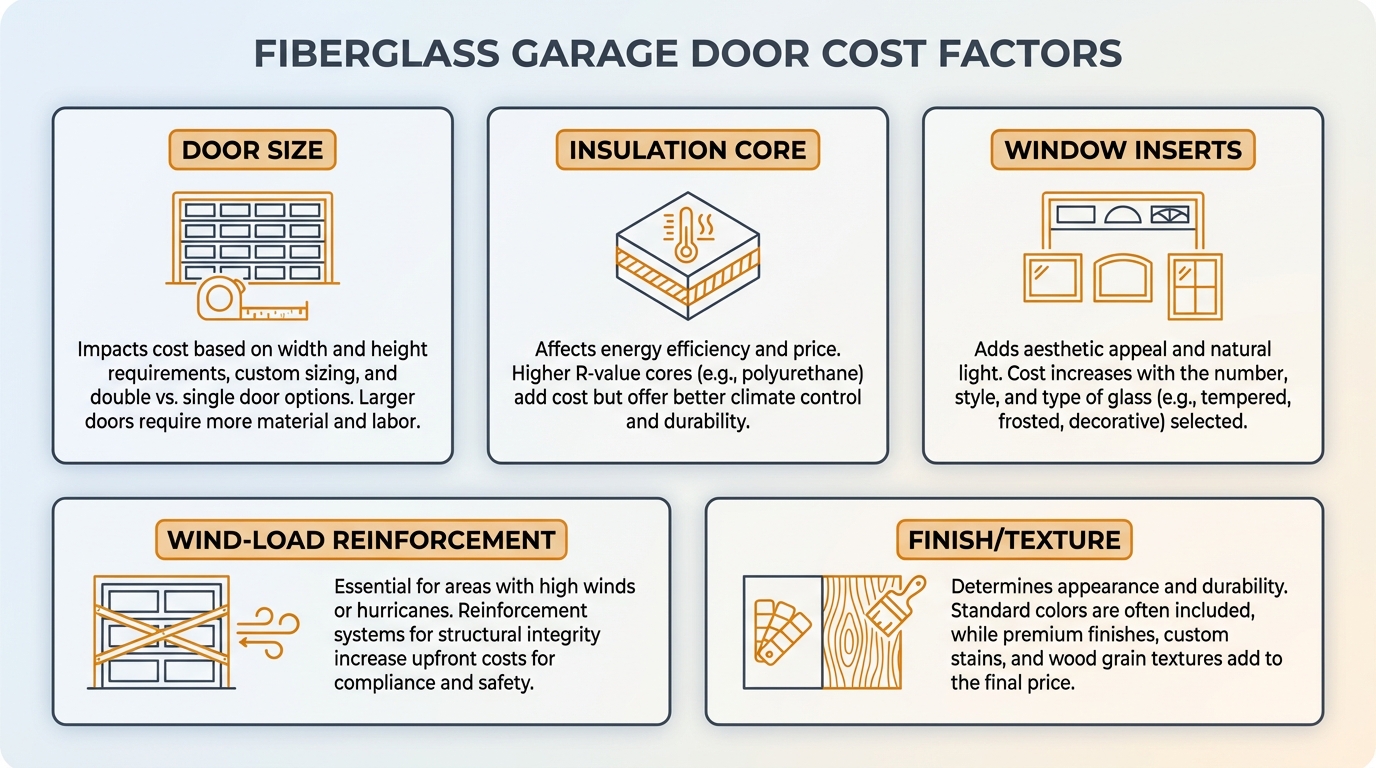
Pricing varies significantly based on size, insulation level, finish, window inserts, and wind-load reinforcement. A standard single-car fiberglass door without insulation or windows falls at the lower end of the spectrum, while a double-car insulated door with decorative glass and a wood-grain texture commands a premium. Installation costs add another variable, as proper alignment, spring calibration, and safety-sensor setup all require professional labor.
Rather than anchoring expectations to a single number, the smarter approach is to request a detailed, transparent quote that breaks down material, hardware, and labor separately. That way you can see exactly where your budget is going and make informed trade-offs. Texas Pros Garage Doors provides free estimates with this level of detail, giving San Antonio homeowners a clear picture before any work begins.
| Cost Factor | Impact on Final Price | What to Ask |
|---|---|---|
| Door Size (single vs. double) | Doubles can cost 40-70% more than singles | Exact opening dimensions (width x height) |
| Insulation Core | Polyurethane adds cost but significant R-value | R-value per inch of core material |
| Window Inserts | Each window section adds material and labor | Tempered vs. acrylic; insulated vs. single pane |
| Wind-Load Reinforcement | Adds cost; may be required by local code | Is this door rated for my area’s design wind speed? |
| Finish / Texture | Premium wood-grain finishes cost more | Warranty period for fading and delamination |
Mistakes Homeowners Make When Choosing a Fiberglass Door
The most common error is selecting a door based on appearance alone without verifying the insulation level, UV-coating grade, or wind rating. A beautiful wood-grain fiberglass door that lacks adequate insulation will turn your attached garage into an oven during a San Antonio summer, forcing your HVAC system to work harder and increasing energy bills. A second frequent mistake is assuming that all fiberglass doors share the same impact resistance. Thin single-skin panels and thick multi-layer constructions behave very differently when struck.
A third overlooked issue is ignoring the installation itself. Even a premium fiberglass door will underperform if the tracks are misaligned, the springs are improperly tensioned, or the weatherstripping does not seal properly against the frame. This is where working with an experienced local team makes a measurable difference. Texas Pros Garage Doors technicians verify spring balance, sensor alignment, and seal integrity as standard steps in every installation, not as optional extras.
Wind Resistance: Why It Matters More Than You Think
Your garage door is often the largest unbraced opening on your home. During a high-wind event, if the door fails inward, internal pressure can lift the roof or blow out walls. FEMA’s wind retrofit guide (P-804) specifically identifies garage doors as critical components and recommends that they be tested to design wind pressures using standards such as ANSI/DASMA 108 (FEMA P-804). This applies to fiberglass doors just as much as steel or wood.
If you live in an area with exposure to severe thunderstorm winds, which includes much of the San Antonio metro during spring storm season, verify that your chosen fiberglass door carries a wind-load rating appropriate for your zip code. After storm damage or visible panel warping, prompt inspection is essential. Texas Pros Garage Doors offers residential garage door repair services that include post-storm structural assessment to determine whether panels, tracks, or reinforcement struts need attention.
Safety Systems Still Need Attention Regardless of Door Material
Choosing fiberglass over steel or wood does not change the safety requirements for your garage door opener system. UL 325, the safety standard governing automatic residential garage door operators, mandates multiple entrapment protection mechanisms including photo-eye sensors near the floor and an auto-reversal system that stops and reverses the door if it contacts an obstruction (UL Standards & Engagement).
A quick monthly check takes under two minutes: place a 2×4 flat on the ground in the door’s path, press the close button, and confirm the door reverses upon contact. Then wave an object in front of each photo-eye sensor to verify it triggers a stop. These checks are safe for any homeowner to perform. If the door does not reverse, stop using the automatic opener and schedule a professional inspection immediately. Springs, cables, and opener adjustments are high-tension components that should always be handled by a trained technician.
What San Antonio Homeowners Say
“The spring on my garage door broke and they were able to come out within an hour. Very professional service and fair pricing.”
“Excellent experience from start to finish. They helped me select the right door design and the installation was completed in one day.”
“My garage door spring broke on a Saturday morning. They came out the same day and fixed it quickly. Great service!”
“Professional commercial garage door repair. They understood the urgency for our business and minimized our downtime.”
How to Choose the Right Fiberglass Door for Your Home
Selection starts with understanding your specific conditions rather than browsing catalog images. Consider the direction your garage faces, how your garage connects to your living space, the level of activity near the door (kids, vehicles, yard equipment), and your tolerance for periodic touch-up maintenance on the finish. Match those factors against measurable specifications.
| Your Situation | What to Prioritize |
|---|---|
| Garage attached to house, used daily | Higher R-value insulation, quality weatherstripping, quiet operation |
| Garage faces west or south (intense sun) | UV-rated finish, lighter color, multi-layer construction |
| Active household with kids and sports | Thicker panels, impact resistance, easy panel replacement availability |
| Detached garage for storage only | Basic insulation acceptable; focus on corrosion resistance and security |
| Area prone to high winds or storms | Wind-load rated door with reinforcement struts, ANSI/DASMA certification |
Fiberglass Panel Doors vs. Full Fiberglass Doors: A Distinction That Matters
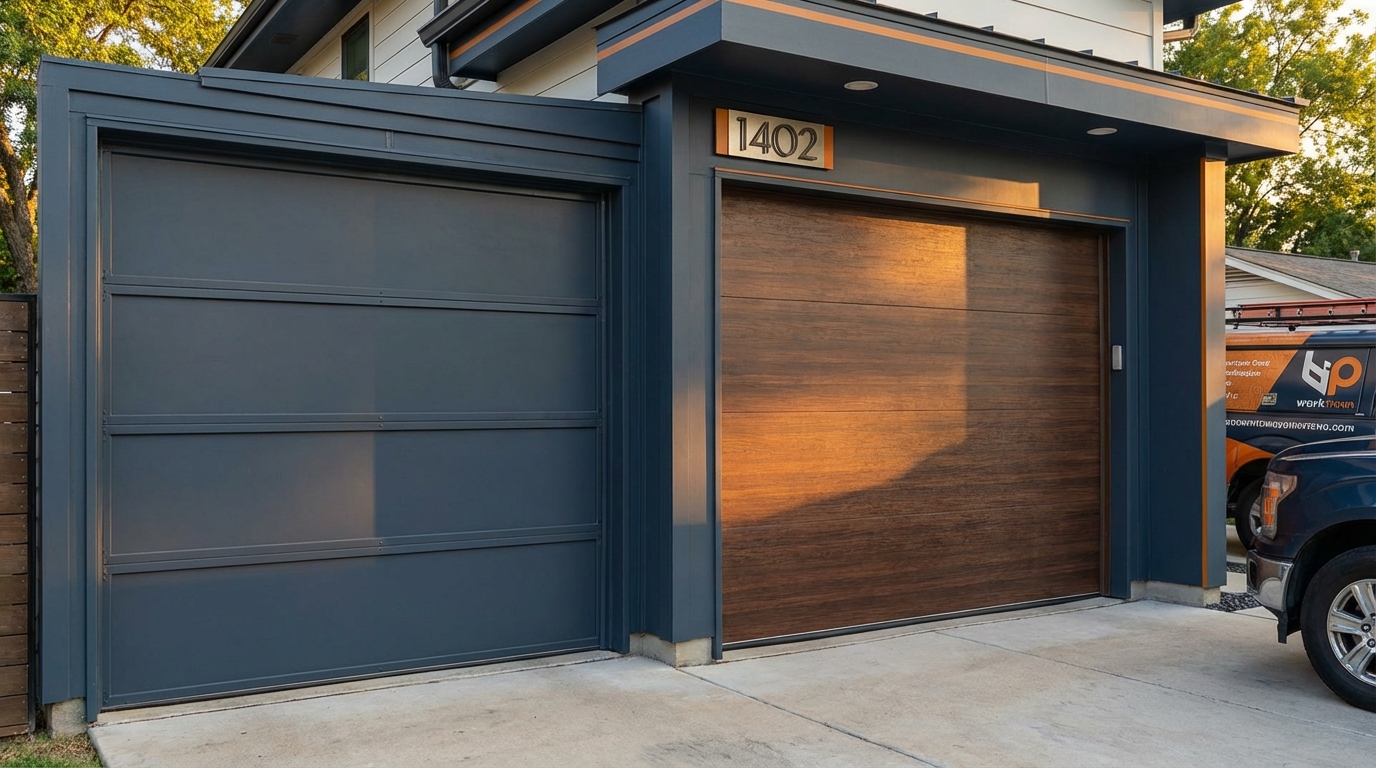
You may encounter the term “fiberglass panel doors” while shopping. This typically refers to doors where only the outermost panels are fiberglass, often thinner and mounted on a separate metal frame. These are not the same as full multi-layer fiberglass doors where the entire section is an integrated composite sandwich. Panel-only constructions can be more affordable but may sacrifice insulation, impact resistance, and long-term durability. Before committing, ask whether you are buying fiberglass-clad panels or a fully integrated fiberglass door system. The performance gap between the two is substantial.
What Makes a Professional Installation Different From a Budget One?
A proper garage door installation involves far more than hanging panels on a track. The technician measures the opening precisely, selects the correct spring type and tension for the door’s weight, verifies that the track is plumb and level, adjusts the opener’s force and travel limits, aligns safety sensors, tests the auto-reverse mechanism, and inspects the weatherseal along all four edges. Skipping or rushing any of these steps can lead to premature wear, noisy operation, uneven closing, or, worst case, a safety hazard.
Texas Pros Garage Doors follows a structured process for every installation: inspection of the existing opening, precise measurement, hardware selection matched to the specific door weight, installation with a full balance test, sensor calibration, and a final operational walkthrough with the homeowner. This methodical approach is particularly important for fiberglass doors, where incorrect spring tension can cause the lighter panels to travel too fast or slam, increasing the risk of cracking over time.
Commercial Applications Are Growing Too
While this guide focuses on residential use, fiberglass and composite door technologies are increasingly adopted in commercial settings, including retail storefronts, climate-controlled warehouses, and mixed-use buildings where aesthetics and durability both matter. The corrosion resistance that benefits a coastal home works equally well for a car wash facility or a warehouse near industrial operations. If your business needs reliable, low-maintenance overhead door solutions, Texas Pros Garage Doors also provides commercial garage door solutions tailored to higher-cycle, heavier-duty requirements.
“Called on a Sunday evening when my opener stopped working. They came out the same night and got everything working again. Outstanding service!”
Frequently Asked Questions About Fiberglass Garage Doors
Ready to Explore Whether Fiberglass Is Right for Your Home?
Choosing a garage door material is a decision that affects your home’s comfort, security, and appearance for years to come. Get a professional assessment of your garage opening, sun exposure, and usage patterns for a clear, confident answer.
(210) 469-9003
Schedule Free Consultation
Transparent Pricing
Serving San Antonio Since 2006

Recent Comments