
Estimated reading time: 12 minutes
Walking into a dark garage every morning feels like stepping into a cave. You flip the switch, wait for the fluorescent buzz, and wonder if there’s a better way. For San Antonio homeowners who use their garage as more than just a parking spot — think home gym, workshop, or extra storage zone — garage doors with windows can be a practical upgrade that transforms the entire space. Natural light reduces electricity use during the day, makes the area feel larger, and adds a noticeable boost to curb appeal from the street.
Texas Pros Garage Doors regularly helps homeowners across San Antonio and surrounding communities choose, install, and maintain windowed garage doors that match the style of the home and the realities of Texas weather. Below, we walk through every decision you need to make — glass type, placement, insulation impact, safety, design, and maintenance — so you can move forward with confidence.
Key Takeaways
- Top-panel window placement delivers the best balance of natural light and privacy for most San Antonio homes.
- Tempered safety glass with a frosted or tinted finish is the recommended standard for residential garage door windows.
- Insulated double-pane glass minimizes heat gain and energy loss, which is critical for Texas summers and conditioned garages.
- Any window addition changes door weight, requiring professional torsion spring adjustment and opener recalibration for safe operation.
- Factory-installed windows on a new door almost always outperform retrofit options in terms of weatherproofing, warranty, and long-term durability.
▼
- Why Choose Garage Doors With Windows?
- A Common Mistake: Picking Glass Before Placement
- Where to Place Windows for Maximum Privacy
- What Type of Glass Is Best?
- Do Windows Make the Garage Hotter in Texas?
- How Windows Affect Insulation and Energy Performance
- Weight Changes After Adding Windows
- Are Windowed Doors Less Secure?
- New Installation vs. Retrofit
- Decorative Window Inserts
- How to Match Window Style to Your Home
- Cleaning and Maintaining Windowed Panels
- Safety Standards Every Homeowner Should Know
- How Many Windows Should a Garage Door Have?
- Frequently Asked Questions
Ready to Add Natural Light to Your Garage?
Get a free on-site consultation with window style samples and a no-obligation estimate from our San Antonio team.
(210) 469-9003
Schedule Free Estimate
Serving San Antonio Since 2006
24/7 Emergency Service
Why Would a San Antonio Homeowner Choose Garage Doors With Windows?
The most obvious reason is light. A natural light garage means you can work on projects, sort through boxes, or exercise without relying entirely on overhead fixtures. But the benefits go further. Windows add visual interest that breaks up large, flat door panels — something especially noticeable on wide two-car doors that dominate a home’s front elevation. Real estate professionals often note that updated garage doors rank among the top exterior improvements for return on investment.
San Antonio homeowners also appreciate that windowed panels help them check weather conditions or see if a delivery truck is outside without opening the door or walking through the house. It is a small convenience, but one that adds up over time. If you are considering a residential garage door installation, adding windows at the time of purchase is far simpler and more cost-effective than modifying a door later.
A Common Mistake: Picking Glass Style Before Choosing Window Placement
Many homeowners start browsing frosted versus clear glass online before they consider where on the door the windows will actually sit. That sequence leads to mismatched expectations. Placement determines how much light enters, how much privacy you keep, and how the door looks from the street. Glass type fine-tunes those factors once placement is settled.
As a general rule, windows placed in the top row of panels allow the most light while keeping the interior out of direct view for anyone standing at street level. If your garage faces a sidewalk or a neighbor’s driveway, a top-row placement with frosted or obscured glass delivers the best balance of openness and discretion.
Where Should You Place Windows on a Garage Door for Maximum Privacy?
Top-panel placement is the starting point for most installations. Because pedestrians and drivers look at a garage door from ground level, windows positioned near the top of the door sit above their natural line of sight. This means light floods in from above while the garage contents remain largely hidden.
Top Row vs. Second Row — When Each Makes Sense
A second-row placement brings windows closer to eye level, which gives you a better view outward — useful if you spend time inside the garage and want to see the driveway. The trade-off is reduced privacy. Second-row windows work well on properties with deep setbacks, privacy fencing, or landscaping that already screens the garage from the street. For homes on corner lots or near busy sidewalks, sticking with the top row is typically the safer choice.
What Type of Glass Is Best for Garage Door Windows?
The short answer for most San Antonio homes is tempered safety glass with a privacy finish — frosted, obscured, or tinted. Tempered glass is stronger than standard annealed glass, and if it does break, it fractures into small granular pieces rather than dangerous shards. Federal safety glazing standards under 16 CFR 1201 outline performance criteria for architectural glazing in locations where human impact is possible, and using tempered glass in a garage door is a practical way to address that concern.
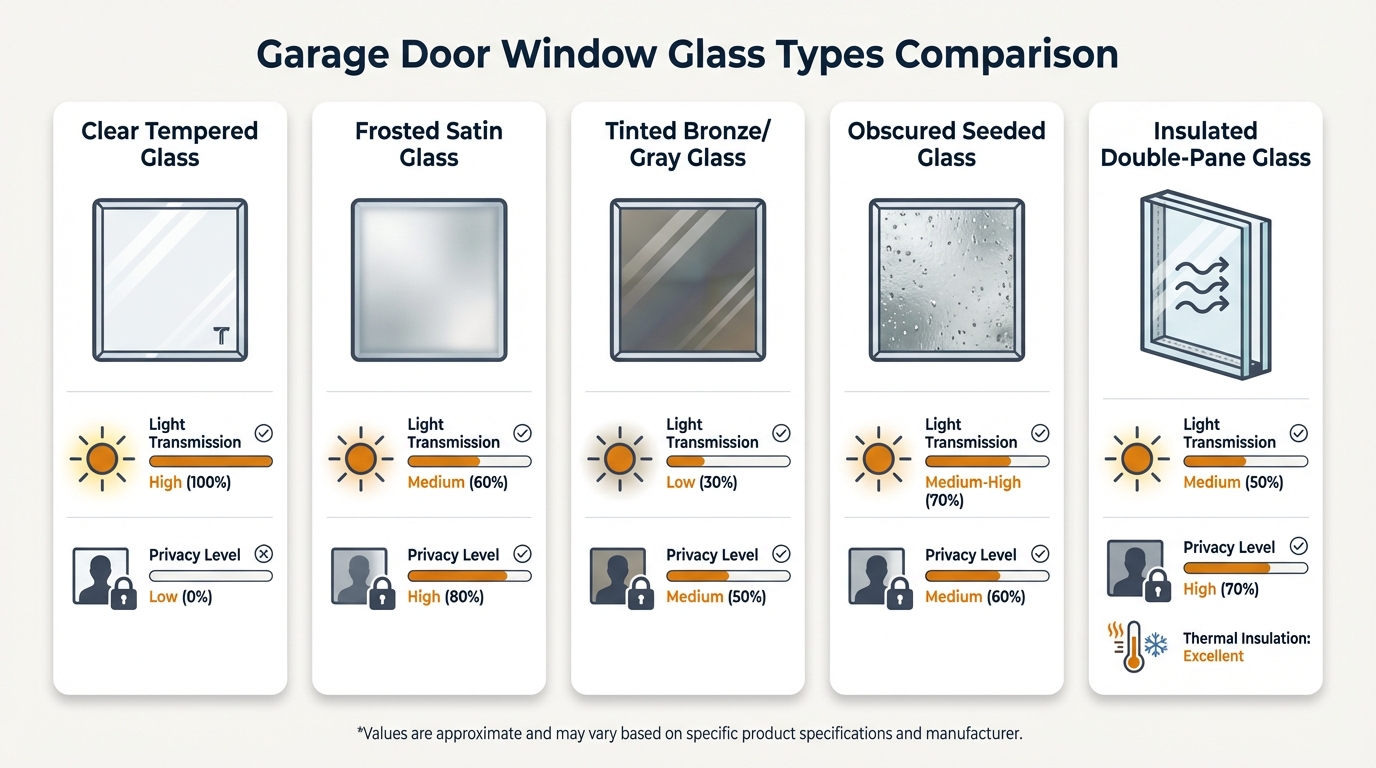
| Glass Type | Light Transmission | Privacy Level | Best For |
|---|---|---|---|
| Clear tempered | High | Low | Rural or well-screened properties |
| Frosted / satin | Medium-high | High | Most residential installations |
| Tinted (bronze or gray) | Medium | Medium | Sun-facing doors, glare reduction |
| Obscured / seeded | Medium | High | Decorative/traditional homes |
| Insulated double-pane | Varies by coating | Depends on finish | Climate-controlled garages |
Homeowners who heat or cool their garage — or whose garage shares a wall with a living space — should lean toward insulated double-pane units. We will cover the energy angle in detail below.
Do Garage Door Windows Make the Garage Hotter in a Texas Summer?
This is one of the most common concerns we hear in San Antonio, and it deserves a straight answer. Yes, clear glass facing direct afternoon sun will admit solar heat gain. The metric that measures this is called the Solar Heat Gain Coefficient, or SHGC. A lower SHGC means less heat passes through the glass. The U.S. Department of Energy explains that SHGC ranges from 0 to 1, and in hot-climate zones like south-central Texas, a lower SHGC is generally preferable.
Practical steps to manage heat include choosing tinted or frosted glass — both reduce direct solar transmission compared to clear glass — and placing windows only in the top panel rather than across multiple rows. If the garage door faces west and receives intense afternoon sun, fewer or smaller window openings may be the wiser design choice. The goal is not to eliminate windows but to size and specify them with the local climate in mind.
How Windows Affect Insulation and Energy Performance
Every window opening in a garage door panel replaces a section of insulated steel or polyurethane with glass, which has a lower R-value. A typical insulated garage door panel might offer R-12 to R-18, while a single-pane window drops to roughly R-1. That gap matters most when the garage is conditioned or shares an interior wall with the home.
Double-pane insulated glass units narrow the gap significantly, reaching roughly R-2 to R-3 or better with Low-E coatings and argon gas fill. For homeowners exploring insulated garage door options, pairing an insulated door body with insulated glazing units keeps the overall thermal envelope intact while still letting natural light through.
Quick Reference: Single-Pane vs. Double-Pane Performance
| Glazing Configuration | Approximate R-Value | Approximate U-Factor | Notes |
|---|---|---|---|
| Single-pane clear | ~1.0 | ~1.0 | Minimal insulation; fine for unconditioned garages |
| Double-pane clear | ~2.0 | ~0.50 | Noticeable improvement; standard upgrade |
| Double-pane Low-E + argon | ~3.0 to 3.5 | ~0.28 to 0.33 | Recommended for conditioned or attached garages |
The U-factor is the inverse of R-value: lower is better. When reviewing specifications, look for a U-factor below 0.35 if energy performance is a priority for your home.
A Scenario Most Homeowners Overlook: Weight Changes After Adding Windows
Replacing a solid insulated panel with a windowed panel changes the door’s total weight. Even a small shift — five to ten pounds — can throw off the torsion spring balance. When a door is out of balance, the opener works harder, components wear faster, and the door may not stay in place when you release it manually. This is a safety issue, not just a convenience issue.
Because torsion springs are under extreme tension, adjusting them is not a safe do-it-yourself task. A trained technician measures the new door weight, recalculates the spring requirements, and rebalances the system. Texas Pros Garage Doors includes a full balance test and safety sensor check as part of every windowed door installation or panel swap in the San Antonio area, so the finished result operates smoothly from the first cycle.
Are Garage Doors With Windows Less Secure Against Break-Ins?
Not necessarily — but the wrong configuration can create a vulnerability. A large clear window at eye level essentially puts your garage contents on display: bicycles, power tools, vehicles. That visual access is what increases risk, not the glass itself. Tempered glass is difficult to break quietly, and a determined intruder is more likely to attack the door lock or track mechanism than the window.
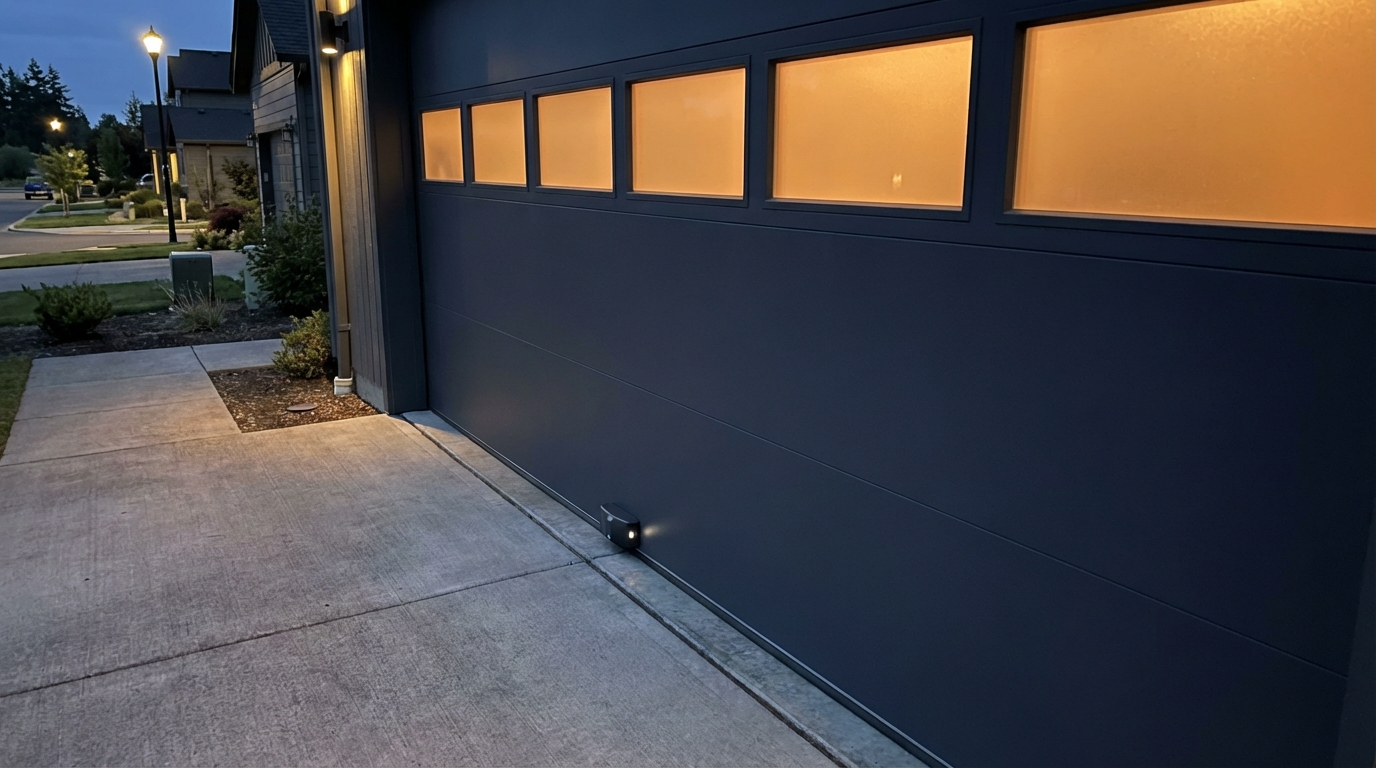
The practical countermeasures are straightforward. Use frosted, tinted, or obscured glass so passersby cannot inventory your belongings. Place windows high. Keep valuable items away from visible sightlines. And make sure your automatic opener meets current UL 325 safety standards, which include entrapment protection mechanisms and prevent the door from being forced open easily.
Questions About Security and Window Options?
Our technicians bring samples to your driveway so you can compare glass types and privacy levels before you decide.
(210) 469-9003
Book a Free Consultation
Licensed and Insured
No-Obligation Estimates
Comparing New Installation vs. Retrofit: Which Path Is Right?
Homeowners often ask whether they can add windows to their existing garage door instead of buying a new one. The honest answer is that a full replacement almost always delivers a better result. Factory-installed windows are engineered into the panel design — the framing, weatherseal, and structural reinforcement are part of the original build. Retrofitting windows into a solid panel can compromise weatherproofing, void the manufacturer warranty, and create cosmetic mismatches in color or texture.
That said, retrofit can make sense in a narrow set of circumstances. If your current door model offers a factory window-insert kit designed specifically for that panel, and the door is still in good structural condition, the swap can be straightforward. The key requirement is a professional spring and balance adjustment afterward to account for the weight change. When Texas Pros Garage Doors evaluates a retrofit request, the technician inspects the existing panels, confirms kit compatibility, and advises honestly whether a retrofit or a new door is the smarter long-term investment.
What Are Decorative Window Inserts and Do They Hold Up in Texas Heat?
Decorative inserts are grid overlays or snap-in frames that sit inside or on top of the glass to create patterns — colonial grids, prairie lines, Stockton arches, and more. They transform a plain rectangular window into a design element that echoes the architectural style of the home. For a carriage-house style door, arched inserts add an authentic period look. For a modern facade, clean horizontal dividers keep the aesthetic minimal.
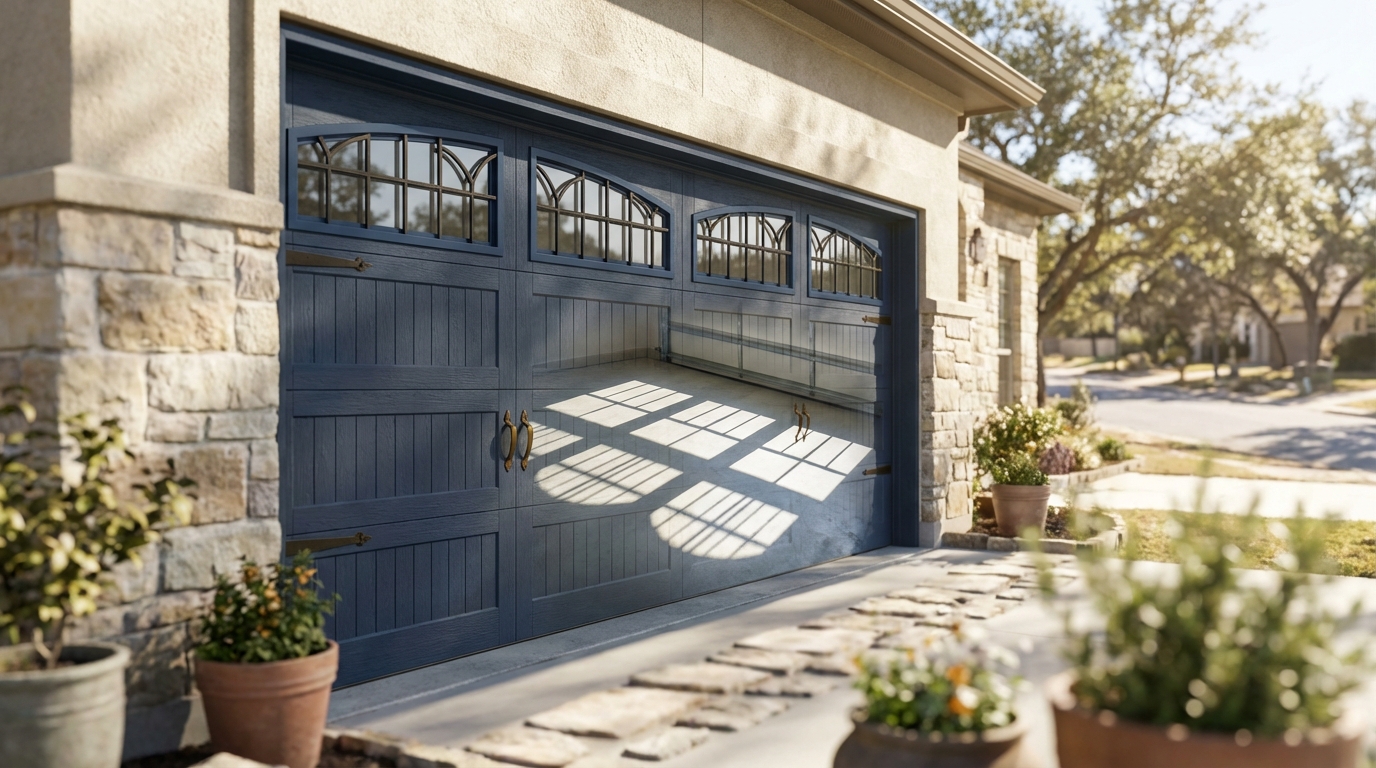
Quality varies. Inserts made from UV-stabilized polycarbonate or powder-coated aluminum stand up well to San Antonio summers. Cheaper ABS plastic versions can yellow, warp, or become brittle after a few years of direct sun exposure. When choosing inserts, ask about UV ratings and whether the manufacturer covers discoloration under warranty.
How to Match Window Style to Your Home’s Architecture
The simplest guideline is to mirror the window language of your front elevation. If your house features rectangular double-hung windows with no grids, a garage door with clean rectangular window panels and no inserts will feel cohesive. If your home has arched windows or divided-light casements, carry those shapes and grid patterns into the garage door design.
| Home Style | Recommended Window Shape | Grid / Insert Style |
|---|---|---|
| Modern / Contemporary | Horizontal rectangles or vertical slits | No grids or minimal horizontal bars |
| Traditional / Colonial | Square or short rectangles | Colonial or Stockton grids |
| Craftsman / Bungalow | Square with divided top lite | Prairie-style or top-only grids |
| Mediterranean / Spanish | Arched or wrought-iron look | Decorative wrought-style inserts |
| Farmhouse / Carriage | Arched pairs or cross-buck panels | Arched inserts with seeded glass |
An experienced installer can bring sample panels or digital renderings to your driveway so you see how the proportions look against your specific facade before committing.
What San Antonio Homeowners Are Saying
Google Review
“The spring on my garage door broke and they were able to come out within an hour. Very professional service and fair pricing.”
Google Review
“Excellent experience from start to finish. They helped me select the right door design and the installation was completed in one day.”
Google Review
“My garage door spring broke on a Saturday morning. They came out the same day and fixed it quickly. Great service!”
Google Review
“Professional commercial garage door repair. They understood the urgency for our business and minimized our downtime.”
Cleaning and Maintaining Windowed Garage Door Panels
Glass on a garage door collects the same road dust, pollen, and water spots as any exterior window. A soft cloth or sponge with mild soap and water handles routine cleaning. Avoid pressure washers aimed directly at window seals — the force can push water past the weatherstripping into the panel cavity. For decorative inserts, remove them gently only if the manufacturer’s instructions allow it. Forcing an aged plastic insert out of its channel often cracks the material.
Twice a year, inspect the rubber or foam seal around each window frame. Look for cracking, shrinkage, or gaps that could let moisture inside an insulated panel. Catching a deteriorating seal early prevents fogging between double-pane layers — a problem that requires full glass unit replacement once it occurs. Texas Pros Garage Doors offers seasonal maintenance visits that cover glass seal inspection along with standard spring, roller, and track checks, which means one appointment handles everything.
Safety Standards Every Homeowner Should Know About
Two sets of standards are relevant when installing or modifying garage doors with windows. First, the glazing itself should meet safety glazing criteria. The Consumer Product Safety Commission’s regulation under 16 CFR 1201 establishes performance categories for architectural glazing materials used in hazardous locations. While local code enforcement varies, using tempered or laminated safety glass in a garage door is widely considered best practice.
Second, the automatic opener system must comply with UL 325, which mandates entrapment protection devices — typically photoelectric sensors at the base of the door and an auto-reverse mechanism. Any time a door is replaced or its weight changes due to window additions, the opener force settings should be recalibrated and the safety sensors re-tested. Skipping this step can result in a door that does not reverse properly when it encounters an obstruction, creating a serious hazard for children, pets, or anyone near the threshold.
Ortal Peretz
Google Review
“Called on a Sunday evening when my opener stopped working. They came out the same night and got everything working again. Outstanding service!”
How Many Windows Should a Garage Door Have?
There is no universal number. A single-car door (8 to 9 feet wide) typically looks balanced with three to four window openings across the top panel. A double-car door (16 feet wide) usually accommodates six to eight windows in a symmetrical layout. The deciding factors are symmetry, the amount of light you want, and how much privacy you are willing to trade.
Some homeowners choose a “partial window” approach — windows on only the top half of the top panel row, or every other opening — to reduce glass area while still getting meaningful daylight. Your installer can mock up different counts on-site so you see the visual balance before any cuts are made.
Frequently Asked Questions
See How Windows Would Look on Your Garage Door
Schedule a free on-site visit. We bring sample panels so you can compare styles, glass types, and privacy levels against your home before committing.
(210) 469-9003
Get Your Free Estimate Today
4.8-Star Rated
Free On-Site Estimates

Recent Comments