
Estimated reading time: 12 minutes
If you live in San Antonio, your garage door is one of the largest openings in your home’s exterior shell. When that door is a single layer of uninsulated steel, it essentially becomes a radiant heater during summer and a cold slab in the occasional winter freeze. Understanding how insulated garage doors work, what separates a good option from a mediocre one, and why professional installation matters can save you money, improve comfort, and protect your home’s safety. This guide covers exactly what San Antonio homeowners need to know before making a decision.
Key Takeaways
- Insulated garage doors can reduce interior garage temperatures by 15 to 25 degrees during San Antonio’s intense summer heat, directly lowering HVAC strain on attached homes.
- Polyurethane-core, three-layer doors deliver the best combination of thermal efficiency, noise reduction, and structural durability for this climate.
- U-factor (tested under ANSI/DASMA 105 standards) is a more reliable performance metric than R-value alone, because it measures the complete installed door assembly.
- Proper perimeter weatherstripping and bottom seals are just as critical as the door’s insulation core. Without them, even high-R-value doors underperform significantly.
- Professional installation with correct spring calibration is essential. An insulated three-layer door weighs more than a single-skin door and requires hardware matched to that weight.
▼
- The Impact of Extreme San Antonio Heat on Your Garage
- What Exactly Is an Insulated Garage Door?
- Are Insulated Garage Doors Actually Worth It in San Antonio?
- Understanding Thermal Performance: R-Value vs. U-Factor
- Polyurethane vs. Polystyrene: Choosing the Right Insulation Core
- How Many Layers Should Your Door Have?
- A Common Mistake: Focusing Only on the Door
- Can You Add Insulation to an Existing Garage Door?
- Beyond Energy Savings: Safety and Air Quality
- What Does Professional Installation Include?
- DIY Kits vs. Factory-Built Insulated Doors
- How Much Does an Insulated Garage Door Cost?
- How Long Does Installation Take?
- Weatherization Checklist After Installation
- Frequently Asked Questions
- Ready to Find the Right Insulated Door?
Get a Free Insulated Garage Door Estimate
Texas Pros Garage Doors provides free, no-obligation on-site assessments for San Antonio homeowners. Find out exactly which insulated door is right for your home and budget.
(210) 469-9003
Schedule Free Estimate
70+ Verified Reviews
Established 2006
24/7 Service
The Impact of Extreme San Antonio Heat on Your Garage
San Antonio is no stranger to triple-digit temperatures. The city has been recording earlier and more frequent 100-degree days, with heat waves stretching well into October some years. According to local reporting from the San Antonio Express-News, the trend toward hotter, longer summers is accelerating. That has a direct impact on every garage in the metro area.
An uninsulated garage door absorbs solar radiation throughout the day and transfers that heat directly into the enclosed space. If your garage faces south or west, interior temperatures can climb 20 to 30 degrees above the already-extreme outdoor reading. That “greenhouse effect” doesn’t stay in the garage. When your garage is attached to the house, that superheated air seeps into living spaces through shared walls, the ceiling above, and the interior door connecting the two.
San Antonio’s “Cooling Degree Days” metric, which tracks how many days require active cooling, ranks consistently high among major Texas cities. The practical takeaway is straightforward: every surface that can reduce heat transfer into your home matters. Insulated garage doors are one of the most impactful single upgrades because the door itself represents such a large surface area exposed to direct sunlight.
What Exactly Is an Insulated Garage Door?
An insulated garage door is a door constructed with one or more layers of thermal insulation sandwiched between steel, aluminum, or composite skins. Unlike a single-skin steel door, which is essentially a hollow metal panel, an insulated door resists heat transfer and adds structural rigidity. Most insulated doors fall into two or three-layer configurations. A two-layer door pairs an outer steel skin with a bonded insulation layer. A three-layer door adds a second interior skin, creating a true “sandwich” panel that is quieter, stronger, and more thermally efficient.
The insulation itself is typically one of two materials: polystyrene sheets or injected polyurethane foam. Each has distinct performance characteristics, which we will compare below. Regardless of the core material, the key benefit is the same: the door slows down the movement of heat between the outside and the inside of your garage.
Are Insulated Garage Doors Actually Worth It in San Antonio?
This is the most common question homeowners ask, and the honest answer depends on how you use your garage and where it sits relative to your living space. For the majority of San Antonio homes where the garage is attached and shares at least one wall or ceiling with the house, an insulated door delivers noticeable improvements in three areas: temperature regulation, noise reduction, and door durability.
If you use your garage as a workshop, home gym, laundry area, or if there is a bedroom above it, the comfort difference is significant. Even if your garage is used purely for parking and storage, an insulated door reduces the heat load that your HVAC system has to overcome, particularly in the long cooling season San Antonio experiences from April through October.
The scenario where insulation matters least is a fully detached garage that sits in the shade, has no climate-sensitive contents, and is rarely occupied. In that case, a standard door may suffice. But for the vast majority of attached garages in this city, insulated garage doors are a practical investment, not a luxury.
Understanding Thermal Performance: R-Value vs. U-Factor
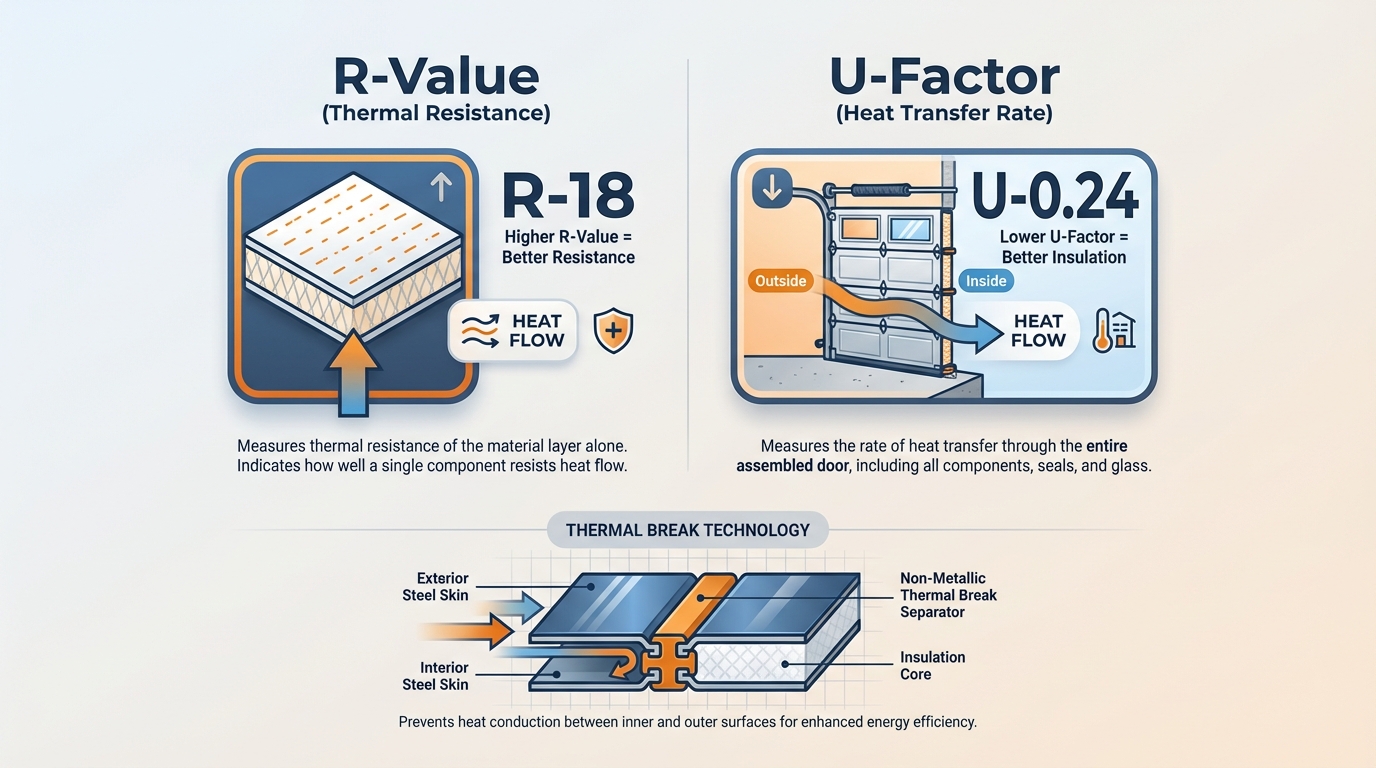
When shopping for insulated garage doors, you will encounter two numbers repeatedly: R-value and U-factor. They measure related but different things, and understanding the distinction can prevent you from being misled by marketing.
R-value measures the thermal resistance of a specific material or section. A higher R-value means the material itself resists heat flow more effectively. However, R-value is typically calculated for the insulation core alone, not the entire assembled door with its joints, seals, and hardware. This means two doors can advertise the same R-value but perform very differently once installed.
U-factor, by contrast, measures the rate of heat transfer through the complete door assembly as it would actually be mounted in your garage opening. A lower U-factor indicates better overall thermal performance. The DASMA Thermal Performance Verification Program uses ANSI/DASMA 105 testing standards to verify U-factor ratings through independent third-party testing. When comparing doors, asking for the tested U-factor gives you a much more accurate picture of real-world energy performance than R-value alone.
The Importance of a Thermal Break and Proper Sealing
Insulated steel doors often include a component called a “thermal break,” which is a non-metallic separator between the inner and outer steel skins. Without it, heat conducts directly through the metal from one side to the other, essentially bypassing the insulation core. A thermal break disrupts this conductive bridge and meaningfully improves the door’s overall U-factor.
Equally critical is air sealing. The U.S. Department of Energy emphasizes that weatherstripping around the perimeter and a proper bottom seal are essential for any energy-efficient door. In San Antonio’s humid climate, gaps around the door do not just let heat in. They also allow moisture, dust, and insects to penetrate the garage. A door with excellent insulation but poor perimeter sealing will underperform a moderately insulated door that is properly sealed and weather-stripped on all sides.
Polyurethane vs. Polystyrene: Choosing the Right Insulation Core
The two most common insulation materials in residential garage doors are polystyrene and polyurethane. Both serve the same basic purpose, but they achieve it differently, and the practical differences matter for San Antonio homeowners.
| Feature | Polystyrene (EPS Sheets) | Polyurethane (Injected Foam) |
|---|---|---|
| Installation method | Pre-cut sheets placed into panel cavities | Liquid foam injected, expands to fill the entire cavity |
| Thermal efficiency per inch | Moderate | Higher (fills gaps and voids completely) |
| Structural contribution | Minimal, does not bond to skins | Bonds to inner and outer skins, adding rigidity |
| Noise reduction | Some improvement over uninsulated | Noticeably quieter due to denser fill and bonded structure |
| Cost | Lower | Higher, but often justified by performance and durability |
| Best suited for | Budget-conscious upgrades, moderate climate exposure | High-heat exposure, workshops, rooms above garage |
Polyurethane’s key advantage is that it expands into every crevice inside the door panel. This eliminates air pockets that would otherwise allow heat to pass through. It also bonds to both the inner and outer skins, turning the panel into a rigid structural unit that resists denting, warping, and vibration. For a city where doors absorb intense solar radiation for months at a time, polyurethane generally delivers the better long-term value. The Department of Energy notes that steel doors with polyurethane foam cores are among the most common energy-efficient exterior door configurations available.
How Many Layers Should Your Door Have?
Garage door construction falls into three basic tiers based on layer count, and each has a clear use case. A single-layer door is just the exterior skin with no insulation. A two-layer door adds insulation behind the outer skin, often with a vinyl or composite backer. A three-layer door sandwiches insulation between two full steel skins, creating the most durable and thermally efficient configuration.
For San Antonio homeowners replacing an existing door, the three-layer construction is the practical sweet spot. It is quieter during operation because the bonded sandwich absorbs vibration. It is more resistant to dings and dents from hail, kids’ basketballs, and everyday garage activity. And it provides the most consistent thermal barrier because the inner skin protects the insulation from damage and moisture over time.
A two-layer door is a reasonable choice when budget is a primary concern but you still want a meaningful improvement in comfort and noise. It is a clear step up from a single-layer door and often delivers the most improvement per dollar in moderate-use garages.
A Common Mistake: Focusing Only on the Door and Ignoring the Garage Envelope
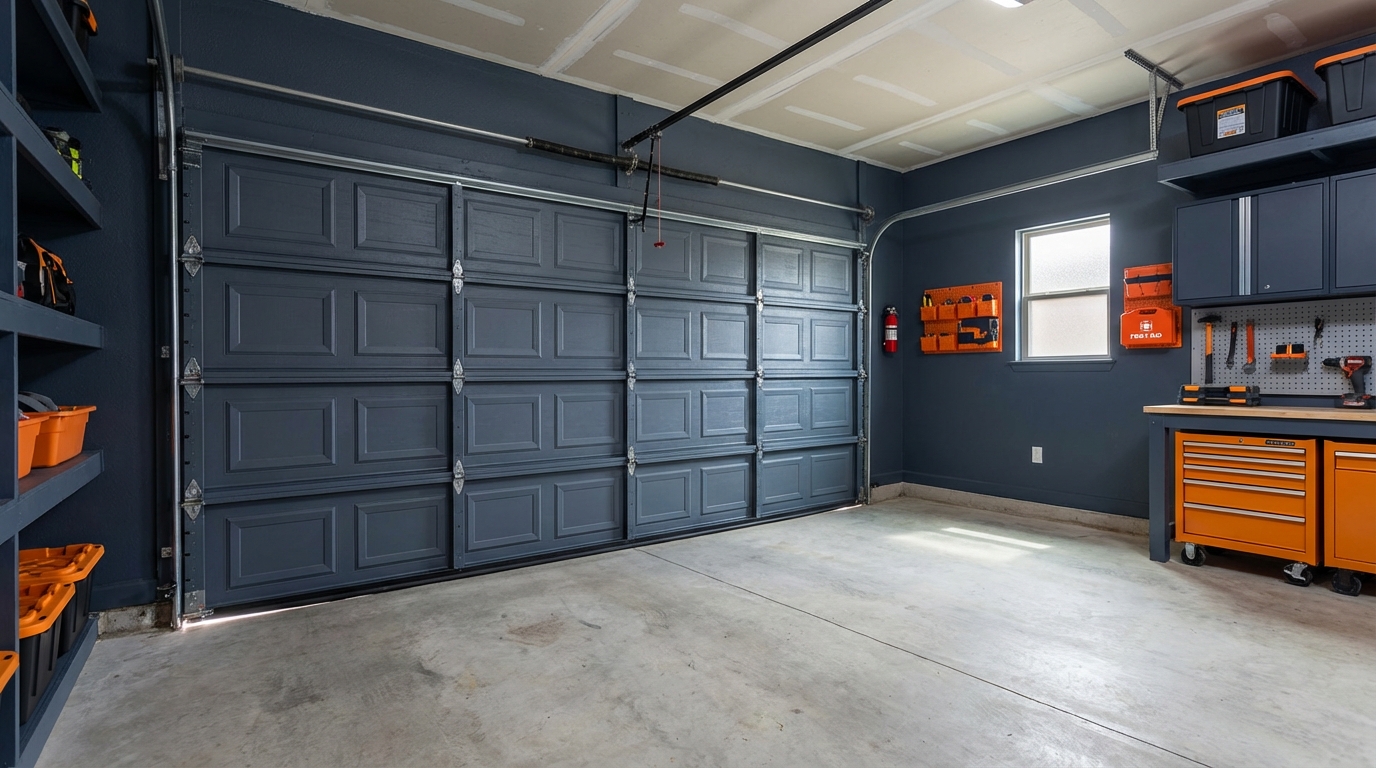
One of the most frequent errors homeowners make is investing in a high-R-value insulated door while neglecting everything around it. Your garage has walls, a ceiling, a concrete floor, and a series of seals and weatherstripping that together form its thermal envelope. If your perimeter seals are cracked, if the bottom rubber is torn, or if there are gaps where the door meets the frame, you will lose a significant portion of your insulation investment to air leakage.
Before or during a door replacement, it is worth evaluating the full picture. Check the weatherstripping on all four sides of the door opening. Inspect the threshold seal at the bottom. Look for daylight around the edges when the door is closed. If you have windows in the garage, assess whether they are sealed properly. These relatively low-cost improvements amplify the effectiveness of any insulated door you install.
Can You Add Insulation to an Existing Garage Door Instead of Replacing It?
Retrofit insulation kits exist, and they can provide a modest improvement in thermal comfort. However, there are real limitations. Adding foam board or reflective insulation to the back of an existing single-skin door increases its weight. That additional weight changes the balance of the entire door system. Springs calibrated for the original door weight will now be under-tensioned, which causes the opener to work harder, accelerates wear on cables and brackets, and can create a safety hazard if the door does not hold its position when partially open.
Retrofit insulation also does not improve structural rigidity the way a factory-built insulated panel does. It sits on the surface rather than bonding into a unified panel, so it does not reduce vibration or noise as effectively. And because it is applied after the fact, it rarely creates the same continuous, gap-free insulation coverage that an injected polyurethane core provides.
The practical rule of thumb: if your existing door is in good condition, relatively new, and you just want a slight comfort improvement, a retrofit kit can help, as long as you have the springs professionally re-tensioned afterward. If the door is aging, showing signs of warping, rust, or damage, or if you want a meaningful performance upgrade, replacing it with a purpose-built insulated door is the more reliable path.
Not Sure Whether to Repair or Replace Your Garage Door?
Our technicians will assess your current door’s condition and give you an honest recommendation. No pressure, no obligation, just straightforward guidance from experienced professionals.
Beyond Energy Savings: Safety and Air Quality in Attached Garages
Insulation and air sealing are not just about comfort and energy bills. They play a direct role in your family’s safety. Research published by the National Institute of Standards and Technology (NIST) has documented that air pollutants, including vehicle exhaust, stored chemical vapors, and Carbon Monoxide (CO), can migrate from attached garages into living spaces through air leakage pathways.
The Texas Department of Insurance specifically warns against leaving vehicles running in the garage, even with the garage door open, due to CO poisoning risk. A well-sealed, properly insulated garage door with intact perimeter weatherstripping reduces the pathways through which contaminated air enters your home. It is not a substitute for proper ventilation, but it is an important layer of protection, especially in a city where garages are used year-round.
Maintaining your door’s seals, hardware, and alignment is part of this safety equation. When panels warp or seals degrade, gaps form, and those gaps become channels for both heat and pollutants. Scheduling professional garage door repair in San Antonio when you notice uneven gaps, worn seals, or operational problems helps preserve both thermal performance and indoor air quality.
What Does Professional Installation Actually Include?
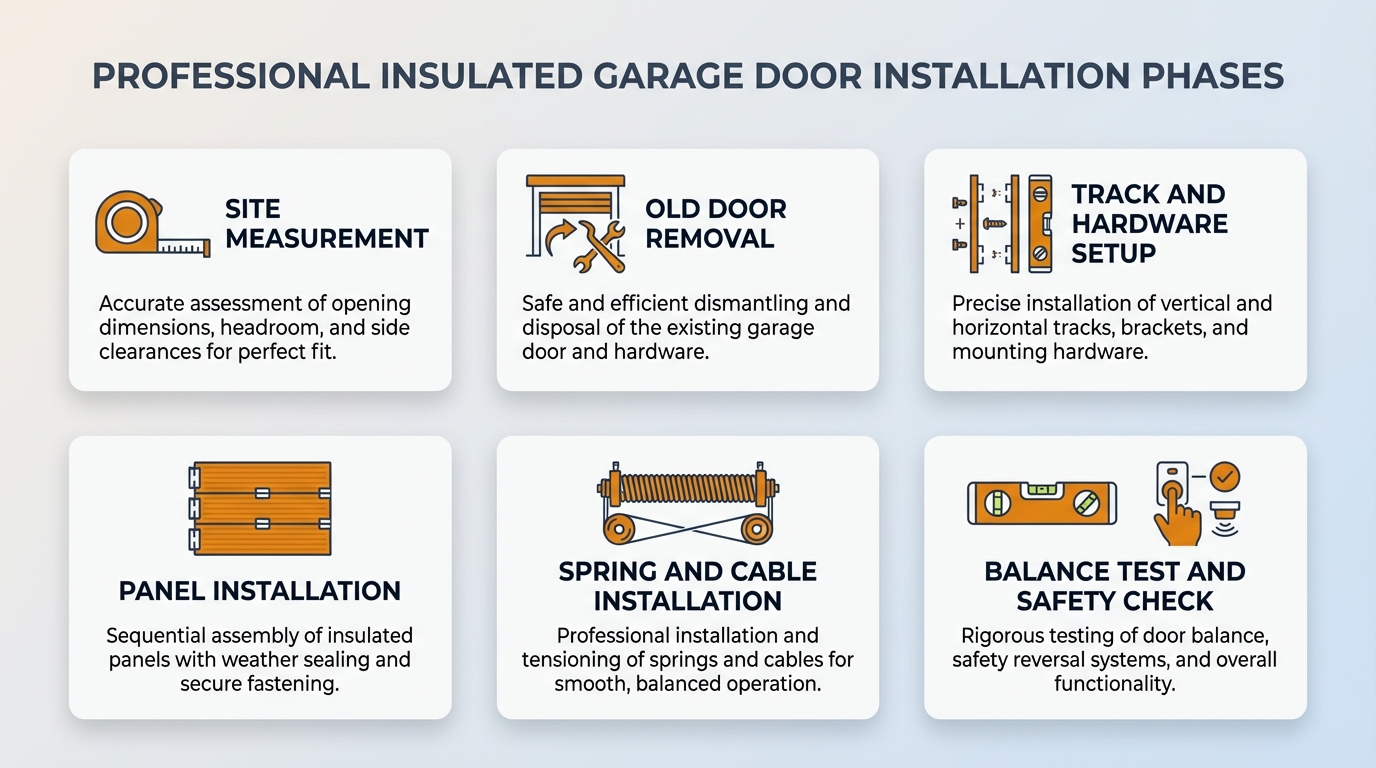
Understanding what happens during a professional insulated garage door installation helps you evaluate whether you are getting thorough service or a rushed job. A proper installation follows a clear sequence that goes well beyond hanging panels on a track.
| Installation Phase | What It Involves | Why It Matters |
|---|---|---|
| Site measurement and assessment | Measuring the opening, checking header space, inspecting existing tracks and framing | Ensures the new door fits correctly and identifies structural issues before work begins |
| Old door removal | Safely releasing spring tension, dismounting panels, removing hardware | Springs under tension are dangerous. Improper removal risks injury and property damage |
| Track and hardware setup | Installing or adjusting vertical and horizontal tracks, mounting brackets | Proper alignment prevents binding, uneven wear, and premature failure |
| Panel installation | Setting each panel section, connecting hinges, inserting rollers | Panels must be level and properly seated for the door to operate smoothly |
| Spring and cable installation | Mounting torsion or extension springs calibrated to the new door’s weight | Incorrect spring tension causes opener strain, imbalance, and safety hazards |
| Weatherstripping and seals | Installing perimeter seals, bottom rubber, and any threshold components | Seals are what make insulation effective. Without them, thermal performance drops significantly |
| Balance test and safety check | Disconnecting the opener and manually testing door balance at multiple positions. Testing auto-reverse and safety sensors | A balanced door extends the life of every component and ensures safe daily operation |
| Final test and cleanup | Full cycle test with opener, adjustment of travel limits and force settings | Confirms everything functions as a complete system before the crew leaves |
Texas Pros Garage Doors follows this full-sequence approach for every installation in San Antonio and surrounding areas. The critical detail many homeowners miss is the spring calibration step. An insulated three-layer door weighs noticeably more than a single-skin door. If existing springs are not replaced or adjusted for the new weight, the system will be out of balance from day one. That is why new garage door installation through a professional team includes spring sizing as a standard part of the job, not an afterthought.
DIY Insulation Kits vs. Factory-Built Insulated Doors: An Honest Comparison
DIY garage door insulation kits are widely available and relatively inexpensive. They typically consist of cut-to-fit foam panels or reflective radiant barrier sheets that adhere to the interior side of your existing door panels. For renters or homeowners on a tight budget, they can provide a temporary improvement. However, there are practical trade-offs that are important to acknowledge.
A factory-built insulated garage door is engineered as a complete system. The insulation is bonded or injected during manufacturing, the panel thickness accounts for the insulation layer, and the door’s weight is calculated into the hardware specifications from the start. A DIY kit, by contrast, adds insulation to a door that was never designed for it. The result is often uneven coverage, increased weight that stresses the opener and springs, and insulation that sags or detaches over time, especially in San Antonio’s extreme heat.
The most practical approach: if you are planning to stay in your home for several years and your current door is more than 15 years old, a factory-insulated replacement is almost always the better investment. If you are in a short-term rental or just need a stopgap measure, a DIY kit can bridge the gap, but get your springs checked afterward.
What San Antonio Homeowners Are Saying
The spring on my garage door broke and they were able to come out within an hour. Very professional service and fair pricing.
Excellent experience from start to finish. They helped me select the right door design and the installation was completed in one day.
My garage door spring broke on a Saturday morning. They came out the same day and fixed it quickly. Great service!
Professional commercial garage door repair. They understood the urgency for our business and minimized our downtime.
How Much Does an Insulated Garage Door Cost in San Antonio?
Pricing for insulated garage doors varies significantly based on several factors, and any company quoting a fixed price without seeing your garage should raise a red flag. The main variables that affect cost include door size (single vs. double), number of insulation layers, type of insulation core, panel design and finish, whether windows are included, and the condition of your existing tracks, springs, and framing.
Rather than focusing on a single price point, focus on what is included in the quote. A thorough estimate should account for the door itself, all necessary hardware, removal and disposal of the old door, spring sizing, weatherstripping, and a post-installation balance and safety test. Texas Pros Garage Doors provides free estimates that include an on-site assessment, so you understand exactly what you are paying for before any work begins. That transparency eliminates surprises and ensures the quoted price reflects your specific situation, not a generic average.
How Long Does Installation Take?
A standard insulated garage door replacement on an existing opening, where the tracks and framing are in good condition, typically completes in a single service visit. The exact timeframe depends on whether it is a single or double door, whether the opener needs to be repositioned, and whether any structural adjustments are required.
Installations that involve widening or modifying the opening, replacing deteriorated framing, or upgrading from a very old track system will naturally take longer. One advantage of working with a local San Antonio team like Texas Pros Garage Doors is the ability to schedule same-day or next-day service for straightforward replacements, minimizing the time your garage is open and unsecured.
Weatherization Checklist: What to Verify After Installation
Once your insulated door is installed, a few checks ensure you are getting the full benefit of your investment. The Department of Energy’s weatherization guidance applies directly to garage doors as part of the home’s overall thermal envelope. After installation, verify the following:
- The bottom seal makes full contact with the floor across its entire width with no visible gaps.
- The side and top weatherstripping compresses evenly when the door closes, with no daylight visible from inside.
- The door sits flush and level when closed, without bowing or twisting.
- All panels are firmly seated in their tracks with no rattling during operation.
- The door holds its position when manually lifted to waist height and released, confirming proper spring balance.
If any of these checks reveal issues, addressing them promptly preserves your door’s thermal performance and extends the life of every mechanical component in the system.
Called on a Sunday evening when my opener stopped working. They came out the same night and got everything working again. Outstanding service!
Frequently Asked Questions About Insulated Garage Doors in San Antonio
Yes, in most cases. Even without a dedicated HVAC system in the garage, an insulated door reduces the extreme temperature swings that stress stored items, affect adjacent rooms, and make the space uncomfortable to work in. In San Antonio’s heat, the difference between an insulated and uninsulated garage can be 15 to 25 degrees on a summer afternoon.
Significantly. Three-layer insulated doors in particular dampen vibration during operation, reducing the rumbling and rattling sound that travels into living spaces. The improvement is most dramatic when paired with quality rollers and properly tensioned springs.
Rather than fixating on a specific R-value number, look for a door with a verified U-factor tested under ANSI/DASMA 105 standards. A moderate-to-high R-value combined with a thermal break and proper perimeter sealing will outperform a door with a very high R-value but poor air sealing. For most attached garages in this climate, a polyurethane-core door in the mid-range thickness is effective.
It depends on the opener’s horsepower and the weight difference between your old and new door. An insulated three-layer door is heavier than a single-skin door, and if your opener is undersized or aging, it may struggle with the added load. A professional installer will test compatibility and recommend an upgrade only if necessary.
Close the door and look for daylight around the edges from inside the garage. Feel for air movement along the sides and bottom. Check the bottom seal for cracks, tears, or sections that have hardened and no longer flex to meet the floor. If you notice any of these signs, replacing the weatherstripping is one of the most cost-effective improvements you can make.
The door is the single largest surface in most garages, so insulating it first makes sense as the highest-impact starting point. You will not get the same result as a fully insulated garage envelope, but you will still reduce peak temperatures and noise. Over time, adding wall and ceiling insulation completes the picture.
Ready to Find the Right Insulated Door for Your San Antonio Home?
Choosing an insulated garage door involves balancing thermal performance, durability, noise reduction, and budget against the specific conditions of your home and how you use your garage. The right answer is not the same for every household, which is why a professional on-site assessment matters more than any online calculator. What does your garage face, south, west, or shaded? Is there a room above it? Do you spend time working in the space? These details shape the recommendation.
Texas Pros Garage Doors provides free, no-obligation estimates for San Antonio homeowners considering an insulated garage door upgrade. The team evaluates your opening, framing, existing hardware, and sealing conditions before recommending a specific solution. If you are ready to explore your options or just want an honest assessment of whether upgrading makes sense for your situation, reach out to schedule a consultation.
Take the First Step Toward a More Comfortable Garage
Get a free on-site estimate from San Antonio’s trusted garage door professionals. We will assess your current setup and recommend the insulated door solution that fits your home and budget.
(210) 469-9003
Get Your Free Estimate
70+ Verified Reviews
Serving San Antonio Since 2006
24/7 Emergency Service

Recent Comments