
Estimated reading time: 12 minutes
Your garage door is likely the largest moving component in your entire home. It operates multiple times each day, often without much thought given to the potential hazards it presents. When properly maintained and operated, a garage door functions smoothly and safely. However, when safety measures are neglected or basic precautions are ignored, this heavy mechanical system can become a source of serious injury. Understanding garage door safety tips is not just about convenience—it is about protecting your family, your pets, and yourself from preventable accidents.
Texas Pros Garage Doors has served San Antonio homeowners for years, and during that time, we have witnessed firsthand the consequences of inadequate safety awareness. Crushing injuries, pinch points between door sections, and entanglement in moving parts represent the most common hazards. The good news is that most garage door accidents are entirely preventable when you know what to look for and which safety checks to perform regularly.
Key Takeaways
- Perform monthly safety tests on photo-eye sensors and auto-reverse mechanisms to ensure your garage door responds correctly to obstructions
- Never attempt DIY repairs on springs or cables—these high-tension components cause severe injuries when mishandled
- Mount wall controls at least 5 feet high and keep remotes away from children to prevent unsupervised operation
- A properly balanced garage door should stay in place when lifted halfway and released manually
- Install carbon monoxide detectors near attached garages and never run vehicles or generators inside, even with the door open
▼
- Why Monthly Safety Checks Matter
- How to Test Photo-Eye Sensors Correctly
- The Correct Way to Perform the Auto-Reverse Test
- Home Safety Checks vs Professional Inspections
- Why Your Door Closes Then Reopens
- Protecting Children from Hazards
- Why DIY Spring Repairs Are Dangerous
- Components You Can Maintain Yourself
- Using the Emergency Release Safely
- Door Balance and Safe Operation
- Carbon Monoxide Risks
- When Professional Service Is Essential
- Frequently Asked Questions
Concerned About Your Garage Door Safety?
Our certified technicians are standing by to perform a comprehensive safety inspection.
(210) 469-9003
Schedule Safety Inspection
4.8 Star Rating
24/7 Emergency Service
Why Do Monthly Safety Checks Matter for Your Garage Door?
Many homeowners assume that once a garage door is installed, it will continue working safely without intervention. This assumption can lead to dangerous situations. Components wear down over time, sensors become misaligned, and springs lose tension gradually. Monthly safety checks catch these issues before they become hazardous. According to federal safety standards outlined in 16 CFR 1211.16, homeowners should test their garage door’s reversal system at least once per month to ensure it functions correctly.
These checks take only a few minutes but provide peace of mind that your door will respond appropriately if something—or someone—is in its path during operation. When you commit to regular inspections, you also extend the lifespan of your garage door system by identifying worn components before they fail completely.
How Do You Test Photo-Eye Sensors Correctly?
Photo-eye sensors, sometimes called electric eyes, create an invisible beam across your garage door opening approximately six inches above the ground. When this beam is broken while the door is closing, the system should immediately reverse direction. This feature has been required on all garage door openers since 1993, as documented in the Safety Commission’s final rules for automatic garage door openers.
Testing the Beam Interruption Response
Begin by activating your garage door to close. While it is in motion, wave your hand or pass an object like a broom handle through the sensor beam. The door should immediately stop and reverse direction. If it continues closing, your sensors require attention. Clean both sensor lenses with a soft cloth, as dust, cobwebs, and dirt commonly obstruct them. Check that both units are properly aligned—most sensors have indicator lights that glow steadily when alignment is correct.
Recognizing Signs of Sensor Malfunction
A blinking indicator light typically signals misalignment or obstruction. If your door starts closing but then reverses without any visible obstruction, the sensors may be picking up interference from sunlight or reflective surfaces. Some homeowners notice they must hold down the wall button continuously to close the door—this indicates the opener has detected a sensor problem and has defaulted to a safer operation mode.
What Is the Correct Way to Perform the Auto-Reverse Test?
The auto-reverse mechanism represents your garage door’s last line of defense against crushing injuries. This system detects when the door encounters resistance during closing and immediately reverses direction. Federal regulations established in 1991, as noted by the CPSC Safety Standard targeting garage door deaths, require this feature on all residential garage door openers.
To test this function, place a flat 2×4 board on the ground in the path of your closing garage door. Activate the door to close. When the bottom edge contacts the board, the door should reverse within two seconds. If the door continues pressing down on the obstruction or fails to reverse, stop using the automatic function immediately and contact a professional for service.
What Should You Do If the Door Fails to Reverse?
Resist the temptation to increase the force setting as a quick fix. While this might seem logical, it actually makes your door more dangerous by allowing it to exert greater pressure before reversing. A non-reversing garage door opener constitutes a serious safety hazard, as emphasized in CPSC Publication 523. The underlying cause—whether a force setting issue, worn components, or mechanical malfunction—requires proper diagnosis.
Comparing Home Safety Checks Versus Professional Inspections
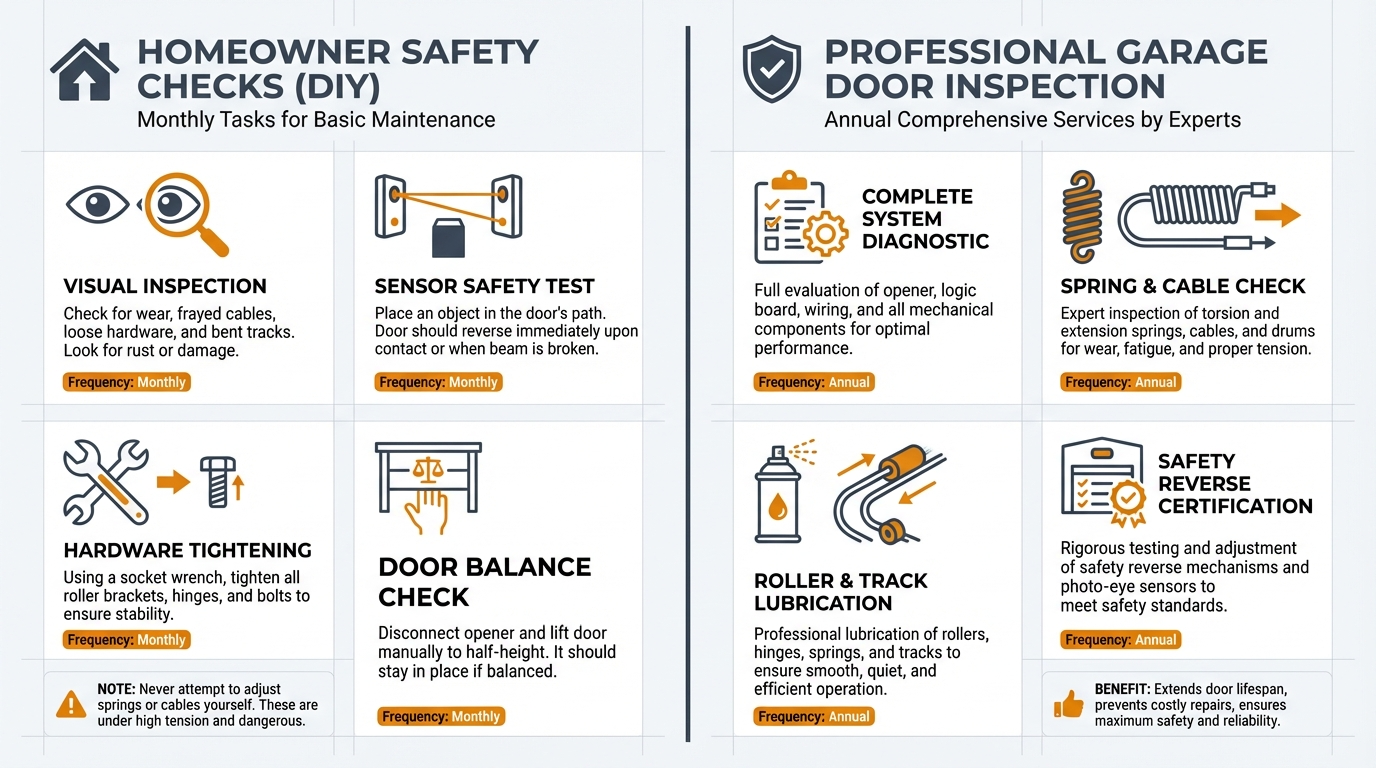
| Safety Check | Homeowner Can Perform | Professional Required | Recommended Frequency |
|---|---|---|---|
| Photo-eye sensor test | Yes | No | Monthly |
| Auto-reverse test with 2×4 | Yes | No | Monthly |
| Visual inspection of cables | Yes (observation only) | Yes (repair) | Monthly |
| Spring adjustment or replacement | No | Yes | As needed |
| Force setting calibration | No | Yes | Annually or after failure |
| Door balance check | Basic test only | Yes (correction) | Every 6 months |
| Lubrication of moving parts | Yes (basic) | Yes (comprehensive) | Every 6 months |
This comparison illustrates why both homeowner vigilance and professional expertise play essential roles in maintaining a safe garage door system. Texas Pros Garage Doors recommends combining your monthly self-checks with annual professional inspections for optimal safety and performance.
Why Does Your Garage Door Close Then Immediately Reopen?
This frustrating behavior almost always indicates a safety system activation. Your door detects something it interprets as an obstruction and reverses to prevent potential injury. While the door is functioning as designed, the underlying trigger needs identification. Common causes include misaligned photo-eye sensors, debris on the tracks, worn rollers creating uneven movement, or force settings that have drifted out of calibration.
Start troubleshooting by examining the sensor alignment and cleaning the lenses. Next, inspect the tracks for any objects, buildup, or dents that might cause the door to bind during travel. Check that nothing is hanging from the ceiling or walls that could swing into the door’s path. If these basic checks reveal nothing, the issue likely involves internal settings or component wear that requires professional assessment.
Door Acting Strangely? Get Expert Help Fast
Our technicians diagnose and resolve garage door issues quickly—often same-day.
How Can You Protect Children from Garage Door Hazards?
Children are particularly vulnerable to garage door accidents because they may not recognize the dangers and often view the moving door as a source of entertainment. The CPSC has warned about garage door accidents involving children for decades, emphasizing that adult supervision and proper safety measures are essential.
Mount your wall-mounted garage door control at least five feet above the floor, placing it out of reach of small children. Store remote controls where children cannot access them—these should not be treated as toys. Teach children that running under a closing door is never acceptable, even if they think they can make it. Establish a clear rule: everyone waits until the door has completely stopped before walking through the opening.
The area around a garage door contains multiple pinch points where small fingers can be caught between moving sections. Explain to children that they should never place their hands near the seams between door panels, especially when the door is in motion. This education, combined with physical safeguards, creates multiple layers of protection.
What Makes DIY Spring and Cable Repairs So Dangerous?
Garage door springs—whether torsion springs mounted above the door or extension springs along the tracks—store enormous amounts of energy. This stored tension counterbalances the weight of the door, allowing your opener to lift what might be several hundred pounds of steel and glass with a relatively small motor. When these springs break or are improperly handled, they release that energy instantaneously.
Attempting to adjust, remove, or replace springs without proper training and tools has resulted in severe injuries and deaths. The same applies to cables, which are under significant tension and can snap with dangerous force. Even what appears to be a simple adjustment can have catastrophic consequences if the spring suddenly releases.
Texas Pros Garage Doors technicians undergo specific training for handling high-tension components safely. They possess specialized tools designed for these tasks and understand the proper procedures to neutralize stored energy before working on these parts. This is one area where the cost of professional service is genuinely an investment in your family’s safety.
Which Garage Door Components Can You Safely Maintain Yourself?
While springs and cables should remain off-limits, several maintenance tasks fall within safe DIY territory. Keeping your tracks clear of debris requires only visual inspection and occasional wiping with a clean cloth. Tightening loose bolts on brackets and hinges—excluding anything connected to the spring system—can reduce noise and improve operation.
Lubrication helps reduce friction and extend component life. However, applying lubricant incorrectly can create problems. Metal rollers with bearings benefit from light lubrication, while nylon rollers typically do not require it. Hinges and pivot points appreciate periodic lubrication, but tracks should generally remain dry—lubricant on tracks can actually cause the door to slip or attract dirt that creates bigger problems.
When performing these tasks, always disconnect the opener by pulling the emergency release cord before working near any moving parts. This prevents accidental activation while your hands are near the mechanism.
How Should You Safely Use the Emergency Release During Power Outages?
The red emergency release cord hanging from your opener carriage allows you to disconnect the door from the automatic opener, enabling manual operation. This feature proves essential during power outages but requires careful use to prevent accidents.
The safest approach involves pulling the emergency release only when the door is fully closed. In this position, the door rests on the ground and cannot fall unexpectedly. If you must release the mechanism while the door is open, exercise extreme caution—an unbalanced door may drop rapidly once disconnected from the opener’s drive system. Stand to the side, not directly under the door, when pulling the release.
After power returns, reconnect the door to the opener by pulling the release cord toward the door (on most systems) and then activating the opener. The trolley should reengage automatically. If you encounter difficulty reconnecting, professional assistance ensures the mechanism operates correctly before resuming normal use.
What Role Does Door Balance Play in Safe Operation?
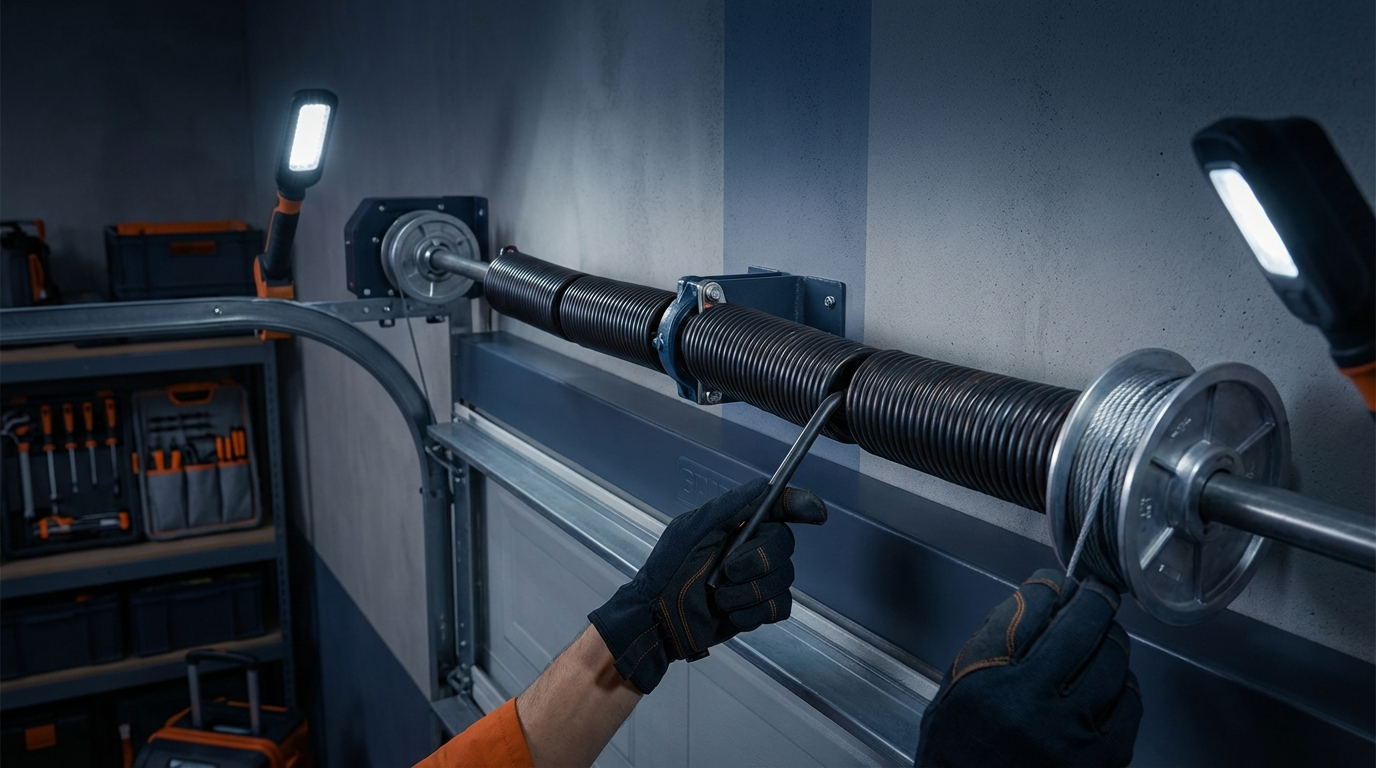
A properly balanced garage door should remain stationary when lifted manually to the halfway point and released. If the door drifts upward, the springs are too tight. If it falls, the springs have lost tension or may be damaged. An unbalanced door forces your opener to work harder, accelerates wear on all components, and creates unpredictable behavior that increases accident risk.
To perform a basic balance check, close the door completely and pull the emergency release to disconnect the opener. Lift the door manually to approximately waist height and carefully release it. The door should stay in place without your support. If it moves significantly in either direction, professional adjustment is necessary. Do not attempt to adjust spring tension yourself.
Texas Pros Garage Doors includes balance assessment as part of every service call because proper balance affects virtually every aspect of safe, reliable operation.
What San Antonio Homeowners Say
Robert Parshall
Google Review
“The spring on my garage door broke and they were able to come out within an hour. Very professional service and fair pricing.”
Leon McPherson
Google Review
“Excellent experience from start to finish. They helped me select the right door design and the installation was completed in one day.”
Alyssa Silva
Google Review
“My garage door spring broke on a Saturday morning. They came out the same day and fixed it quickly. Great service!”
Adam Mendoza
Google Review
“Professional commercial garage door repair. They understood the urgency for our business and minimized our downtime.”
Carbon Monoxide Risks: A Hidden Garage Danger
Garage door safety extends beyond the door itself to encompass the entire garage environment. Carbon monoxide poisoning represents one of the most serious yet overlooked hazards in attached garages. According to the CDC’s guidance on carbon monoxide, running a vehicle engine in an attached garage creates life-threatening conditions even when the garage door is open.
This invisible, odorless gas accumulates quickly and seeps into living spaces through shared walls, doorways, and gaps in construction. Many homeowners mistakenly believe that an open garage door provides sufficient ventilation—it does not. The CDC also warns against using generators, charcoal grills, or other fuel-burning equipment inside garages or carports.
Install a carbon monoxide detector in your home near the door connecting to your garage. Test it monthly and replace batteries annually. This simple precaution provides critical warning if dangerous gas levels develop.
Risk Assessment by Garage Door Component
| Component | Risk Level | Common Failure Signs | Recommended Action |
|---|---|---|---|
| Photo-eye sensors | Low | Blinking lights, inconsistent closing | Clean and realign; call if problem persists |
| Rollers and hinges | Medium | Squeaking, jerky movement | Lubricate or schedule replacement |
| Tracks | Medium | Door sticking, visible dents | Clear debris; professional repair for damage |
| Cables | High | Fraying, loose strands visible | Stop use immediately; call professional |
| Springs | Very High | Loud bang, door won’t lift, gap in spring | Do not operate; call professional immediately |
Understanding which components carry higher risk helps you prioritize both your inspection efforts and your response when problems arise. Low-risk issues allow time for scheduling service, while high-risk situations demand immediate action and professional intervention.
Preventing Vehicle Backover Accidents in Your Garage Area
The area immediately outside your garage door presents backover risks, particularly for small children and pets who may be difficult to see from inside a vehicle. The National Highway Traffic Safety Administration recommends walking completely around your vehicle before backing out, checking for anyone or anything in your blind spots.
Establish family rules that make the driveway and garage area off-limits as play zones. Children should understand that vehicles cannot see them when backing up, and they should never assume a driver knows they are there. These conversations, repeated regularly, build habits that prevent tragic accidents.
Recognizing When Professional Service Becomes Essential
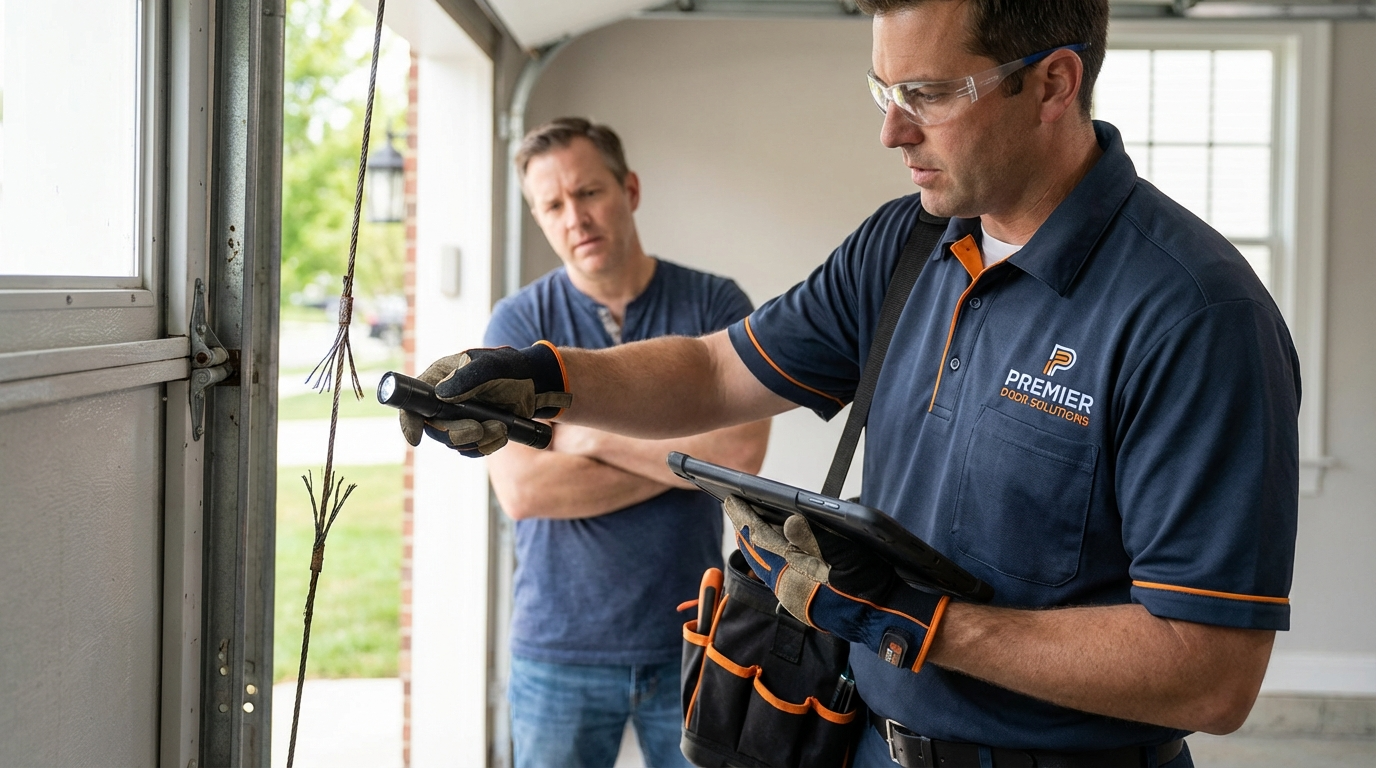
Some garage door issues clearly require professional attention. If your door fails the 2×4 reversal test or the photo-eye sensor test despite your troubleshooting efforts, continuing to operate the door in automatic mode creates unacceptable risk. Unusual noises—grinding, scraping, popping, or snapping sounds—often indicate component failure in progress.
Visible damage to springs, cables, or hardware demands immediate professional assessment. A door that moves erratically, reverses unexpectedly, or falls faster than normal signals problems that could quickly become dangerous. When force settings require adjustment or door balance needs correction, these tasks belong in trained hands.
Texas Pros Garage Doors responds promptly to safety-related service calls because we understand that a malfunctioning garage door affects your daily routine and, more importantly, your family’s wellbeing. Our technicians arrive equipped to diagnose issues accurately and implement lasting solutions that restore safe operation.
Ortal Peretz
Google Review
“Called on a Sunday evening when my opener stopped working. They came out the same night and got everything working again. Outstanding service!”
Frequently Asked Questions About Garage Door Safety
Most sensors have small LED indicator lights. When properly aligned, these lights glow steadily. A blinking light typically indicates misalignment or obstruction. You may also notice the door refusing to close or reversing immediately after starting to descend. Check that both sensors are pointing directly at each other and that nothing is blocking the invisible beam between them.
Persistent blinking after cleaning suggests misalignment rather than obstruction. The sensors must face each other precisely for the beam to connect properly. Slight bumps, vibration over time, or settling of the garage structure can shift sensor positions. Try gently adjusting the angle of each sensor until the indicator lights become steady. If adjustment does not resolve the issue, the sensors may need professional realignment or replacement.
No, the 2×4 test is specifically designed as a safe, recommended method for checking auto-reverse function. The board provides enough resistance to trigger the reversal mechanism without damaging the door bottom or the opener. This test has been recommended by safety regulators since the early 1990s and should be performed monthly. If your door presses hard against the board without reversing, the door settings need adjustment—the test itself causes no harm.
Force settings control how much resistance the door will push through before reversing. While the adjustment controls are accessible on most openers, changing these settings without understanding the proper calibration process can make your door either too weak to close properly or dangerously forceful. Incorrect settings directly affect safety performance. Professional calibration ensures your door operates with the minimum force necessary to function while maintaining reliable reversal capability.
Door balance depends primarily on the spring system counteracting the door’s weight. As springs age, they lose tension and can no longer hold the door at the halfway point. Temperature changes cause springs to expand and contract, affecting tension. A broken spring immediately unbalances the door. Additionally, if one spring in a two-spring system weakens faster than the other, the door may tilt during operation. Only trained professionals should adjust or replace springs.
Photo-eye sensor obstruction or misalignment causes more incomplete closing issues than any other factor. The sensors interpret any beam interruption as a potential obstruction and prevent full closure as a safety measure. Other common causes include travel limit settings that stop the door before it reaches the floor, track obstructions, and worn rollers that create resistance during the final inches of travel.
Erratic movement typically indicates a more immediate danger. A heavy door suggests balance issues that make operation difficult but still somewhat predictable. Erratic movement—jerking, stopping unexpectedly, or reversing without apparent cause—signals unpredictable behavior that makes accidents more likely. Both conditions require attention, but erratic movement warrants faster response and immediate discontinuation of automatic operation until professionally serviced.
Ready to Ensure Your Garage Door Is Safe?
Do not wait for a safety issue to become an emergency. Our expert technicians provide thorough inspections and reliable repairs.
(210) 469-9003
Book Your Safety Inspection
Licensed and Insured
Free Estimates

Recent Comments