
Estimated reading time: 12 minutes
When your garage door stops working properly, it can disrupt your entire day. Whether you are rushing to work or returning home after a long shift, a malfunctioning garage door creates frustration and potential security concerns. This comprehensive garage door troubleshooting guide from Texas Pros Garage Doors will help you diagnose garage issues quickly and determine whether you can fix garage door problems yourself or need professional assistance.
Understanding common garage problems is the first step toward restoring your garage door to proper working condition. Many issues stem from simple causes that homeowners can address with basic tools and careful attention. However, certain problems involve components under extreme tension or electrical systems that require trained professionals. Throughout this guide, we emphasize safety as the primary consideration when attempting any repair work.
Key Takeaways
- Always disconnect the opener and ensure safety before attempting any garage door troubleshooting or manual tests
- Most garage door problems fall into two categories: electrical/control issues or mechanical/balance issues
- Safety sensor misalignment and dirty lenses are the most common causes of doors that reverse or refuse to close
- Never attempt spring repairs yourself as they operate under extreme tension that can cause serious injury or death
- Regular monthly maintenance including sensor cleaning and safety tests prevents most common garage door problems
▼
- Understanding Common Garage Door Problems in Texas
- How Can You Diagnose a Garage Door Problem in 60 Seconds?
- Why Does the Garage Door Refuse to Open at All?
- What Causes a Garage Door to Stop Before Closing Completely?
- What Should You Check When the Door Closes Then Immediately Reverses?
- Why Must You Hold the Wall Button Continuously for the Door to Close?
- How Do You Distinguish Between Remote Control and Opener Problems?
- What Causes Excessive Noise During Garage Door Operation?
- How Do You Test Garage Door Balance and Why Does It Matter?
- Why Are Garage Door Springs Dangerous for DIY Repair?
- What Force and Limit Settings Affect Door Operation?
- How Does Weather Affect Garage Door Performance in Texas?
- What Maintenance Tasks Prevent Common Garage Door Problems?
- When Professional Service Becomes Essential
- Frequently Asked Questions
Garage Door Not Working? Get Expert Help Now
Our certified technicians diagnose and repair all garage door problems fast. Same-day service available throughout San Antonio.
(210) 469-9003
Schedule Free Inspection
70+ Google Reviews
Since 2006
Understanding Common Garage Door Problems in Texas
Texas homeowners face unique challenges with their garage doors due to extreme temperature fluctuations, humidity changes, and occasional severe weather. These environmental factors can cause components to expand, contract, and wear more quickly than in milder climates. Common garage problems in Texas often include sensor malfunctions caused by direct sunlight, lubricant breakdown during summer heat, and track alignment issues from foundation settling.
Before attempting any troubleshooting, ensure the area around your garage door is clear of vehicles, people, and pets. Never stand directly under a moving garage door, and always disconnect the opener before performing manual tests. Knowing how to diagnose garage issues properly can save you time, prevent further damage, and help you communicate effectively with technicians if professional service becomes necessary.
How Can You Diagnose a Garage Door Problem in 60 Seconds?
A rapid diagnostic approach helps you categorize the problem quickly. Start by asking three fundamental questions: Is there power reaching the opener unit? Are the safety sensors communicating with each other? Does the door move smoothly when disconnected from the opener and operated manually? These questions divide most problems into two categories: control and electrical issues versus mechanical and balance issues.
Quick Power Verification Steps
Check whether the opener unit displays any lights or responds to commands. Verify that the outlet powering the unit is functional by testing it with another device. Inspect your electrical panel for tripped breakers, particularly if other garage circuits have also lost power. A simple power disruption accounts for a surprising number of service calls that homeowners could resolve themselves.
Rapid Sensor Assessment Method
Locate the two safety sensors positioned near the floor on each side of the door opening. Most sensors display indicator lights showing their operational status. Clean the sensor lenses gently with a soft cloth, as dust and cobwebs frequently obstruct the infrared beam. Verify that nothing blocks the invisible line between the two sensors, including stored items, vehicles, or hanging objects.
Why Does the Garage Door Refuse to Open at All?
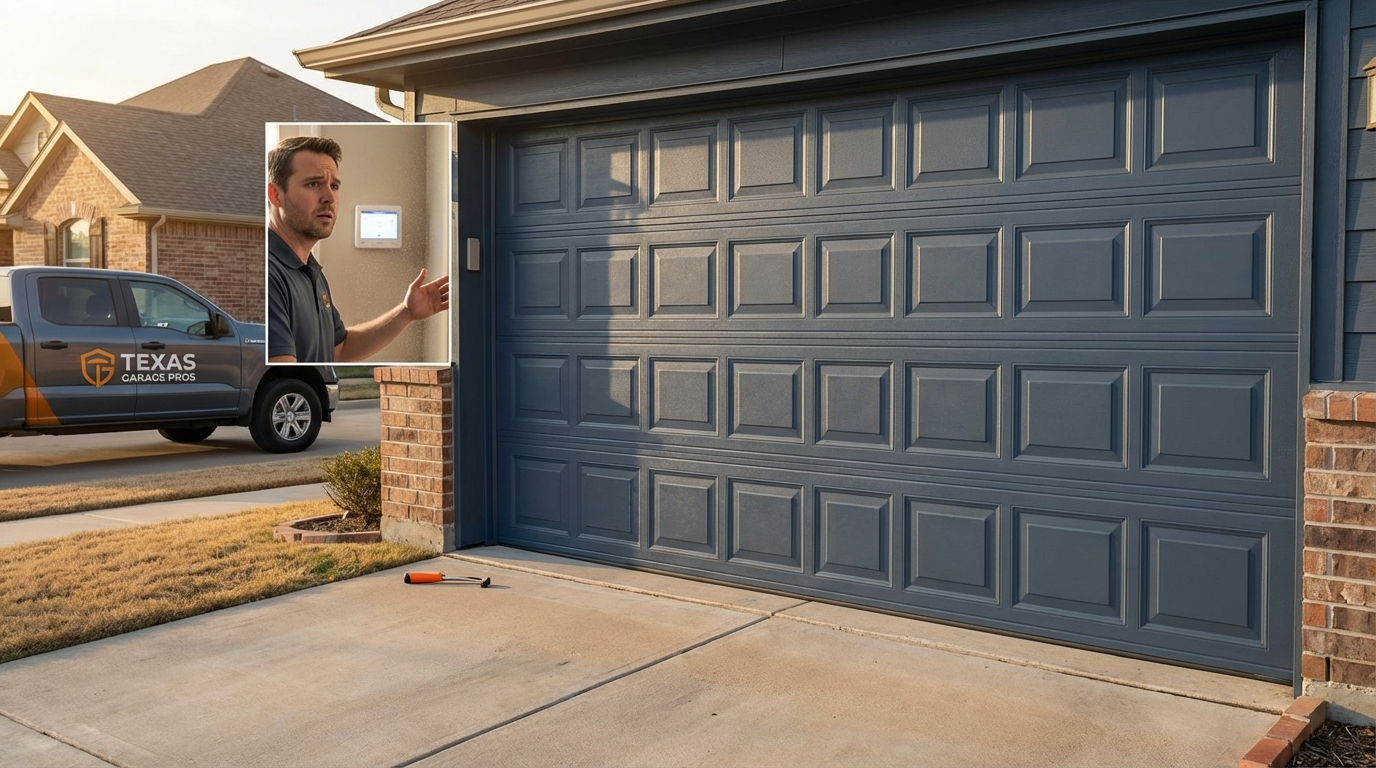
Complete failure to open typically indicates a power or control problem, though mechanical issues can also prevent movement. Start with the simplest possibilities: check that the door is not locked manually using the slide lock mechanism on the inside. Verify that the opener has not been accidentally switched to vacation mode or locked out through the wall control panel.
If the opener motor runs but the door does not move, the connection between the opener and the door may have failed. This could indicate a broken trolley, disconnected emergency release, or stripped gear. However, if attempting to lift the door manually reveals extreme heaviness or complete immobility, suspect a spring failure. According to safety guidelines published by the International Association of Certified Home Inspectors, garage door springs operate under tremendous tension and should never be adjusted or replaced by untrained individuals.
What Causes a Garage Door to Stop Before Closing Completely?
When your garage door descends partway and then stops or reverses, the safety system is usually responding to a perceived obstruction. The most common culprit involves the photoelectric sensors, commonly called photo eyes, that create an invisible beam across the door opening. Any interruption of this beam during closing triggers an immediate stop or reversal to prevent injury or property damage.
Sensor issues arise from several sources. Accumulated dirt, spider webs, or moisture on the lens can weaken the signal enough to cause intermittent failures. Misalignment occurs when sensors shift due to vibration, accidental contact, or temperature changes affecting their mounting brackets. Texas regulations specifically address sensor installation height, with the Texas Real Estate Commission requiring inspectors to report sensors mounted more than six inches above the floor as deficient.
What Should You Check When the Door Closes Then Immediately Reverses?
This frustrating behavior almost always indicates a safety system activation. The opener interprets something as a hazard and reverses to prevent damage or injury. While this protective function is essential, identifying what triggers it requires systematic investigation.
Sensor Alignment Verification Process
Examine both sensors closely for their indicator lights. Many systems use a steady green light on the receiving sensor to indicate proper alignment and signal reception. A blinking or absent light suggests misalignment or malfunction. Adjust the sensor angle carefully until the indicator shows solid status. The Door and Access Systems Manufacturers Association emphasizes maintaining proper sensor height and alignment to ensure reliable detection of obstructions.
Track and Obstruction Examination
Inspect the entire length of both tracks for debris, bent sections, or objects that could impede the door panels. Even small obstructions can cause binding that triggers the force-sensing reversal mechanism. Check the bottom seal and threshold area for accumulated dirt, ice buildup during rare Texas freezes, or damage that creates resistance during the final inches of travel.
Why Must You Hold the Wall Button Continuously for the Door to Close?
This specific symptom indicates that the opener has detected a safety system fault and switched to a backup operating mode. According to federal requirements documented by the Consumer Product Safety Commission, openers manufactured after 1993 must include constant-pressure operation as a fallback when photoelectric sensors malfunction or are not properly installed.
While holding the button allows you to close the door temporarily, this workaround bypasses important safety features. The underlying problem requires attention to restore normal operation and full protection against entrapment hazards.
Wiring Connection Inspection
Trace the wires running from each sensor back toward the opener unit. Look for loose connections, damaged insulation, or signs of rodent activity. Vibration during door operation can gradually loosen terminal connections, creating intermittent faults that worsen over time. Ensure all wire connections are secure and that no bare wire is exposed or touching metal components.
Sensor Stability Assessment
Observe the sensors while the door operates. Do they vibrate noticeably as the door approaches the closed position? Mounting brackets can loosen, allowing sensors to move slightly during operation. This movement disrupts the beam alignment precisely when stable detection matters most. Tighten mounting hardware and consider adding vibration-dampening washers if the problem persists.
Sensor Problems? We Fix Them Fast
Our technicians carry replacement sensors and can restore your safety system in one visit.
How Do You Distinguish Between Remote Control and Opener Problems?
When the remote control fails to operate the door, determining whether the fault lies with the remote, the opener, or the receiving antenna saves troubleshooting time. A simple test establishes the baseline: try operating the door using the wall-mounted control button. If the wall button works normally but the remote does not, focus your investigation on the remote and signal path.
| Symptom | Likely Cause | Recommended Action |
|---|---|---|
| Remote does not work; wall button functions normally | Dead battery, lost programming, or signal interference | Replace battery; reprogram remote following manufacturer instructions |
| Neither remote nor wall button activates opener | Power failure, tripped breaker, or opener malfunction | Check power supply; inspect circuit breaker; contact professional if power is confirmed |
| Remote works intermittently or only at close range | Weak battery, antenna issue, or signal interference | Replace battery; check antenna position; identify potential interference sources |
| Wall button operates door but must be held continuously | Safety sensor fault triggering backup mode | Inspect, clean, and align safety sensors; check sensor wiring |
What Causes Excessive Noise During Garage Door Operation?
Unusual sounds during operation often indicate worn components, inadequate lubrication, or loose hardware. Identifying the specific type of noise helps pinpoint the source and determine appropriate remedies.
Grinding and Scraping Sounds
Metal-on-metal grinding typically indicates worn rollers, dry bearings, or track misalignment. Standard steel rollers deteriorate over time, developing flat spots and rough surfaces that create grinding noises. Inspect rollers for visible wear, cracks, or chips. Nylon rollers operate more quietly and last longer, making them a worthwhile upgrade consideration.
Squeaking and Squealing Noises
High-pitched sounds usually result from friction between moving parts that lack adequate lubrication. Apply a garage door-specific lubricant to hinges, rollers, and springs. Avoid general-purpose lubricants like WD-40 for primary lubrication, as they can attract dust and leave residue. Focus on pivot points and bearing surfaces where metal components rotate or slide against each other.
Rattling and Vibration Sounds
Loose hardware amplifies vibration into audible rattling. Systematically check and tighten all nuts, bolts, and screws on hinges, brackets, and track supports. Pay particular attention to the bolts securing the opener unit to the ceiling and the hardware connecting the door arm to the trolley carriage.
What Our Customers Say
Robert Parshall
Google Review
“The spring on my garage door broke and they were able to come out within an hour. Very professional service and fair pricing.”
Leon McPherson
Google Review
“Excellent experience from start to finish. They helped me select the right door design and the installation was completed in one day.”
Alyssa Silva
Google Review
“My garage door spring broke on a Saturday morning. They came out the same day and fixed it quickly. Great service!”
Adam Mendoza
Google Review
“Professional commercial garage door repair. They understood the urgency for our business and minimized our downtime.”
How Do You Test Garage Door Balance and Why Does It Matter?
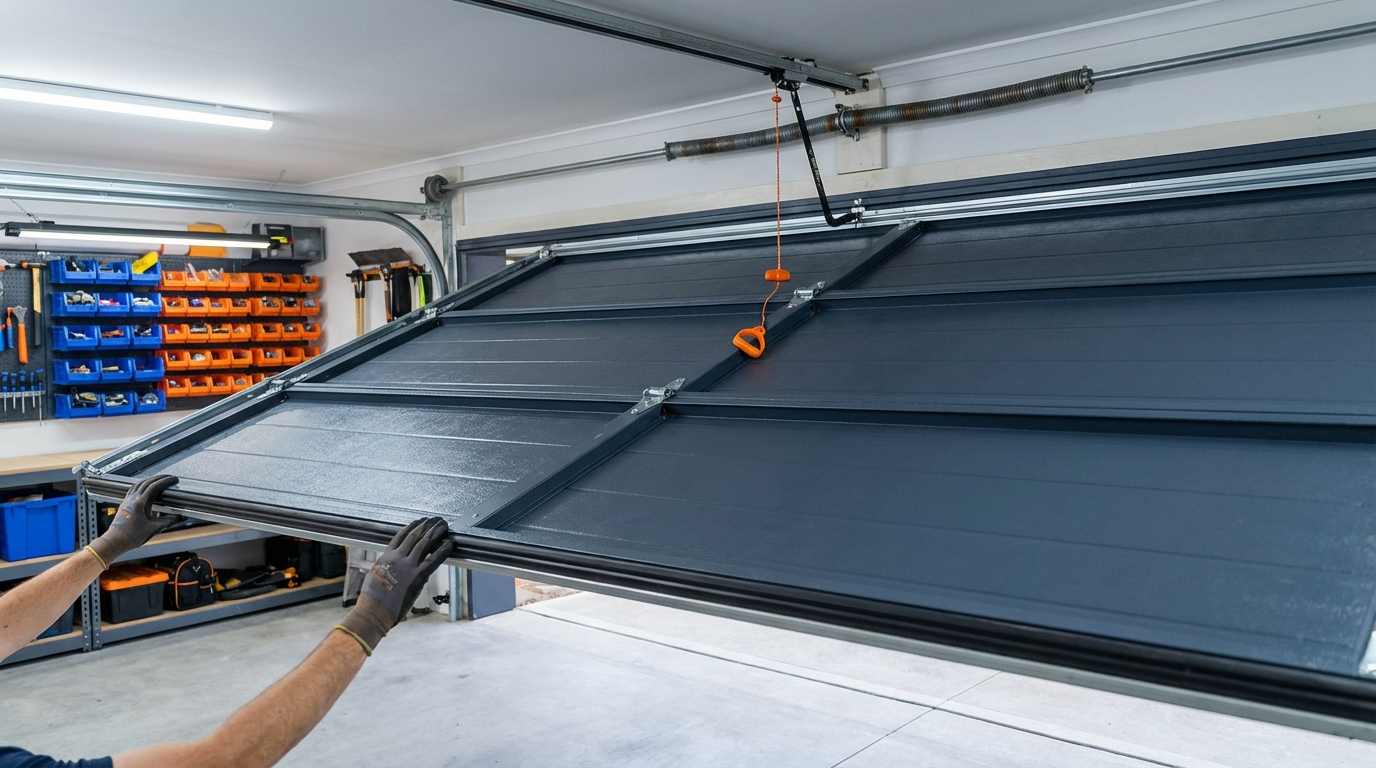
Proper balance ensures the opener motor works efficiently without excessive strain. An imbalanced door wears out opener components faster, operates less reliably, and poses greater safety risks if springs or cables fail. Testing balance requires disconnecting the door from the opener and operating it manually.
Pull the emergency release handle to disengage the opener trolley. Lift the door manually to approximately waist height and release it carefully. A properly balanced door should remain in place with minimal drift in either direction. If the door falls rapidly, rises unexpectedly, or feels extremely heavy, the spring system requires professional attention.
| Balance Test Result | Indication | Recommended Response |
|---|---|---|
| Door stays in position when released at mid-height | Springs properly balanced | No adjustment needed; reconnect opener |
| Door drifts slowly upward | Springs slightly over-tensioned | Professional adjustment recommended |
| Door drifts slowly downward | Springs slightly under-tensioned or weakening | Professional inspection and adjustment needed |
| Door falls rapidly or feels extremely heavy | Spring failure or severe imbalance | Do not operate; contact professional immediately |
Why Are Garage Door Springs Dangerous for DIY Repair?
Torsion and extension springs store enormous amounts of potential energy to counterbalance doors weighing hundreds of pounds. When these springs break or are improperly handled, they release energy explosively. Research published in the National Institutes of Health medical literature documents severe eye injuries resulting from garage door spring accidents during amateur repair attempts.
Professional technicians use specialized tools, follow established safety protocols, and understand the specific requirements for different spring configurations. The CDC National Institute for Occupational Safety and Health has documented fatal accidents involving trained workers, underscoring the hazards even for experienced professionals. For homeowners without proper training and equipment, spring repair represents unacceptable risk regardless of apparent cost savings.
What Force and Limit Settings Affect Door Operation?
Modern garage door openers include adjustable settings that control how far the door travels in each direction and how much force the motor applies before stopping or reversing. These settings ensure the door closes completely against the floor and opens fully without straining against stops, while also providing safety reversal when encountering unexpected resistance.
Incorrect limit settings cause the door to stop short of full closure, fail to open completely, or reverse unexpectedly during normal operation. Force settings that are too sensitive trigger unnecessary reversals, while settings that are too aggressive may not reverse quickly enough when the door encounters an obstruction.
The Consumer Product Safety Commission recommends testing the auto-reverse function monthly by placing a flat board, such as a 2×4 lumber piece, on the floor beneath the door. When the closing door contacts the board, it should reverse within two seconds. Failure to reverse properly indicates a need for adjustment or professional service.
How Does Weather Affect Garage Door Performance in Texas?
Texas weather creates specific challenges for garage door systems. Summer temperatures exceeding 100 degrees Fahrenheit cause metal components to expand, potentially affecting track alignment and sensor positioning. Lubricants can thin or evaporate more quickly under extreme heat, requiring more frequent maintenance attention.
While rare, winter freezes can cause the bottom seal to freeze to the concrete floor overnight. Attempting to operate the door while frozen can damage the seal, strain the opener motor, or trigger safety reversals. During freeze events, verify the seal has released before operating the door. Humidity fluctuations throughout the year can affect wooden door panels, causing swelling or warping that creates binding in the tracks.
Ortal Peretz
Google Review
“Called on a Sunday evening when my opener stopped working. They came out the same night and got everything working again. Outstanding service!”
What Maintenance Tasks Prevent Common Garage Door Problems?
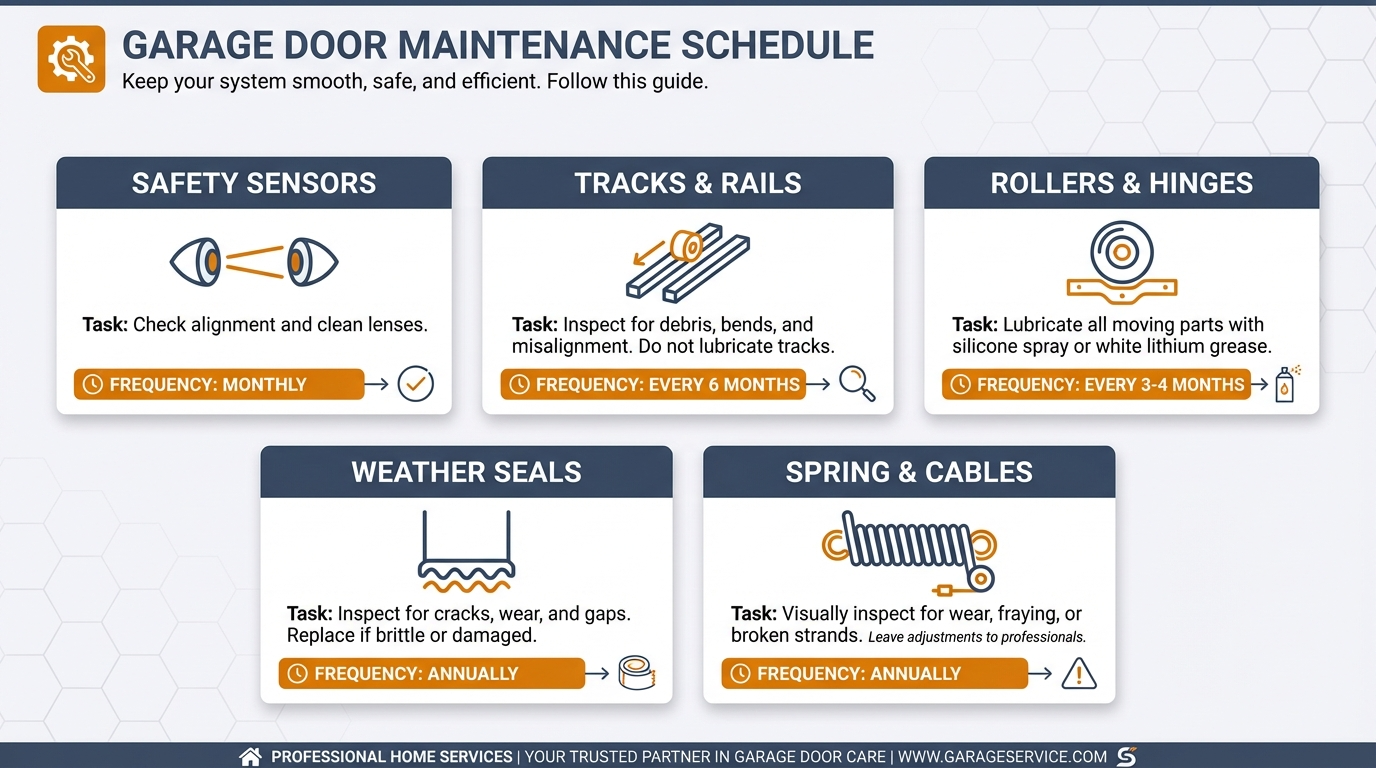
Regular maintenance significantly reduces the frequency and severity of garage door issues. A systematic approach addressing all major components ensures reliable operation and extends equipment lifespan. Texas Pros Garage Doors recommends scheduling comprehensive maintenance at least annually, with visual inspections performed monthly.
| Component | Maintenance Task | Recommended Frequency |
|---|---|---|
| Safety sensors | Clean lenses; verify alignment; test function | Monthly |
| Tracks | Remove debris; check alignment; wipe clean | Quarterly |
| Rollers | Inspect for wear; lubricate bearings | Twice yearly |
| Hinges | Check for wear; lubricate pivot points | Twice yearly |
| Springs | Visual inspection only; professional service for adjustment | Annually by professional |
| Hardware | Tighten all bolts and brackets | Twice yearly |
| Weather seals | Inspect for damage; clean; replace if cracked | Annually |
| Auto-reverse function | Test with 2×4 board placed under closing door | Monthly |
When Professional Service Becomes Essential
While this garage door troubleshooting guide addresses many issues homeowners can investigate independently, certain situations require professional expertise and equipment. Recognizing these scenarios prevents injury and ensures proper repairs that restore full functionality and safety.
Spring replacement or adjustment demands professional service without exception. The extreme tension in torsion and extension springs creates lethal hazards for untrained individuals. Similarly, cable repairs involve components under tension that can cause serious injury if handled improperly.
Electrical problems beyond simple power supply verification require qualified technicians. Opener motor issues, circuit board failures, and wiring faults involve electrical hazards and require diagnostic equipment most homeowners do not possess. Track realignment following impact damage often requires professional assessment to ensure proper door operation and safety.
Texas Pros Garage Doors brings extensive experience to every service call, providing thorough diagnosis and lasting repairs. Our technicians understand the specific challenges Texas conditions create for garage door systems and carry comprehensive parts inventories to complete most repairs in a single visit. We prioritize customer education, explaining what we find and recommending solutions that fit your needs and budget.
Frequently Asked Questions About Garage Door Troubleshooting
Clean sensor lenses monthly as part of routine maintenance. In dusty environments or during pollen season, more frequent cleaning may be necessary. Use a soft, dry cloth to avoid scratching the lens surface.
Bottom bracket rollers require spring tension and should only be replaced by professionals. Other rollers along the door panels can often be replaced by careful homeowners, though the process requires proper technique to avoid damaging the door or tracks.
Extreme heat causes metal expansion, which can affect track alignment, sensor positioning, and lubrication effectiveness. Components that operate with minimal clearance in cooler temperatures may bind when heat causes expansion.
Quality openers typically provide 10 to 15 years of reliable service with proper maintenance. Factors affecting lifespan include usage frequency, environmental conditions, and whether recommended maintenance has been performed consistently.
Phantom operation can result from radio frequency interference, stuck remote buttons, faulty wall controls, or even neighbors with compatible openers. Reprogramming the opener and remotes with new codes typically resolves interference issues.
If the door is properly balanced, disconnecting while open is generally safe. However, an imbalanced door may fall rapidly when disconnected. Always stand to the side when pulling the emergency release, and be prepared for unexpected door movement.
Signs include visible gaps in torsion springs, stretched or elongated extension springs, difficulty lifting the door manually, and the door not staying in position during balance testing. Any of these symptoms warrant professional inspection.
Ready to Resolve Your Garage Door Issues?
Has this guide helped you identify the problem? Whether it is a simple fix or requires professional expertise, our certified technicians are ready to help. Same-day service available.
(210) 469-9003
Contact Texas Pros Today
Licensed and Insured
Satisfaction Guaranteed

Our Garage Door Services in San Antonio
Garage Door Repair | New Garage Door Installation | Spring Replacement | Panel Replacement | Rollers Replacement | Openers Service | Fix Broken Cables | Fix Torsion Springs | Fix Bent Track
Contact us or call (210) 469-9003 for a free estimate!
Recent Comments